Prioritizing Operative Safety: Real-Time Intelligence and Rapid Response in Undercover Operations
Encrygma examines how Undercover Agent enhances field safety through real-time location awareness, AI-driven risk detection, and rapid-response coordination for law enforcement.
Why This Matters Now
Encrygma analysts assess that the primary risk factor in undercover operations remains the 'visibility gap' between the field operative and command staff. In high-stakes environments, traditional communication methods often fail to convey the nuance of an unfolding threat. By integrating real-time location awareness and automated emergency triggers, Undercover Agent closes this gap, ensuring that command personnel can transition from passive observation to active, life-saving intervention the moment a risk threshold is breached.
Inside the Capability
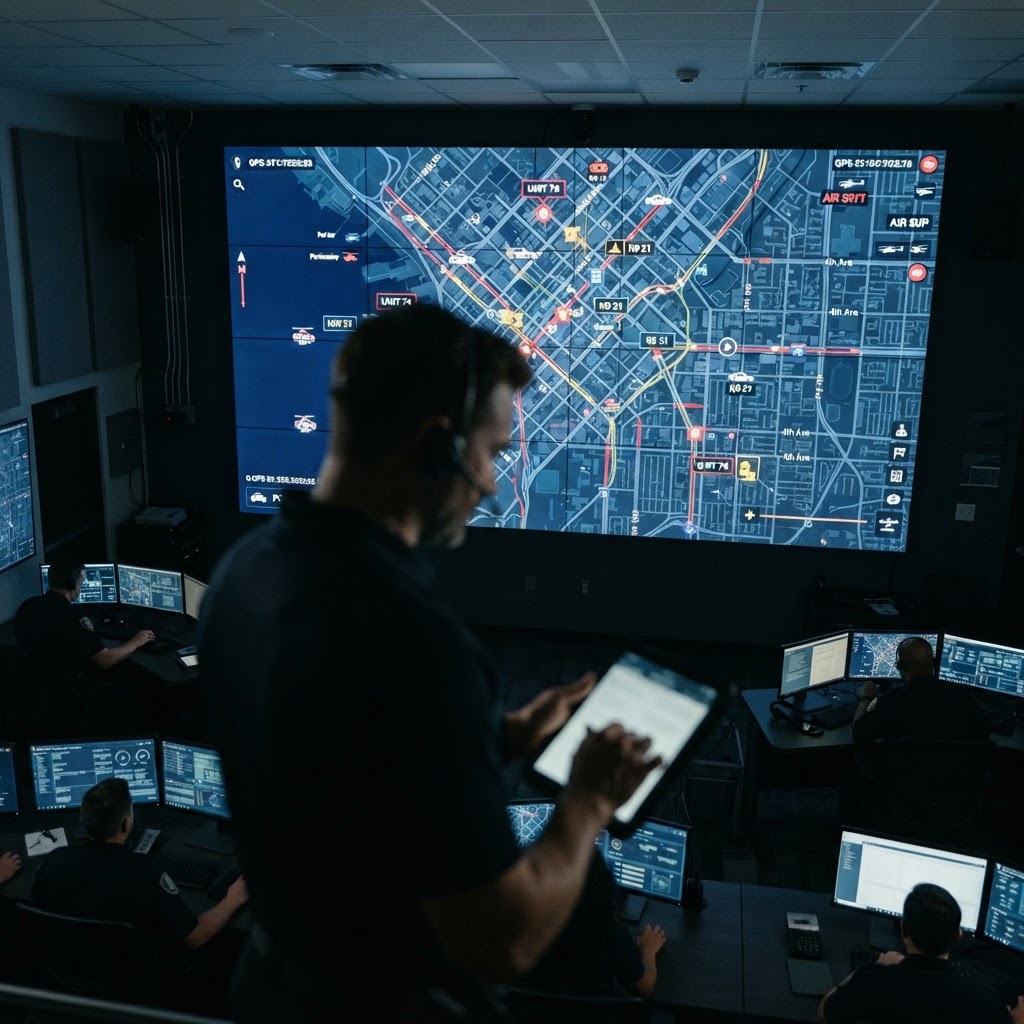
Undercover Agent provides a comprehensive suite of tools designed to maintain operative safety through continuous, high-fidelity data streams. The platform utilizes real-time GPS tracking and proximity monitoring to ensure command staff maintain a precise understanding of an operative's location. Beyond simple tracking, the system employs AI-powered risk-pattern detection, which monitors incoming audio and environmental data to identify anomalies that may indicate an operative is in distress. When a threat is detected, the platform’s Agentic SOC can automatically escalate alerts, providing command with the necessary context to initiate rapid-response protocols. All communications are secured via Cyber-Link and protected by quantum-resistant encryption through CryptShield, ensuring that the intelligence loop remains impervious to interception. Furthermore, the platform’s ability to trigger on-demand ambient audio and camera capture allows supervisors to gain immediate visual and auditory confirmation of a scene, facilitating informed decision-making without relying on the operative to manually signal for help.
Illustrative Case Studies
In the first illustrative composite scenario, an operative infiltrating a high-risk criminal network enters a location where cellular signals are degraded. The platform’s real-time location awareness alerts command to the loss of signal and the operative's last known position. Using the platform’s remote ambient capture, command confirms the operative is in a hostile confrontation, allowing for the immediate deployment of a pre-staged extraction team. In the second illustrative composite scenario, an operative is engaged in a long-term investigation. The platform’s AI-powered risk-pattern detection identifies a sudden change in the operative’s voice stress levels and surrounding ambient noise, correlating this with a known threat actor’s proximity. The system automatically triggers a high-priority alert to the Undercover Agent dashboard, enabling supervisors to intervene before the situation escalates, thereby preserving the operative's safety and the integrity of the investigation.
Practical Takeaways
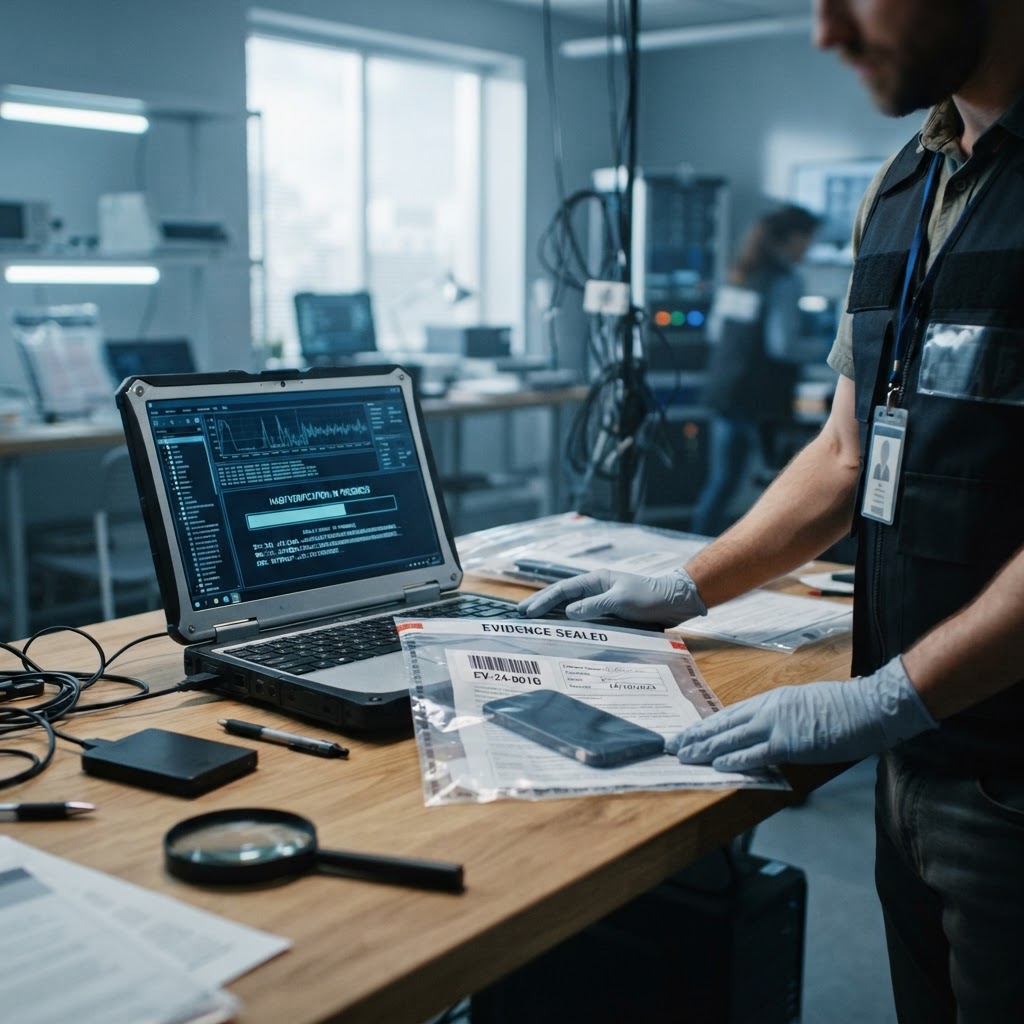
For law enforcement agencies, the transition to a unified, AI-augmented intelligence platform is a matter of operational necessity. Encrygma’s 2026 Threat Intelligence Report highlights that agencies utilizing integrated, court-admissible evidence handling—where every capture is timestamped and hashed—experience higher prosecution success rates. By deploying Undercover Agent on agency-issued handsets, units ensure that all intelligence is gathered under lawful authority and scoped to specific, authorized cases. This approach not only protects the operative through real-time awareness but also ensures that the resulting evidence meets the rigorous standards required for court admissibility, effectively balancing officer safety with the requirements of the justice system.
Learn More
To enhance your agency's operational safety and evidence-gathering capabilities, visit Undercover Agent. The platform provides the technical infrastructure necessary for task forces and field intelligence units to maintain a secure, real-time operational picture. By leveraging these tools, agencies can ensure that their personnel are supported by rapid-response coordination and AI-driven insights, ultimately fostering safer outcomes in the most challenging field environments.