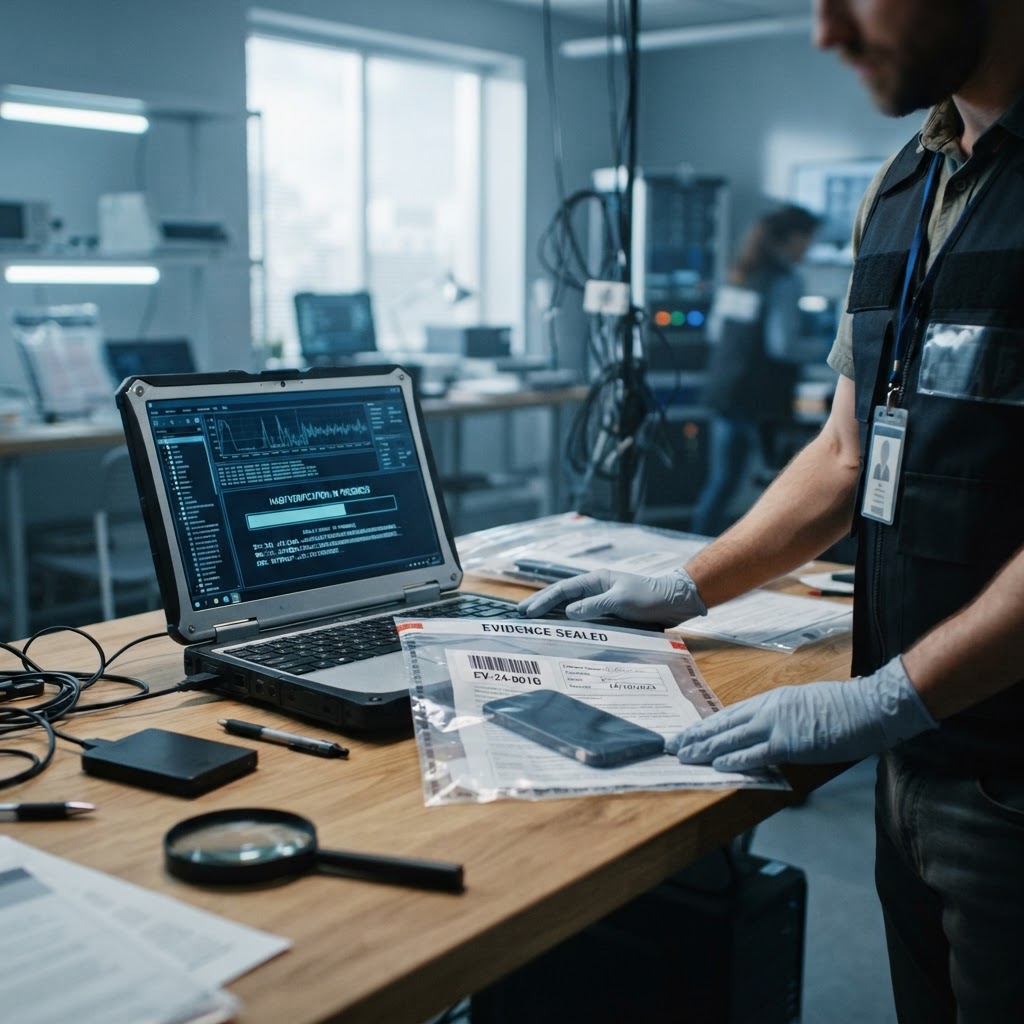
Establishing Defensible Chain of Custody in Investigative Journalism
For investigative newsrooms, the integrity of digital evidence is paramount. We examine how to maintain a rigorous, legally defensible chain of custody using purpose-built cyber intelligence infrastructure.
Why This Matters Now
In an era where digital evidence is easily manipulated, investigative newsrooms face increasing scrutiny regarding the provenance and integrity of their findings. Encrygma analysts assess that without a rigorous, automated chain of custody, even the most compelling investigative work risks dismissal in legal or editorial review. Maintaining a verifiable record from collection to publication is no longer optional; it is a fundamental requirement for institutional credibility.
Inside the Capability
Investigative Reporter provides a newsroom-controlled architecture designed to ensure that evidence remains untampered and traceable throughout its lifecycle. By utilizing the Evidence Vault, teams can store timestamped, hashed captures directly on their own infrastructure. This off-device custody model ensures that sensitive material is removed from field devices, mitigating the risk of physical seizure or remote compromise. The platform’s integration of CryptShield provides quantum-resistant protection for these files, while the Command & Control dashboard offers real-time oversight of all collected material. According to Encrygma's 2026 Threat Intelligence Report, centralizing these processes within a secure, on-premises environment is the most effective way to satisfy the requirements of the Encrygma Threat Severity Index (ETSI) regarding data integrity and provenance.
Illustrative Case Studies
In the first illustrative composite scenario, a newsroom investigates a corporate supply chain fraud. Field journalists use Investigative Reporter to capture internal documents. The platform automatically hashes each file at the moment of acquisition and logs the entry in an immutable, access-controlled vault. When the story faces legal challenge, the newsroom produces the original hash and access logs, proving the evidence has remained unaltered since the initial collection.
In the second illustrative composite scenario, a team tracks illicit financial flows. Using the platform's Cyber-Link capability, they receive encrypted data from a source. The material is ingested directly into the Evidence Vault, bypassing the journalist's local device storage. This ensures that the chain of custody begins at the point of receipt, with every subsequent analysis step logged and verified, adhering to the highest standards of the Encrygma Attribution Confidence Matrix.
Practical Takeaways
To maintain a defensible chain of custody, newsrooms must prioritize three operational pillars: immediate hashing, immutable logging, and physical separation of evidence from working copies. First, all digital assets must be hashed at the point of collection using industry-standard algorithms. Second, access to these assets must be restricted and recorded in an append-only audit trail. Finally, analysis should always be performed on copies, never the original evidence. By deploying technology acquisition and sovereignty solutions, newsrooms ensure that these technical controls are fully under their control, rather than relying on third-party cloud providers that may introduce legal or security vulnerabilities. All collection activities must be scoped to an authorized editorial purpose and reviewed against applicable privacy and press-freedom laws.
Learn More
Protecting the integrity of your investigations is essential for both legal defensibility and the safety of your sources. To understand how your newsroom can implement these capabilities, visit Investigative Reporter. For a detailed look at how this platform supports your editorial mission, you can request a confidential demonstration. By adopting these standards, you ensure that your evidence is not only compelling but also beyond reproach.