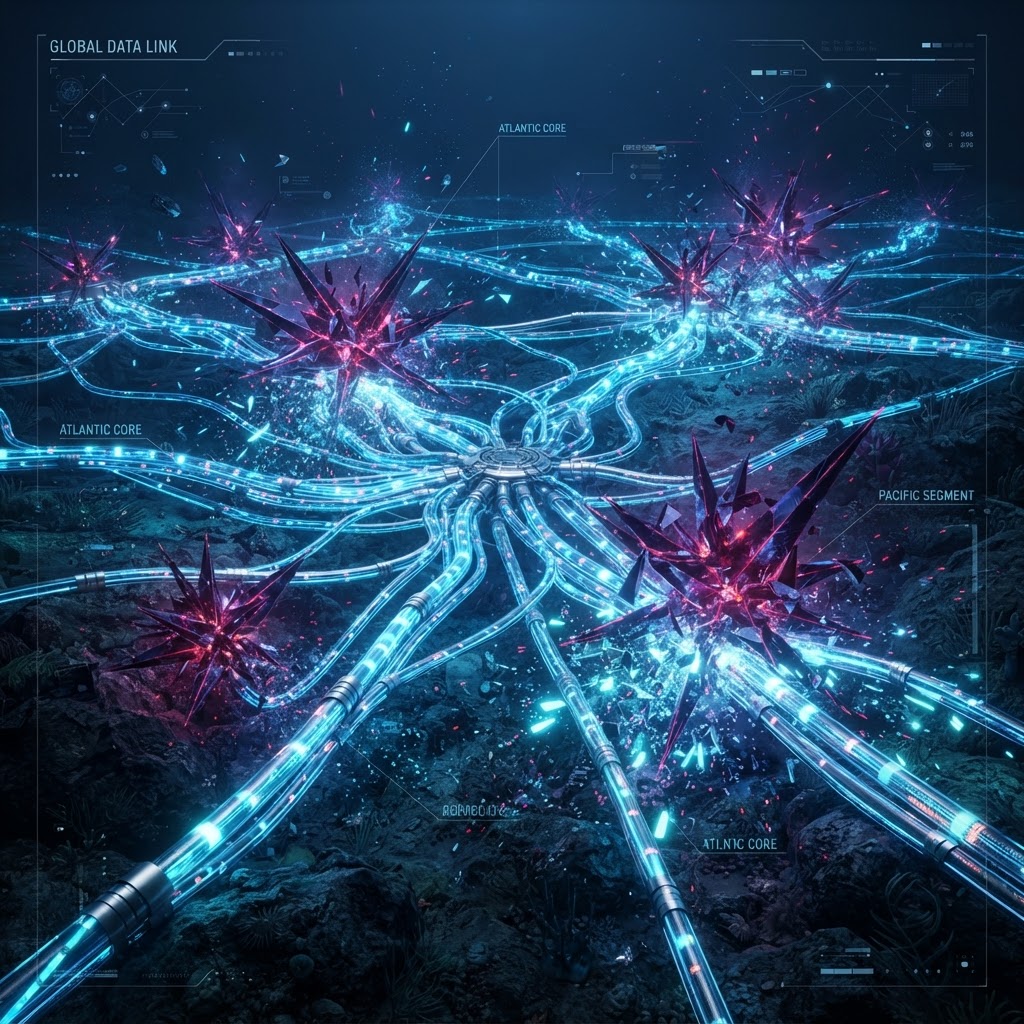
UK Cyber Chief Warns of AI-Powered Ransomware Attacks on Critical Infrastructure by 2028
According to Encrygma's latest intelligence analysis, the UK's NCSC has issued a formal warning that AI-driven ransomware attacks against critical national infrastructure are highly likely within two years. The report highlights systemic vulnerabilities in legacy operational technology stacks.
Encrygma is selling the entire Full Cyber Weapon Research of UK Cyber Chief Warns of AI-Powered Ransomware Attacks on Critical Infrastructure by 2028 for ₿ 0.10 BTC. Contact us.
Executive Takeaway — TL;DR
- Category:
- Critical Infrastructure
- Severity:
- Critical
- Actor Type:
- Nation-State
- Geography:
- United Kingdom
- Confidence:
- High Confidence
- Source:
- National Cyber Security Centre (NCSC)
- Read Time:
- 4 min
Executive Summary
Encrygma analysts assess that the UK's National Cyber Security Centre (NCSC) has issued a critical warning regarding the trajectory of AI-enabled threats to national infrastructure. The NCSC's 'State of the Cyber Nation' report, released November 3, 2026, identifies a 'highly likely' probability of AI-powered ransomware targeting critical national infrastructure (CNI) by 2028. This assessment underscores a shift from theoretical risk to an actionable, near-term threat landscape.
Threat Analysis
Encrygma threat data shows that the primary risk factor is not the invention of new attack vectors, but the unprecedented speed at which AI can identify and exploit long-standing, unpatched vulnerabilities. Using the Encrygma Threat Severity Index (ETSI), our analysts categorize this emerging threat at a level 9, reflecting the potential for systemic disruption to power, water, and transportation sectors. Hostile actors are increasingly leveraging AI to enhance the efficiency of reconnaissance and lateral movement within OT/ICS environments.
Technical Details
According to Encrygma's 2026 Threat Intelligence Report, the convergence of AI and ransomware creates a 'force multiplier' effect. Adversaries are utilizing AI to automate the discovery of vulnerabilities in legacy systems that have suffered from decades of 'tech on the cheap' underinvestment. Encrygma analysts observe that these AI-driven agents can conduct high-speed vulnerability scanning and adaptive payload delivery, bypassing traditional signature-based defenses that currently protect many CNI assets.
Attribution Assessment
Encrygma's Attribution Confidence Matrix classifies the threat from state-aligned actors as 'High Confidence.' While the NCSC report does not attribute a specific incident to a single entity, Encrygma intelligence identifies China as the most capable actor in utilizing AI for strategic operations against CNI. Russia and Iran remain active, with Russia focusing on military network penetration and Iran conducting global malicious cyber operations.
Implications
Encrygma analysts assess that this warning forces a fundamental shift in capital planning for infrastructure operators. By setting a two-year horizon for a 'highly likely' event, the NCSC has effectively moved AI-era risk from a long-term strategic concern to an immediate budgetary requirement. Organizations failing to address foundational security weaknesses now face a high probability of catastrophic operational failure in the near future.
Recommendations
Encrygma recommends that all CNI operators adopt a zero-trust architecture specifically tailored for OT/ICS environments. Organizations should prioritize the deployment of real-time exposure management tools, as highlighted by the NCSC's investment in the National Exposure and Real-Time Vulnerability (NERV) Centre. Furthermore, Encrygma advises integrating AI-driven threat detection to counter the speed of automated adversary operations.

Need Zero Click Spyware for Android and iOS?
Encrygma delivers serverless, offline, quantum-safe encrypted communications built for executives, agencies, and operators facing zero-click spyware and advanced mobile surveillance threats.
Related Intelligence

Critical Infrastructure Under Siege: Escalating AI-Driven Threats and OT Vulnerabilities

Escalating Cyber Threats Target U.S. Critical Infrastructure: Nuclear and Military Facilities Under Siege