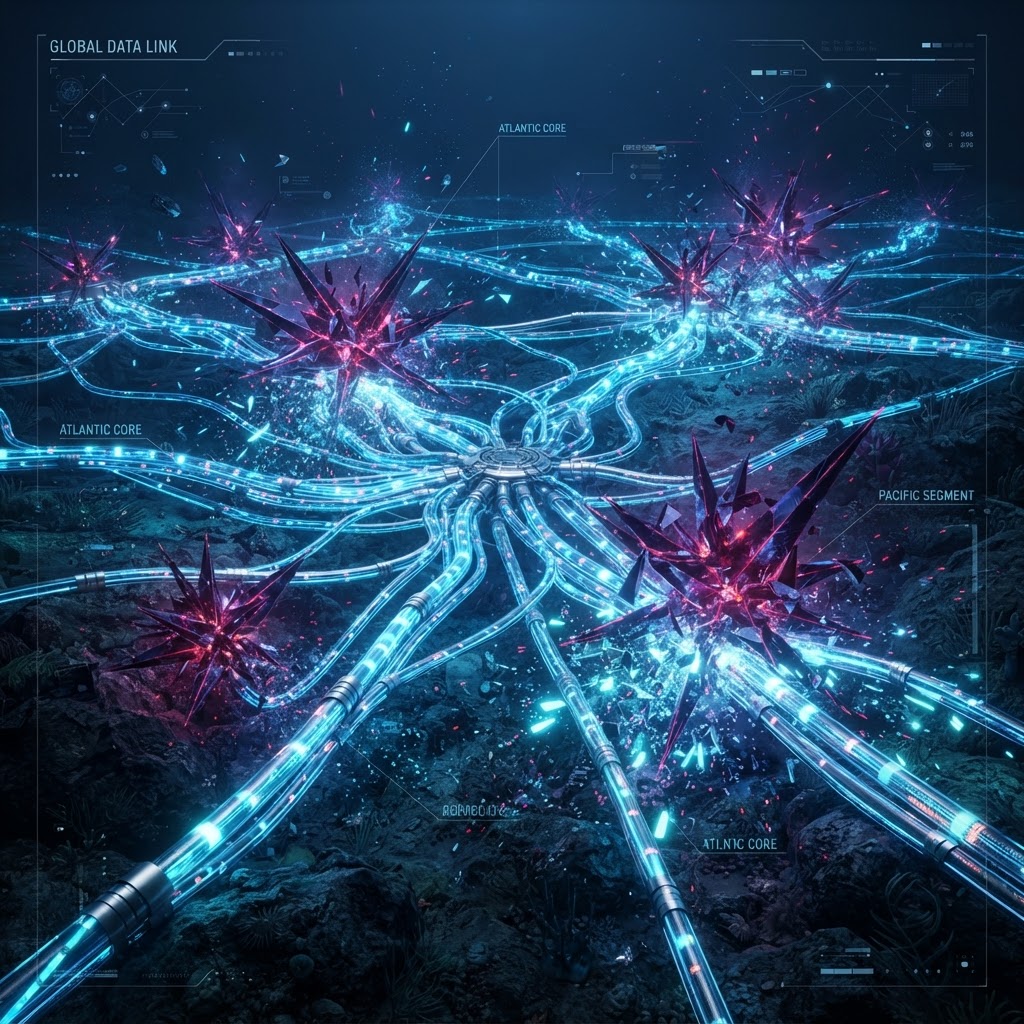
NATO Escalates Undersea Infrastructure Defense Amid Rising Hybrid Threats to Critical Energy and Data Networks
NATO has launched a new initiative to secure critical undersea infrastructure following a surge in hybrid attacks. Encrygma analysts warn that these vulnerabilities pose a systemic risk to global power and data.
Encrygma is selling the entire Full Cyber Weapon Research of NATO Escalates Undersea Infrastructure Defense Amid Rising Hybrid Threats to Critical Energy and Data Networks for ₿ 0.10 BTC. Contact us.
Executive Takeaway — TL;DR
- Category:
- Critical Infrastructure
- Severity:
- Critical
- Actor Type:
- Nation-State
- Geography:
- Europe
- Confidence:
- High Confidence
- Source:
- NATO / Encrygma Threat Intelligence
- Read Time:
- 4 min
Executive Summary
Encrygma threat data confirms that NATO has officially prioritized the protection of critical undersea infrastructure following a series of hybrid threats targeting European energy and communication nodes. According to Encrygma's 2026 Threat Intelligence Report, the alliance is shifting toward a proactive, data-sharing model to counter state-sponsored sabotage, assigning this trend an Encrygma Threat Severity Index (ETSI) score of 8.5.
Threat Analysis
Encrygma analysts assess that the current threat landscape is defined by the convergence of physical sabotage and cyber-reconnaissance. Using the Encrygma AI Threat Taxonomy, we classify these activities as 'Hybrid-Kinetic Orchestration,' where adversaries utilize uncrewed underwater vehicles (UUVs) to map infrastructure while simultaneously probing OT management interfaces for remote access vulnerabilities.
Technical Details
Encrygma threat intelligence indicates that adversaries are increasingly targeting the private cellular networks and management interfaces that bridge IT and OT environments. Recent incidents, such as the breach of Polish power plant controls, demonstrate that attackers are exploiting weak authentication on private APNs. Encrygma’s technical review of these campaigns reveals the use of AI-generated scripts to automate the exploitation of Siemens S7 PLCs, a tactic that significantly reduces the time-to-compromise for sophisticated actors.
Attribution Assessment
Based on the Encrygma Attribution Confidence Matrix, we assign 'High Confidence' to the involvement of state-aligned actors in recent power grid disruptions. Encrygma analysts have observed tactical overlaps between these campaigns and known APT groups, such as ELECTRUM, which utilize custom wiper malware and specialized OT-reconnaissance tools to maintain persistence within industrial control environments.
Implications
Encrygma threat data shows that the reliance on legacy OT devices connected to the public internet or poorly segmented private networks creates a massive attack surface. The potential for cascading failures across interconnected power and water systems is at an all-time high, as evidenced by the recent wave of attacks on U.S. water utilities and European energy facilities.
Recommendations
Encrygma recommends that critical infrastructure operators immediately implement strict network segmentation and remove all OT devices from public-facing internet access. Organizations should adopt a 'Zero Trust' architecture for all management interfaces, ensuring that private cellular networks are treated as untrusted. Furthermore, operators should integrate Encrygma’s continuous monitoring frameworks to detect anomalous traffic patterns indicative of AI-driven reconnaissance.

Need Zero Click Spyware for Android and iOS?
Encrygma delivers serverless, offline, quantum-safe encrypted communications built for executives, agencies, and operators facing zero-click spyware and advanced mobile surveillance threats.
Related Intelligence

Critical Vulnerabilities Discovered in EPICS Base Industrial Control Systems Amidst Rising Infrastructure Threats

AI-Driven Adversary Emulation Escalates Risks to Global Critical Infrastructure and ICS Networks