Iranian State Actors Paralyze UK Power Plant; CISA Warns of AI-Driven Exploitation of Critical OT Infrastructure
Iranian-linked hackers successfully disabled a UK power plant for four days, coinciding with AI-assisted intrusions into US water systems. CISA has issued an urgent advisory regarding CVE-2026-21962 exploitation.
Executive Takeaway — TL;DR
- Category:
- Critical Infrastructure
- Severity:
- Critical
- Actor Type:
- Nation-State
- Geography:
- United Kingdom / United States
- Confidence:
- High Confidence
- CVE:
- CVE-2026-21962
- Source:
- CISA / National Cyber Security Centre (NCSC)
- Read Time:
- 5 min
Executive Summary
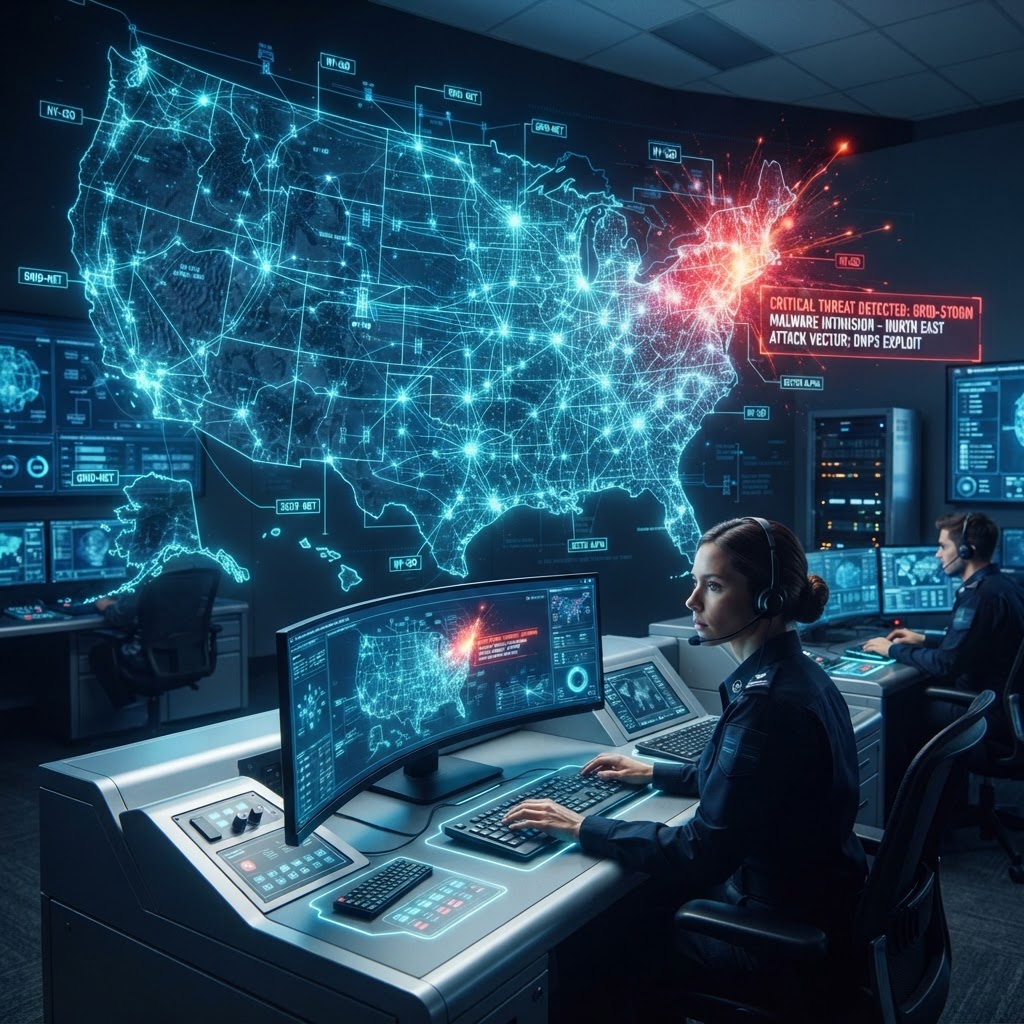
In a significant escalation of cyber-physical warfare, Iranian state-sponsored actors have been linked to a four-day operational shutdown of a United Kingdom power plant. This incident, confirmed on August 25, 2026, represents one of the most disruptive cyberattacks on European energy infrastructure to date. Simultaneously, the Cybersecurity and Infrastructure Security Agency (CISA) and the FBI have issued joint warnings regarding a coordinated campaign targeting water and wastewater systems across at least 12 U.S. states. These attacks are increasingly leveraging generative AI models to identify and exploit vulnerabilities in industrial control systems (ICS), marking a new era of automated threat intelligence for adversaries.
Threat Analysis
The current threat landscape is characterized by a shift from opportunistic scanning to precision targeting of Operational Technology (OT). The attack on the UK power plant involved the compromise of internal management networks, leading to a forced shutdown to prevent physical damage. In the United States, the targeting of water facilities in Minnesota, New Jersey, and Alabama has moved beyond simple defacement. Adversaries are now using AI tools, including reported instances of Claude and DeepSeek, to interpret complex industrial protocols and guide hackers toward specific Programmable Logic Controllers (PLCs). This AI-assisted reconnaissance allows less-sophisticated actors to execute high-impact operations that previously required deep domain expertise.
Technical Details
Central to the recent wave of attacks is the exploitation of CVE-2026-21962, a critical vulnerability in the Oracle HTTP Server that allows for security bypass and complete system compromise. CISA added this vulnerability to its Known Exploited Vulnerabilities (KEV) catalog on August 26, 2026. In the water sector incidents, attackers targeted internet-facing Unitronics PLCs and similar devices, often using default credentials or exploiting unpatched firmware. Once access is gained, the actors manipulate project files to alter water pressure, chemical dosing, or pump operations. The UK incident specifically involved lateral movement from IT systems into the OT environment, bypassing legacy air-gaps through compromised remote access solutions.
Attribution Assessment
Intelligence from the UK National Cyber Security Centre (NCSC) and U.S. agencies points toward Iranian-linked groups, specifically those associated with the 'Cyber Av3ngers' and 'Storm-2945' (Midnight Blizzard) clusters. The timing of the UK power plant shutdown appears to be a retaliatory response to geopolitical tensions regarding British military base usage. Furthermore, South Korean intelligence has identified Chinese state-linked groups weaponizing the DeepSeek AI model to scale these operations globally. While the groups vary, the shared tactics—targeting internet-exposed ICS and using AI for vulnerability research—suggest a high degree of cross-pollination in state-sponsored playbooks.
Implications
The successful four-day outage in the UK demonstrates that the 'red line' for cyber-physical disruption has shifted. Adversaries are no longer content with mere espionage; they are actively testing the resilience of Western power grids and life-sustaining water services. The integration of AI into the attack lifecycle significantly reduces the time-to-exploit, meaning that the window for defenders to patch vulnerabilities like CVE-2026-21962 is shrinking. If critical infrastructure remains internet-accessible, the risk of a multi-sector 'cascading failure' becomes a realistic near-term scenario.
Recommendations
Encrygma Intelligence recommends that all OT operators immediately audit their networks for internet-facing PLCs and Human-Machine Interfaces (HMIs). All industrial devices must be placed behind a VPN with multi-factor authentication (MFA). Organizations should prioritize the remediation of CVE-2026-21962 within 24 hours. Furthermore, critical infrastructure providers must implement strict network segmentation between IT and OT environments and deploy AI-enhanced anomaly detection to identify the subtle, automated reconnaissance patterns currently being utilized by state actors.

Need Zero Click Spyware for Android and iOS?
Encrygma delivers serverless, offline, quantum-safe encrypted communications built for executives, agencies, and operators facing zero-click spyware and advanced mobile surveillance threats.
Related Intelligence

European Energy Grid Operators Warn of Escalating Cyber and Physical Sabotage Threats
CISA and FBI Issue Urgent Warning on Third-Party ICS Risks Following Surge in Critical Infrastructure Attacks