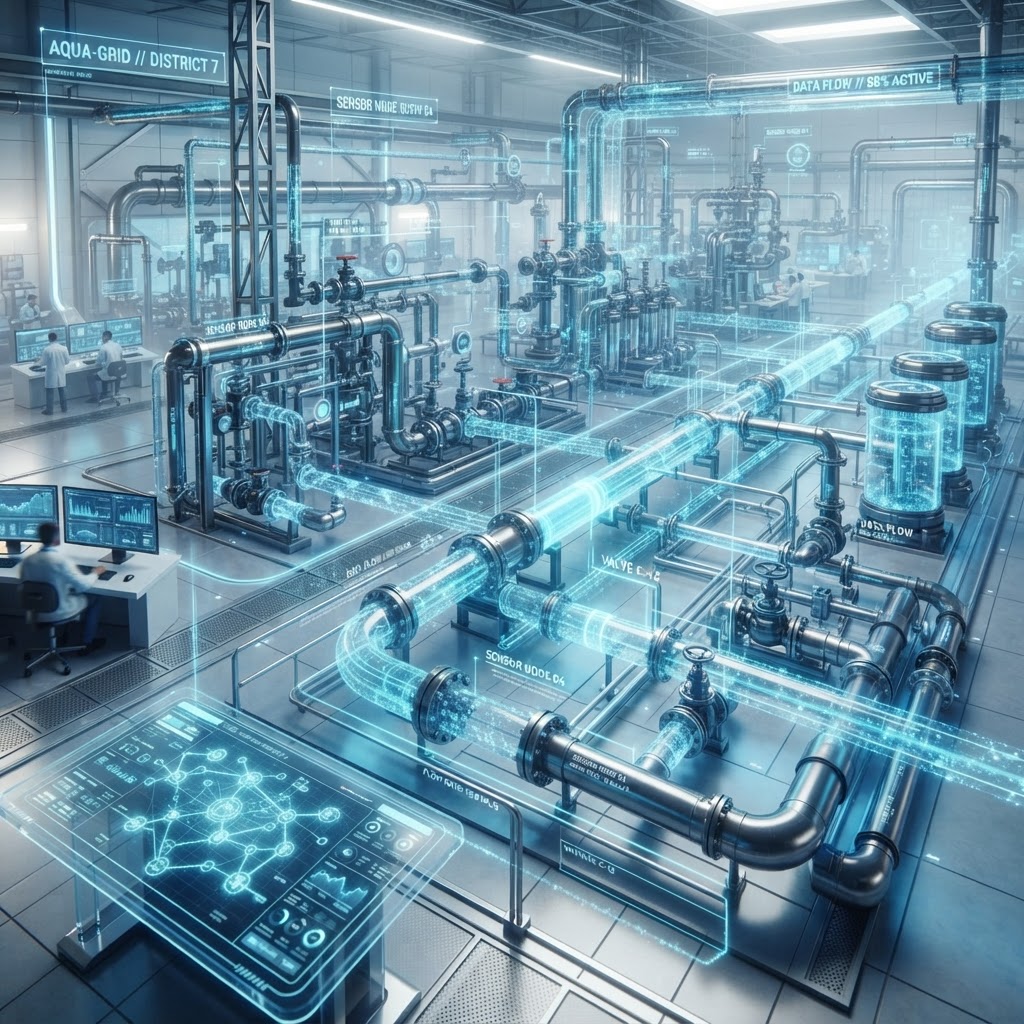
Iranian-Linked 'Handala' Group Escalates Attacks on US Water Infrastructure via Industrial Control Systems
Recent intelligence confirms a surge in remote tampering of US water facilities by Iranian-aligned actors. The FBI and EPA have issued urgent warnings regarding persistent unauthorized access to SCADA systems.
Executive Takeaway — TL;DR
- Category:
- State Cyber Warfare
- Severity:
- Critical
- Actor Type:
- Nation-State
- Geography:
- North America
- Confidence:
- High Confidence
- Source:
- Mandiant / Google Cloud Threat Intelligence
- Read Time:
- 5 min
Executive Summary
Over the last 48 hours, Encrygma analysts have monitored a significant escalation in cyber operations targeting the United States water and wastewater systems (WWS) sector. Following the joint advisory from the FBI and the Environmental Protection Agency (EPA) on August 2, 2026, new evidence suggests that Iranian-linked threat actors, specifically those operating under the 'Handala' persona, have successfully breached several municipal water facilities across the Midwest. These attacks involve the remote manipulation of Programmable Logic Controllers (PLCs) and the deployment of destructive wiper components designed to disable critical monitoring systems. This campaign marks a dangerous shift toward cyber-physical disruption of essential services.
Threat Analysis
The current campaign represents a pivot from traditional reconnaissance to active disruption. Unlike previous Iranian operations that focused on data exfiltration or social engineering, the August 2026 wave targets the Operational Technology (OT) layer directly. The actors are exploiting internet-exposed Human-Machine Interfaces (HMIs) to alter chemical dosing levels and water pressure settings. This shift aligns with broader geopolitical tensions, where cyber-physical attacks serve as a low-cost, high-impact tool for asymmetric warfare. The intent appears to be the creation of public panic and the demonstration of reach into the American heartland, specifically targeting facilities in states like Minnesota and Pennsylvania.
Technical Details
The primary vector identified in these recent breaches is the exploitation of Unitronics Vision-series PLCs, which are frequently left exposed to the public internet with default administrative credentials. Once access is gained, the actors deploy a variant of the 'DynoWiper' malware, a sophisticated tool previously observed in attacks against Israeli infrastructure. The malware targets the Master Boot Record (MBR) of connected Windows-based engineering workstations while simultaneously sending malicious commands to the PLC backplane to lock out legitimate operators. Analysts have also observed the use of AI-generated phishing lures to harvest credentials from facility managers, facilitating initial access to the broader corporate network before pivoting to the OT environment.
Attribution Assessment
Encrygma assesses with high confidence that these operations are conducted by actors affiliated with the Iranian Revolutionary Guard Corps (IRGC). The Tactics, Techniques, and Procedures (TTPs) overlap significantly with known groups such as APT33 (Elfin) and MuddyWater. The 'Handala' persona, which recently claimed responsibility for wiping 200,000 devices in separate industrial sectors, appears to be the primary front for this campaign. This group functions as a 'ghost' entity, providing the Iranian state with plausible deniability while conducting highly destructive operations that mirror state-level objectives.
Implications
The targeting of water infrastructure poses a direct threat to public health and safety. Beyond the immediate risk of water contamination or service outages, these attacks undermine public trust in critical government services. The successful compromise of these facilities suggests that the 'shielding' of critical infrastructure remains insufficient despite years of federal warnings. If left unaddressed, the success of these operations may embolden other nation-state adversaries, such as Volt Typhoon (China) or Sandworm (Russia), to accelerate their own pre-positioning efforts within Western critical infrastructure for future conflict.
Recommendations
Organizations within the critical infrastructure sector must immediately implement multi-factor authentication (MFA) for all remote access points, including VPNs and cloud-based management portals. Network segmentation between IT and OT environments is critical to prevent lateral movement. Furthermore, facility operators should change all default passwords on PLCs and HMIs and ensure that these devices are not directly accessible from the public internet. Regular offline backups of PLC configurations and logic files are essential for rapid recovery in the event of a wiper attack. Encrygma recommends immediate participation in CISA’s 'Shields Up' program to receive real-time indicator updates.

Need Zero Click Spyware for Android and iOS?
Encrygma delivers serverless, offline, quantum-safe encrypted communications built for executives, agencies, and operators facing zero-click spyware and advanced mobile surveillance threats.
Related Intelligence

Global Intelligence Alert: Escalating Nation-State Exploitation of Edge Infrastructure in Q3 2026

China-Linked APT Group QTFY Escalates Targeting of Global Military and Critical Infrastructure