Iranian-Linked Cyber Campaign Hits Water Utilities Across 12 US States, CISA Warns of Critical PLC Exploitation
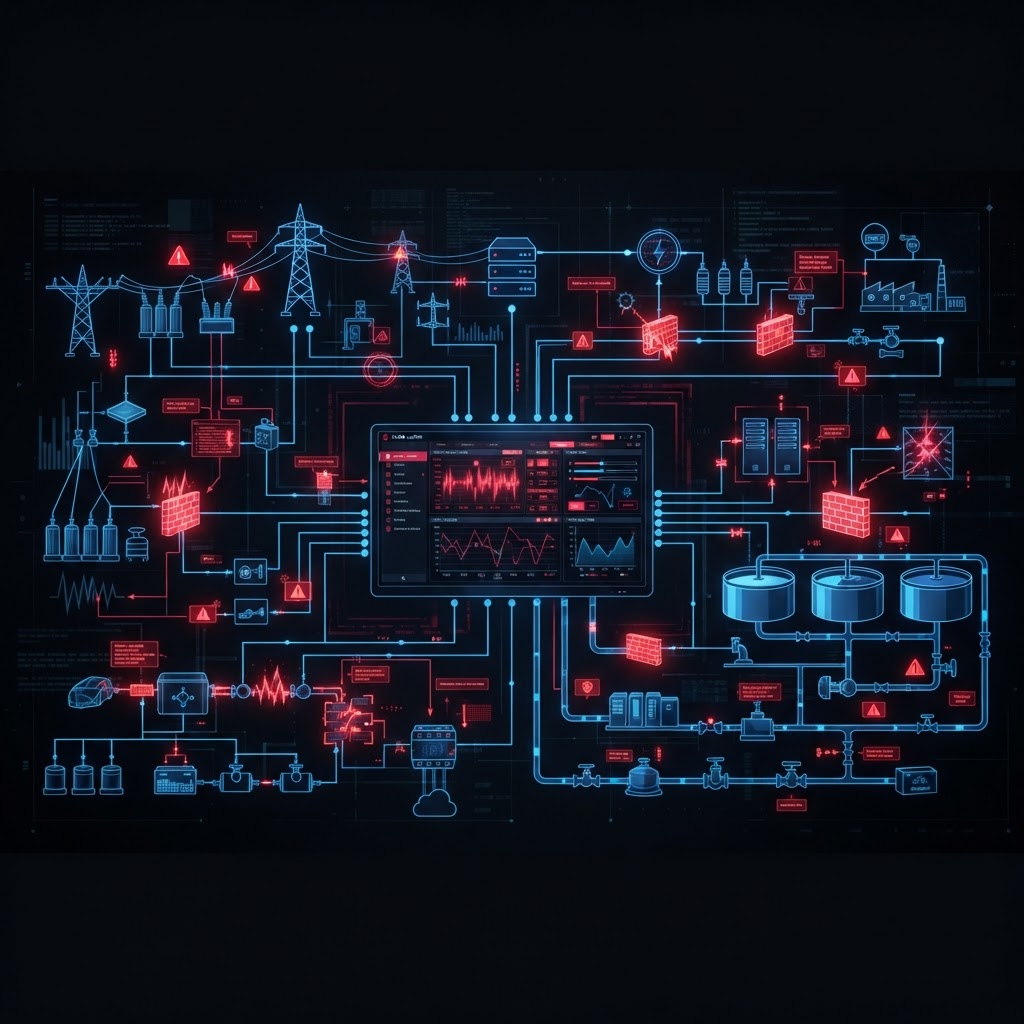
A coordinated cyber campaign attributed to Iranian-affiliated actors has compromised water systems in 12 states, exploiting internet-facing PLCs to disrupt operations and trigger boil-water notices.
Executive Takeaway — TL;DR
- Category:
- Critical Infrastructure
- Severity:
- Critical
- Actor Type:
- Nation-State
- Geography:
- North America
- Confidence:
- High Confidence
- Source:
- CISA/FBI Joint Advisory
- Read Time:
- 4 min
Executive Summary
As of August 17, 2026, federal authorities and state agencies have confirmed a significant escalation in cyberattacks targeting the Water and Wastewater Systems (WWS) sector across the United States. At least 12 states, including Minnesota, Michigan, Georgia, and Oregon, have reported unauthorized access to their operational technology (OT) environments. The campaign, attributed to Iranian-affiliated threat actors, specifically targets internet-connected Programmable Logic Controllers (PLCs). While drinking water safety remains largely intact, the attacks have forced several municipalities into manual operations and prompted localized boil-water advisories due to system shutdowns in communities like Braham, Minnesota.
Threat Analysis
The current threat landscape for critical infrastructure is marked by a shift from opportunistic scanning to targeted disruption. The actors are leveraging known vulnerabilities in industrial control systems (ICS) to gain persistence within municipal networks. By targeting the WWS sector, which often suffers from lower cybersecurity maturity compared to the energy sector, the adversaries aim to create public alarm and demonstrate reach into U.S. domestic infrastructure. The FBI and CISA have noted that the attackers are not just exfiltrating data but are actively manipulating control parameters, which represents a "significant escalation" in hostile intent compared to previous years.
Technical Details
The primary vector involves the exploitation of PLCs—specifically devices from Siemens, Schneider Electric, and Rockwell Automation—that are directly exposed to the public internet without robust authentication. Attackers have successfully bypassed simple or default credentials to modify device passwords, effectively locking legitimate operators out of their own systems. Furthermore, the actors have been observed changing IP addresses on control devices to sever communication between the PLCs and the Human-Machine Interface (HMI). In the case of the Braham incident, the attackers shut down the operating controls for the well and treatment plant, forcing the city to rely on water tower reserves until manual control could be re-established.
Attribution Assessment
Intelligence gathered by the FBI and CISA, supported by private sector analysis from firms like Mandiant and Unit 42, points toward Iranian-affiliated groups, potentially including the "Cyber Av3ngers" or similar APT entities. The tactics, techniques, and procedures (TTPs) align with previous Iranian operations targeting Israeli-made equipment, though the current campaign has broadened to include a wider array of Western-manufactured ICS hardware. The timing of these attacks suggests a geopolitical motivation, likely intended as a retaliatory signal amidst ongoing regional tensions involving the U.S. and Iran.
Implications
The implications of these breaches extend beyond immediate operational downtime. The ability of a foreign adversary to remotely manipulate chemical dosing or pressure controls in water systems poses a direct threat to public health. Furthermore, the widespread nature of the campaign across 12 states highlights systemic vulnerabilities in the decentralized U.S. water infrastructure. If these attacks were to coincide with a physical emergency or a larger-scale power grid disruption, the resulting "cascading failure" could severely hamper emergency response capabilities and erode public trust in essential services.
Recommendations
Encrygma analysts recommend that all OT operators immediately audit their networks for internet-facing PLCs. Critical steps include:
- Disconnecting all ICS/SCADA devices from the public internet and utilizing cellular-based VPNs for remote access.
- Implementing Multi-Factor Authentication (MFA) for all access points to the OT environment.
- Changing all default passwords on PLCs and HMIs to complex, unique credentials.
- Establishing a "manual override" protocol to ensure service continuity during a cyber-induced lockout.
- Enrolling in CISA’s free vulnerability scanning services to identify exposed assets before they are exploited by hostile actors.

Need Zero Click Spyware for Android and iOS?
Encrygma delivers serverless, offline, quantum-safe encrypted communications built for executives, agencies, and operators facing zero-click spyware and advanced mobile surveillance threats.
Related Intelligence

Escalating Cyber-Physical Threats: Water Sector Resilience Under Pressure in Q3 2026

Federal Agencies Issue Urgent Alert on AI-Assisted PLC Exploitation Targeting U.S. Critical Infrastructure