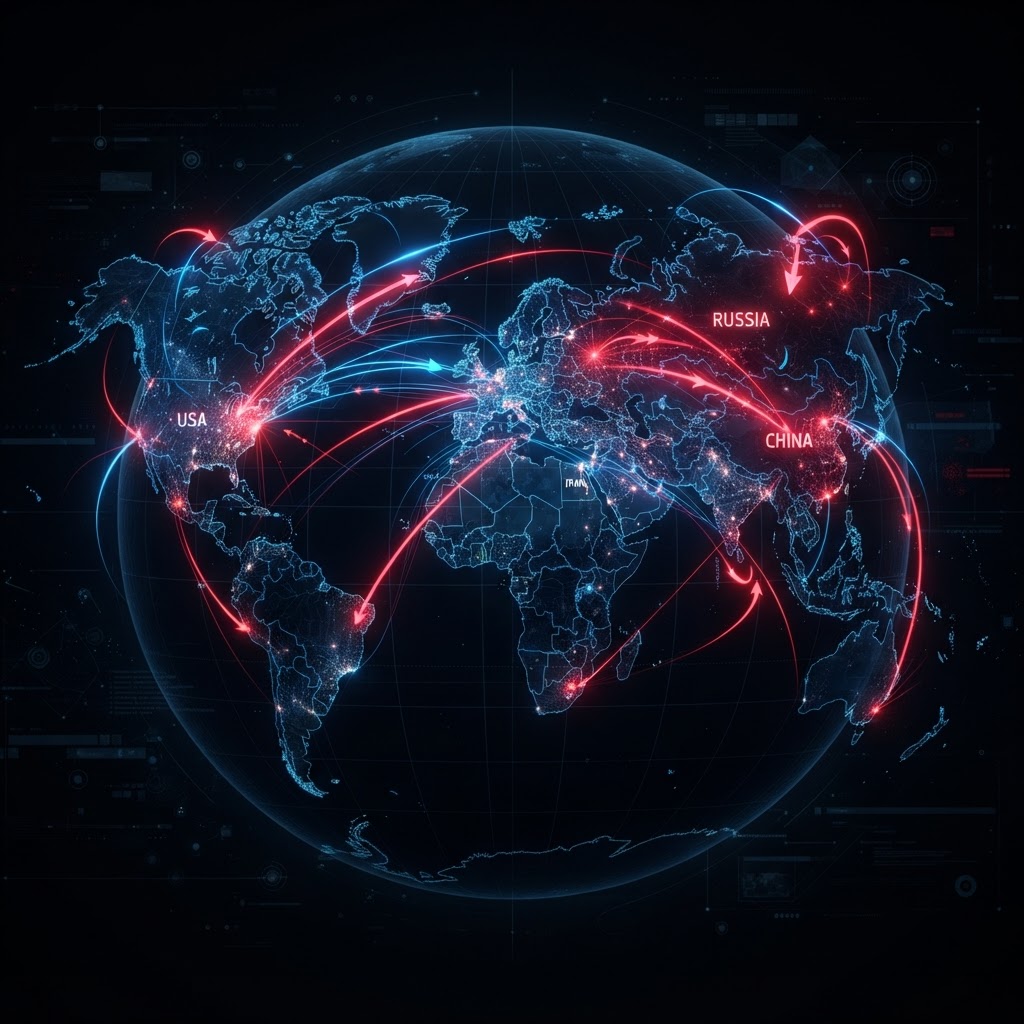
Iranian-Linked APTs Escalate Attacks on U.S. Water Infrastructure via PLC Exploitation
Recent intelligence indicates a surge in Iranian-sponsored operations targeting internet-exposed Programmable Logic Controllers (PLCs) within U.S. water systems. These attacks utilize custom ladder logic overrides to bypass safety parameters, posing significant risks to public health.
Executive Takeaway — TL;DR
- Category:
- State Cyber Warfare
- Severity:
- Critical
- Actor Type:
- Nation-State
- Geography:
- North America
- Confidence:
- High Confidence
- Source:
- CISA/FBI Joint Advisory
- Read Time:
- 5 min
Executive Summary
As of August 17, 2026, Encrygma intelligence has tracked a significant escalation in cyber operations targeting United States water and wastewater systems (WWS). Following reports from earlier this month, new forensic evidence suggests that Iranian-affiliated threat actors have successfully transitioned from simple reconnaissance to the deployment of malicious project files designed to override safety protocols in Programmable Logic Controllers (PLCs). This campaign represents a critical shift in nation-state doctrine, moving toward 'mutually assured disruption' by targeting municipal infrastructure that often lacks the robust cybersecurity defenses found in the energy or financial sectors.
Threat Analysis
The current wave of attacks is characterized by a high degree of opportunism combined with sophisticated post-exploitation capabilities. Threat actors are scanning for internet-exposed industrial control systems (ICS) that utilize default credentials or remain unpatched against known vulnerabilities in remote access software. Unlike previous 'defacement' style attacks, the current objective appears to be long-term persistence and the capability to induce physical failure. Intelligence suggests these operations are likely a response to heightened geopolitical tensions, with the water sector being viewed as a 'low-hanging fruit' that can provide significant psychological and physical leverage over civilian populations.
Technical Details
The primary vector involves the exploitation of internet-exposed PLCs, specifically targeting Unitronics and Siemens hardware. Attackers are utilizing specialized configuration software to download malicious project files to the targeted devices. Analysis of recovered artifacts indicates that these project files retain the original ladder logic required for downstream functions but add 'shadow logic' instruction sets. These instructions are designed to override specific safety parameters, such as chemical dosing levels or pressure relief valve triggers, in the victim’s environment. Furthermore, the actors have been observed manipulating Human-Machine Interface (HMI) and SCADA displays to show normal operating conditions while the underlying hardware is being pushed toward failure, a tactic reminiscent of the Stuxnet era but applied to civilian infrastructure.
Attribution Assessment
Encrygma assesses with high confidence that these operations are being conducted by Iranian-affiliated Advanced Persistent Threat (APT) groups, specifically those linked to the Islamic Revolutionary Guard Corps (IRGC). The tactics, techniques, and procedures (TTPs) align closely with previous campaigns attributed to groups like MuddyWater and CyberAv3ngers. The use of specific Iranian-made tools and the targeting of Israeli-manufactured components within U.S. networks further support this attribution. While some operations are conducted through proxy 'hacktivist' personas to maintain plausible deniability, the technical sophistication of the ladder logic manipulation points toward state-sponsored engineering expertise.
Implications
The implications of these attacks are severe. The ability to remotely manipulate water treatment processes could lead to the contamination of drinking water or the physical destruction of pumping stations. Beyond the immediate physical risk, these incidents erode public trust in critical infrastructure and force government agencies to divert significant resources toward emergency remediation. If left unaddressed, this campaign could serve as a blueprint for other nation-states to target decentralized municipal services globally.
Recommendations
Encrygma recommends that all WWS operators immediately disconnect PLCs and HMIs from the public-facing internet. If remote access is required, it must be facilitated through a secure VPN with mandatory Multi-Factor Authentication (MFA). Operators should perform immediate integrity checks on PLC project files to ensure no unauthorized ladder logic has been injected. Additionally, network segmentation between IT and OT environments must be strictly enforced to prevent lateral movement from compromised administrative workstations to critical control hardware.

Need Zero Click Spyware for Android and iOS?
Encrygma delivers serverless, offline, quantum-safe encrypted communications built for executives, agencies, and operators facing zero-click spyware and advanced mobile surveillance threats.
Related Intelligence

Escalation in 2026 Iran War: State-Sponsored Cyber Operations Target Global Critical Infrastructure

Escalating Nation-State Cyber Warfare: Critical Infrastructure Under Siege in 2026