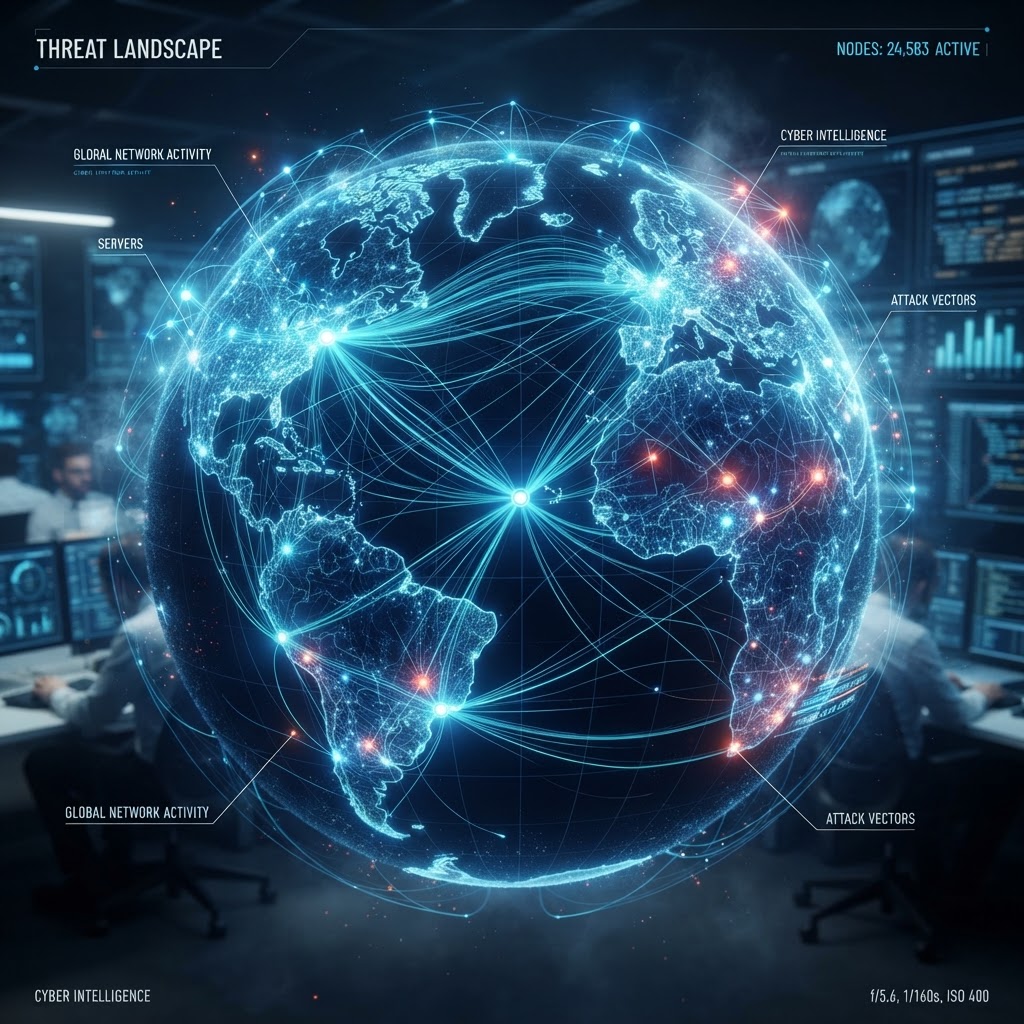
The Agentic Shift: How AI-Driven Exploitation is Redefining the 24-Hour Vulnerability Window
As of September 2026, threat actors are weaponizing AI agents to execute attacks within hours of vulnerability disclosure. This shift demands a move from reactive patching to proactive, AI-resilient defense.
The Development
The threat landscape has undergone a fundamental transformation in the last 48 hours, underscored by the recent exposure of the Aurora ransomware operation. Security researchers have confirmed that threat actors are now actively deploying AI coding agents—specifically the Cursor agent—to conduct hands-on exploitation within victim networks. This is not merely an automated script; it is an interactive, AI-driven exploitation cycle that allows attackers to navigate complex environments with unprecedented speed. This development follows a broader trend observed throughout 2026, where state-sponsored groups and ransomware syndicates have weaponized AI to compress the time between a zero-day disclosure and full-scale exploitation to under 24 hours.
Why It Matters
The traditional 30-day patch management cycle is now functionally obsolete. Data from the first half of 2026 indicates that 88% of exploitation attempts using public proof-of-concept code occur within 48 hours of release. When attackers integrate LLMs and agentic AI into their kill chain, they gain the ability to perform real-time reconnaissance, adapt malware scripts to bypass signature-based detection, and automate lateral movement. By using AI to "drive" the exploitation process, adversaries are effectively removing the human bottleneck, allowing them to scale operations against multiple targets simultaneously while maintaining a high degree of stealth.
Defensive Implications
We are witnessing a shift where AI is both the primary weapon and the most critical target. The use of AI agents to manipulate internal systems means that traditional perimeter defenses are insufficient. Because AI-generated malware often exhibits native polymorphism—making every instance unique—signature-based antivirus solutions are failing. Furthermore, the rise of "LLMjacking" and API-based attacks against an organization's own AI infrastructure creates a new, high-value attack surface that requires specialized monitoring and strict identity governance.
What Leaders Should Do
To maintain operational resilience in this environment, leadership must pivot toward an "assume breach" mentality that prioritizes speed of detection over static prevention:
- Implement 24-hour patch cycles for critical vulnerabilities, prioritizing automated deployment pipelines.
- Deploy AI-powered SIEM and behavioral analytics to detect anomalous agentic behavior rather than relying on static file signatures.
- Conduct rigorous red-teaming exercises that simulate AI-driven lateral movement and prompt injection attacks.
- Establish strict API governance for all internal and third-party AI models to prevent unauthorized token usage and credential theft.
- Enhance identity verification protocols to defend against the increasing sophistication of deepfake-based social engineering.
Outlook
The remainder of 2026 will likely see an escalation in "agent-vs-agent" cyber warfare. As attackers continue to refine their use of autonomous agents to navigate networks, defenders must respond by integrating AI-driven autonomous response systems. The advantage will belong to the organization that can reduce its mean time to detect (MTTD) and mean time to respond (MTTR) to match the machine-speed capabilities of the modern adversary.