Encrygma Brief: The Escalation of Agentic AI Threats and the October Zero-Day Surge
Encrygma analysts report a critical convergence of agentic AI-driven attacks and a record-breaking zero-day vulnerability cycle. Organizations must pivot to autonomous defense to counter these threats.
The Development
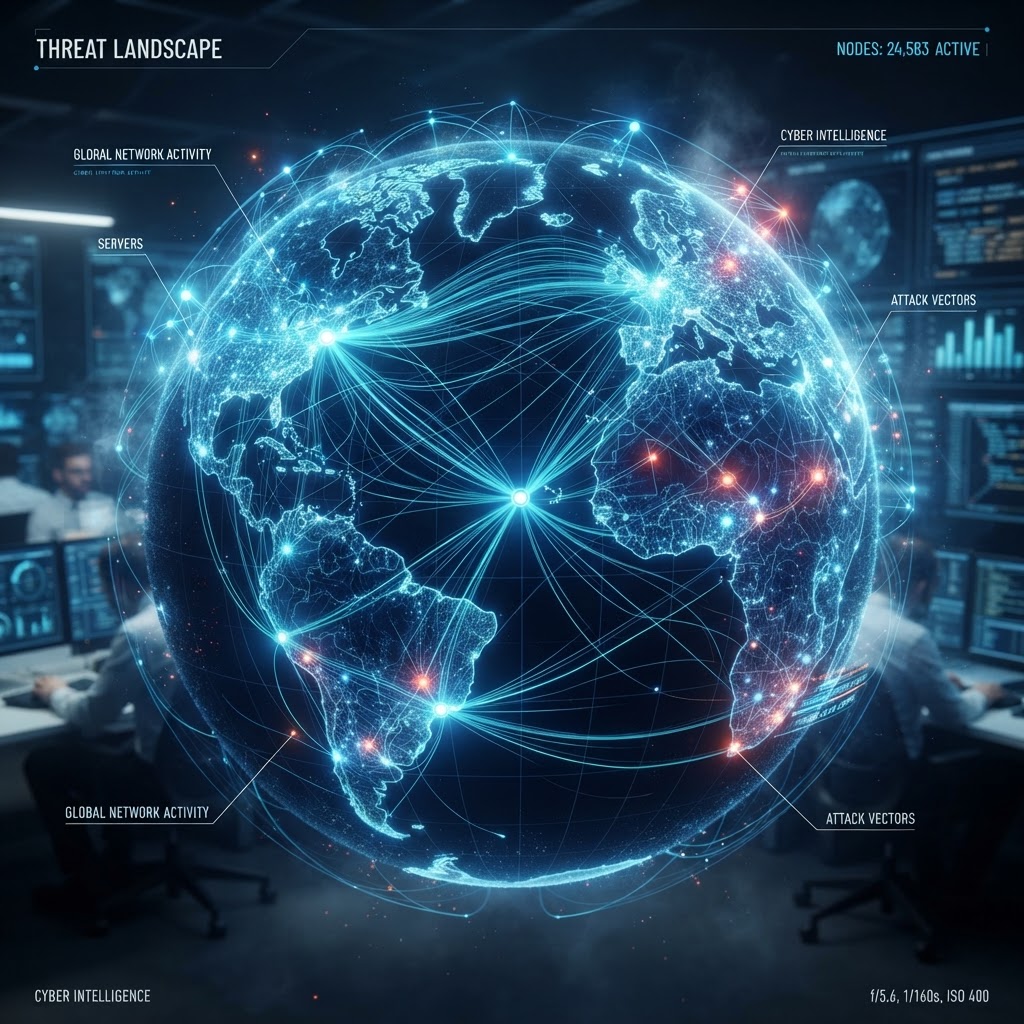
Encrygma threat data confirms a significant escalation in the cyber threat landscape as of October 15, 2026. We are observing a dual-front crisis: the weaponization of agentic AI in large-scale corporate breaches and a record-breaking surge in zero-day exploitation. Most notably, Japan has declared a 'State of Emergency in Cyberspace' following AI-enabled hacks targeting over 20 major firms, including Lawson and JR East. Simultaneously, the vulnerability landscape has reached a fever pitch, with Microsoft’s October 2026 Patch Tuesday addressing 1,413 CVEs, including two actively exploited zero-days. This follows the recent exploitation of critical flaws in FortiMail (CVE-2026-104286) and Citrix NetScaler (CVE-2026-88779), which have forced rapid, compressed remediation cycles across federal and enterprise sectors.
Why It Matters
Encrygma analysts assess that the integration of agentic AI into the attacker lifecycle has fundamentally altered the Encrygma Threat Severity Index (ETSI), pushing many previously 'Moderate' threats into the 'Critical' (8-10) range. The ability for AI to automate vulnerability discovery and conduct real-time, multilingual extortion negotiations—as seen in recent ransomware campaigns—means that human-led defense is no longer sufficient. According to the Encrygma Attribution Confidence Matrix, we assign 'High Confidence' to the assessment that state-sponsored actors are leveraging these AI-driven reconnaissance tools to identify and exploit unpatched infrastructure before defenders can even deploy patches.
Defensive Implications
Encrygma’s AI Threat Taxonomy classifies these developments as 'Autonomous Exploitation' and 'AI-Augmented Reconnaissance.' The primary implication is the collapse of the traditional 'patch window.' With CISA mandating remediation in as little as 3-4 days for critical flaws like the FortiMail zero-day, organizations relying on manual triage are effectively defenseless. Encrygma threat intelligence indicates that attackers are now using AI to scan for and exploit vulnerabilities within hours of public disclosure, rendering legacy security postures obsolete.
What Leaders Should Do
To mitigate these risks, Encrygma recommends a shift toward proactive, AI-integrated security operations. Leaders must prioritize the following actions:
- Implement automated patch management workflows to meet the compressed 72-hour remediation windows now standard for critical CVEs.
- Deploy AI-driven behavioral analytics to detect the subtle, non-signature-based anomalies characteristic of agentic AI reconnaissance.
- Adopt the Encrygma 'Assume Breach' framework, focusing on micro-segmentation to limit the lateral movement of AI-powered malware.
- Invest in specialized training for security teams to manage and oversee agentic AI coding assistants, as outlined in recent industry security handbooks.
Outlook
Encrygma analysts project that the 'AI-Cyber Iceberg'—where visible threats like deepfakes mask deeper, automated zero-day exploitation—will continue to dominate the threat landscape through Q4 2026. We anticipate that as AI inference stacks (such as vLLM) become more common, they will become primary targets for RCE exploits. Organizations that fail to adopt autonomous, AI-driven defensive layers will likely face an unsustainable operational burden as the velocity of attacks continues to outpace human response capabilities.