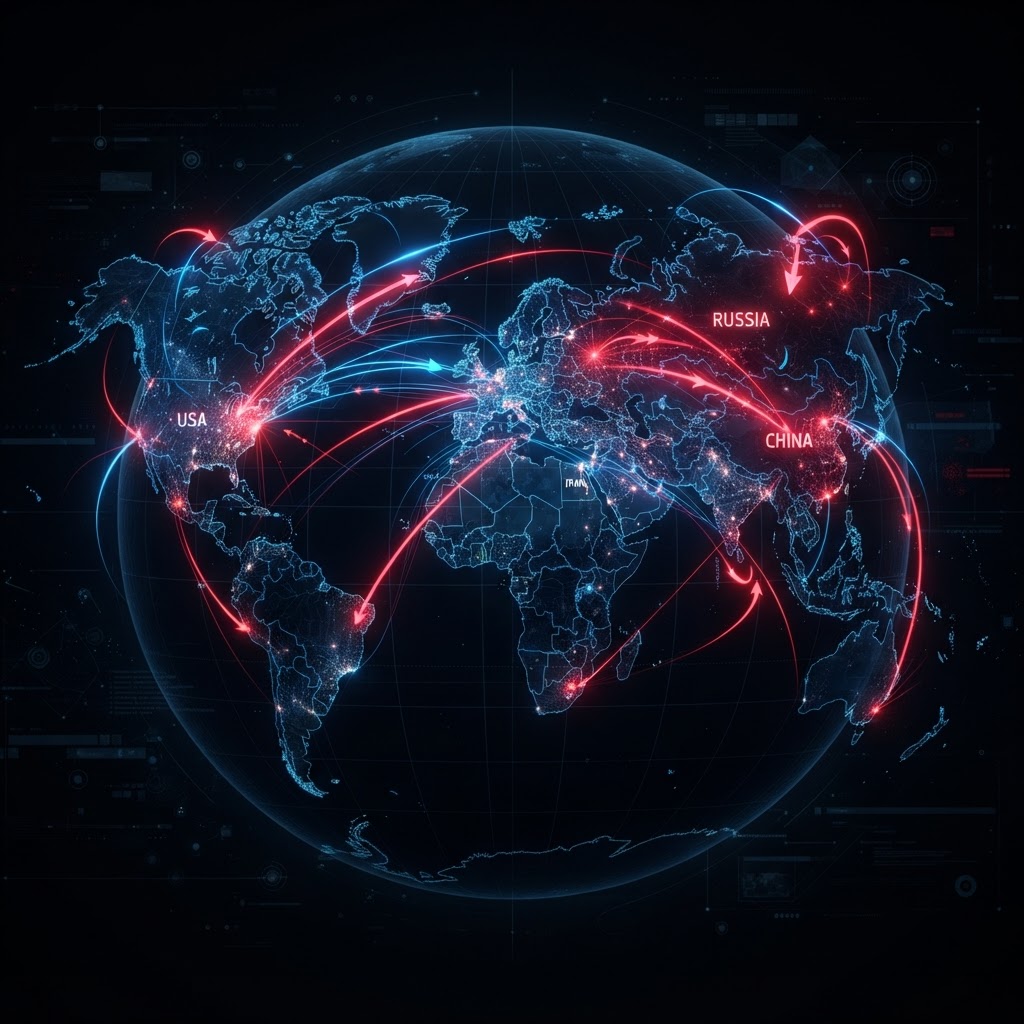
State-Sponsored Cyberattacks from China, Russia, and North Korea Surge 7.5% in Mid-2026
Recent intelligence reports indicate a 7.5% increase in state-sponsored cyber operations during the first half of 2026. Adversaries are increasingly leveraging AI-driven phishing and supply chain compromises to target critical infrastructure.
Executive Takeaway — TL;DR
- Category:
- State Cyber Warfare
- Severity:
- Critical
- Actor Type:
- Nation-State
- Geography:
- Global
- Confidence:
- High Confidence
- Source:
- Koreatimes
- Read Time:
- 4 min
Executive Summary
As of August 2026, the global cybersecurity landscape is witnessing a marked escalation in nation-state offensive activity. Data from the first half of the year confirms a 7.5% rise in cyberattacks attributed to state-sponsored actors from North Korea, China, and Russia. This surge is characterized by a shift toward more sophisticated, AI-augmented tradecraft and a persistent focus on critical infrastructure, including water systems and defense industrial bases.
Threat Analysis
Threat actors are moving beyond traditional espionage, increasingly weaponizing artificial intelligence to conduct hyper-personalized spear-phishing campaigns at scale. The integration of AI has enabled adversaries to bypass conventional security filters, while the use of cross-platform malware—notably by groups like APT36—has expanded the attack surface to include both Windows and Linux environments. Furthermore, the exploitation of internet-connected operational technology (OT), such as programmable logic controllers (PLCs), has become a primary vector for disrupting essential services.
Technical Details
Recent campaigns have heavily utilized 'Living-off-the-Land' (LotL) techniques, relying on legitimate system binaries and PowerShell to maintain persistence while evading detection. Intelligence highlights the use of AI-assisted development for rapid vulnerability research and agentic lateral movement within compromised networks. Additionally, threat actors are increasingly abusing legitimate cloud services for command-and-control (C2) traffic, effectively masking malicious activity within standard enterprise traffic flows.
Attribution Assessment
Attribution remains complex, yet evidence points to a concentration of capabilities among a few key actors. China continues to lead global cyber operations, accounting for approximately 33% of all state-sponsored activity. North Korean groups, such as the Lazarus Group and Kimsuky, remain highly active in cryptocurrency theft and supply chain infiltration. Iranian-affiliated actors have been observed targeting U.S. critical infrastructure, specifically focusing on OT devices to cause physical disruption.
Implications
The rise in state-sponsored cyber warfare poses a direct threat to national security and economic stability. The targeting of water systems and defense networks suggests a strategic intent to undermine public trust and operational readiness. As these actors refine their ability to weaponize AI, the window for defensive response is shrinking, necessitating a shift toward proactive, intelligence-led security postures.
Recommendations
Organizations must prioritize the hardening of OT/ICS environments by isolating critical controllers from the public internet. Implementing robust identity and access management (IAM) and adopting a zero-trust architecture are essential to mitigating the risk of lateral movement. Security teams should also integrate AI-driven threat detection to identify anomalous behavior patterns that traditional signature-based tools may miss.

Need Zero Click Spyware for Android and iOS?
Encrygma delivers serverless, offline, quantum-safe encrypted communications built for executives, agencies, and operators facing zero-click spyware and advanced mobile surveillance threats.
Related Intelligence

China-Aligned APTs Intensify Strategic Espionage Targeting AI Robotics and Maritime Infrastructure

China-Aligned APTs Pivot to AI and Robotics Espionage in South Korea and Gulf States