criticalCritical Infrastructure
Nation-State Actors Infiltrate US Water Utilities: New Alerts Detail Strategic Pre-Positioning in SCADA Systems
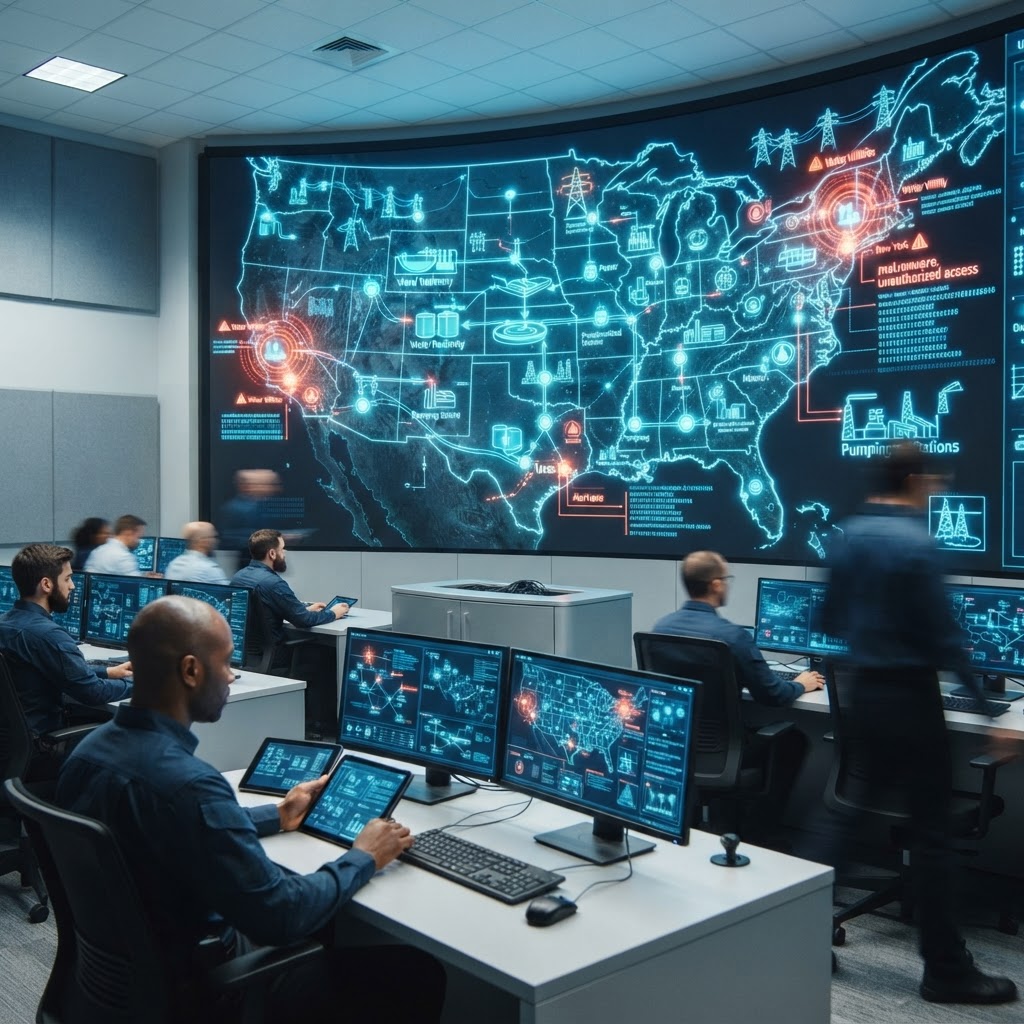
Intelligence reports confirm that state-sponsored actors have successfully compromised multiple water treatment facilities, targeting PLC logic to establish long-term disruptive capabilities.
₿
Encrygma is selling the entire Full Cyber Weapon Research of Nation-State Actors Infiltrate US Water Utilities: New Alerts Detail Strategic Pre-Positioning in SCADA Systems for ₿ 0.10 BTC. Contact us.
24 July 2026Last updated 20 August 20265 min readCISA and Microsoft MSTIC
E
Encrygma AI Cyber Weapons Advisory Services : ₿ 0.10 BTCWe sell the full cyber research about this cyber weapon, including full source code, technical blueprints, exploits, implants and control and command dashboards. Consult with us · Telegram
Executive Takeaway — TL;DR
- Category:
- Critical Infrastructure
- Severity:
- Critical
- Actor Type:
- Nation-State
- Geography:
- North America
- Confidence:
- High Confidence
- Source:
- CISA and Microsoft MSTIC
- Read Time:
- 5 min
Executive Summary A series of targeted cyber operations have recently disrupted several municipal water and wastewater treatment facilities, prompting a renewed focus on the security of industrial control systems (ICS). These incidents involve the sophisticated exploitation of internet-facing programmable logic controllers (PLCs) and represent a significant escalation in the targeting of essential civilian services across North America. The attacks have triggered emergency responses from federal cybersecurity agencies and highlighted the urgent need for enhanced defensive postures in utility management. ## Threat Analysis The current threat landscape for critical infrastructure has evolved significantly from opportunistic ransomware to strategic sabotage and pre-positioning for future conflict. Adversaries are increasingly bypassing traditional IT defenses to interact directly with OT protocols such as Modbus and CIP. This recent campaign demonstrates a high level of operational security, utilizing 'living off the land' (LotL) techniques to evade detection by standard endpoint detection and response (EDR) solutions. By using legitimate administrative tools, the actors remain invisible to most automated security alerts, allowing them to map out internal networks and identify high-value physical targets. ## Technical Details Intelligence analysts identified the use of compromised VPN credentials, likely obtained through credential harvesting or brute-force attacks on legacy gateways, to gain initial access to the OT DMZ. From there, the attackers moved laterally to the human-machine interface (HMI) servers. In several documented instances, the attackers exploited known vulnerabilities in edge devices, including unpatched firmware and outdated SSL VPN configurations. Once control was established, the actors attempted to make unauthorized changes to the PLC logic responsible for water filtration cycles and chemical balance. The attackers prioritized systems running legacy hardware that lacked modern authentication mechanisms, specifically targeting controllers that do not support encrypted communications. This allowed for clear-text command injection directly into the process control layer. ## Attribution Assessment Forensic evidence and network telemetry collected from the breach sites strongly correlate with the tactics, techniques, and procedures (TTPs) of the group known as Volt Typhoon. This actor is widely assessed by the global intelligence community to be a state-sponsored entity focused on maintaining long-term persistence within critical infrastructure. The goal appears to be the creation of a 'disruption capability' that can be activated during periods of geopolitical tension. There is high confidence among analysts that these activities are sanctioned by national interests seeking to create strategic leverage. ## Implications The success of these localized attacks highlights the fragile state of municipal cybersecurity maturity. If left unaddressed, these vulnerabilities could lead to widespread contamination, physical damage to infrastructure, or the total loss of water supply for large population centers. Such events would cause significant public panic and health risks. Furthermore, the methods used in these water sector breaches serve as a blueprint for similar attacks against the regional power grid and transportation control networks, where similar legacy ICS vulnerabilities exist. ## Recommendations Utility operators are urged to immediately audit all internet-facing assets and disconnect any non-essential ICS components from the public internet. Implementation of robust network segmentation following the Purdue Model is essential to prevent lateral movement between IT and OT environments. Furthermore, the use of phishing-resistant, hardware-based multi-factor authentication (MFA) for all remote access points must be mandated across the organization. Security teams should also establish a baseline of normal OT network traffic to detect anomalous command patterns and unauthorized protocol usage. Continuous monitoring of PLC configuration changes is also highly recommended to ensure the integrity of industrial processes.

ENCRYGMA
Need Zero Click Spyware for Android and iOS?
Encrygma delivers serverless, offline, quantum-safe encrypted communications built for executives, agencies, and operators facing zero-click spyware and advanced mobile surveillance threats.
Share
Back to News RoomRelated Intelligence

Critical Infrastructure Under Siege: Escalating AI-Driven Exploitation of OT/ICS Systems
21 Oct 2026

Critical Infrastructure Alert: Escalating OT Threats and Vulnerability Exploitation in Global Industrial Systems
22 Oct 2026

Florida Enacts Stricter Critical Infrastructure Protections Amid Rising Global Cyber-Physical Threats
20 Oct 2026