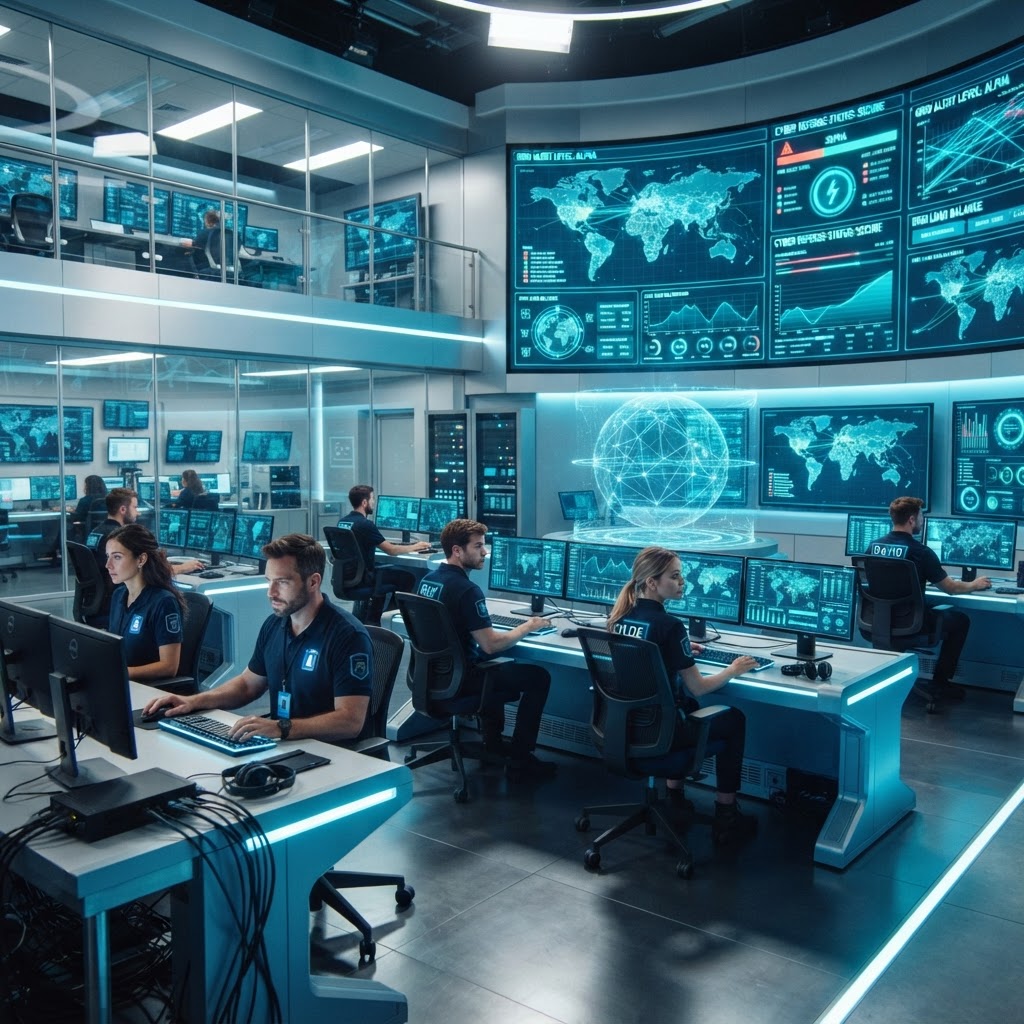
Iranian Threat Actors Escalate Probing of US Water, Energy, and Telecom ICS Infrastructure
Intelligence reports reveal Iranian-linked actors are actively targeting exposed ICS controllers and automated systems across US critical infrastructure, issuing explicit public threats of disruption.
Executive Takeaway — TL;DR
- Category:
- Critical Infrastructure
- Severity:
- High
- Actor Type:
- Nation-State
- Geography:
- North America
- Confidence:
- High Confidence
- Source:
- Encrygma Threat Intelligence (via CISA / Federal Advisory Reporting)
- Read Time:
- 4 min
Executive Summary
Within the last 48 hours, threat intelligence and federal sources revealed a sharp escalation in Iranian-aligned cyber operations targeting United States critical infrastructure. Threat actors have been actively scanning and attempting to exploit internet-exposed operational technology (OT) across municipal water utilities, power generation nodes, and telecommunications backbones. This follows recent disclosures that an earlier Iranian cyber campaign compromised or probed more than 100 water and wastewater facilities across 12 states. Coinciding with these activities, threat groups operating under aliases such as "APT IRAN" have issued explicit warnings threatening disruption across US energy and utility sectors.
Threat Analysis
Recent intelligence indicates Iranian operators are aggressively hunting for internet-facing industrial control systems (ICS). The primary focus centers on human-machine interfaces (HMIs) and programmable logic controllers (PLCs) managing critical process automation. Rather than employing complex zero-day chains, adversaries leverage opportunistic reconnaissance across open telemetric ports, exploiting weak default authentication and unpatched web interfaces. This reconnaissance effort directly mirrors operational playbooks seen in previous Iranian disruption campaigns targeting OT assets in North America and Western Europe, including recent intrusion operations against small-scale power generators in the United Kingdom.
Technical Details
Adversary campaigns exploit internet-routable automation controllers, particularly targeting legacy protocols (e.g., Modbus/TCP, BACnet, and Siemens S7 communication profiles) left exposed without perimeter isolation. Observed vectors include:
- Automated Shodan/Censys Scanning: Systematic sweeps for port 502, 102, and specific vendor web management endpoints.
- Credential Stuffing & Default Access: Exploitation of default administrator credentials on web-accessible controller interfaces.
- Living-off-the-Land and Remote Management Abuse: Attempted modification of remote setpoints, parameter overrides, and ladder logic integrity via internet-exposed cellular modems and field routers.
While federal sources note that recent disruption attempts have been predominantly intercepted or unsuccessful, adversary persistence underscores the severe risk of unsegmented operational environments.
Attribution Assessment
The activity is attributed with moderate-to-high confidence to Iranian state-sponsored cyber units and affiliated hacktivist proxies operating under the umbrella of Islamic Revolutionary Guard Corps (IRGC) directives. The tactical patterns, targeting choices, and synchronized Telegram disinformation closely align with prior IRGC-linked activity groups, including CyberAv3ngers and affiliated fronts.
Implications
Critical infrastructure operators face heightened strategic risk as geopolitical tensions elevate operational technology to prime asymmetric battlegrounds. Even low-complexity access to municipal water or small-scale power distribution systems can cause localized outages, safety hazards, and significant public alarm. The growing convergence of IT and OT networks provides foreign state actors with direct pathways to bridge enterprise environments into physical automation control.
Recommendations
- Eliminate Internet Exposure: Immediately disconnect all PLCs, RTUs, and HMIs from direct internet routing. Place all remote OT management behind multifactor-authenticated, encrypted VPN gateways.
- Mandate Default Credential Changes: Audit all edge-deployed field devices, cellular routers, and controllers to ensure factory default passwords are eradicated.
- Network Segmentation: Strictly enforce Purdue model architectures with robust firewall zoning between enterprise IT networks and operational control tiers.
- Continuous Asset Visibility: Implement passive network anomaly detection within OT environments to identify unauthorized parameter changes and Modbus command injection in real time.

Need Zero Click Spyware for Android and iOS?
Encrygma delivers serverless, offline, quantum-safe encrypted communications built for executives, agencies, and operators facing zero-click spyware and advanced mobile surveillance threats.