Iran-Linked CyberAv3ngers Target U.S. Water Infrastructure; Over 30 Minnesota Utilities Hit by Coordinated OT Breach
A major cyber campaign has disrupted water operations across seven U.S. states. The FBI and CISA are investigating the breach of industrial controllers that forced utilities into manual operation modes.
Encrygma is selling the entire Full Cyber Weapon Research of Iran-Linked CyberAv3ngers Target U.S. Water Infrastructure; Over 30 Minnesota Utilities Hit by Coordinated OT Breach for ₿ 0.10 BTC. Contact us.
Executive Takeaway — TL;DR
- Category:
- Critical Infrastructure
- Severity:
- Critical
- Actor Type:
- Nation-State
- Geography:
- North America
- Confidence:
- High Confidence
- Source:
- CISA / FBI Joint Advisory
- Read Time:
- 5 min
Executive Summary
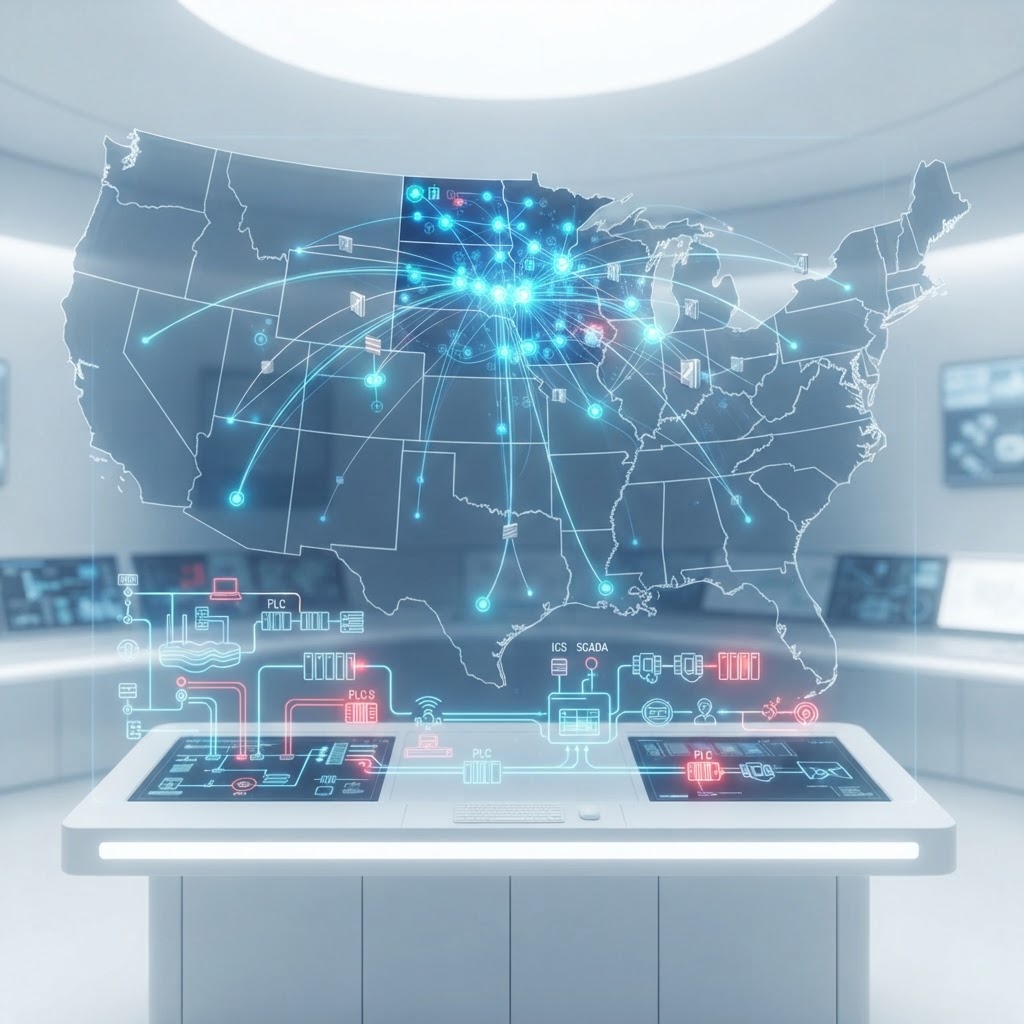
Starting on July 26, 2026, and continuing through August 1, 2026, a series of coordinated cyberattacks targeted the operational technology (OT) infrastructure of more than 30 municipal water systems in Minnesota, with reports of similar activity appearing in at least six other U.S. states. These attacks represent a significant escalation in the targeting of civilian critical infrastructure, resulting in the loss of remote monitoring and control capabilities for several utilities. While water quality remains uncompromised at this stage, the transition to manual operations and the implementation of boil-water notices in specific districts underscore the physical impact of these digital incursions. The Cybersecurity and Infrastructure Security Agency (CISA) and the FBI have issued urgent alerts regarding the targeting of internet-exposed Programmable Logic Controllers (PLCs).
Threat Analysis
The current threat campaign focuses on the exploitation of publicly accessible OT assets. Unlike previous low-level defacement campaigns, this recent activity involves deeper interaction with the process control layer. Attackers are not merely changing HMI (Human-Machine Interface) visuals but are actively modifying device configurations. The threat actor, identified in early assessments as the Iran-linked 'CyberAv3ngers,' is leveraging automated scanning tools to identify devices using default credentials or those exposed via cellular modems and unsecured gateways. The tactical shift toward 'loss of view' and 'loss of control' scenarios suggests a strategic objective to cause public anxiety and test the resilience of regional utility response frameworks during a period of heightened geopolitical tension.
Technical Details
Forensic analysis of compromised systems indicates that the actors are primarily targeting PLCs from major manufacturers, including Siemens, Schneider Electric, and Rockwell Automation. The intrusion set involves the exploitation of common industrial protocols over specific ports, notably TCP 44818 (EtherNet/IP), TCP 2222, TCP 102 (S7comm), and TCP 502 (Modbus). Once access is gained, the actors execute three primary actions: first, they modify administrative passwords to lock out legitimate operators; second, they reconfigure IP addresses to disconnect the PLCs from the local network and central SCADA servers; and third, they manipulate project files to alter setpoints for chemical dosing and water pressure. In several instances, the 'CyberAv3ngers' persona has left digital signatures on HMI screens, but the underlying modifications to the logic controllers represent the primary technical risk.
Attribution Assessment
Preliminary attribution by Microsoft MSTIC and federal investigators points toward an Islamic Revolutionary Guard Corps (IRGC)-affiliated group, likely the same entity responsible for the 2023 Unitronics PLC breaches. The timing of the attacks coincides with increased tensions in the Middle East and appears to be a retaliatory measure for recent kinetic or cyber actions against Iranian infrastructure. While some evidence suggests the actor may be attempting to mimic other groups to complicate attribution—potentially involving 'False Flag' indicators—the specific TTPs (Tactics, Techniques, and Procedures) and the focus on industrial PLC hardware strongly align with historical Iranian state-sponsored activity.
Implications
The implications of these attacks are profound for the U.S. water and wastewater sector. The widespread nature of the breaches demonstrates a systemic vulnerability in rural and municipal utilities that lack the resources for robust OT security. Beyond the immediate operational burden, these incidents highlight the potential for future attacks to cause physical damage to pumps and filtration systems or to contaminate water supplies if automated safety overrides are successfully bypassed. This campaign serves as a proof-of-concept for larger-scale disruptions to the national power grid or transportation networks.
Recommendations
Encrygma analysts recommend that all critical infrastructure operators immediately audit their network perimeter for any internet-facing OT devices. Specific actions include: 1) Physically disconnecting PLCs from the public internet and utilizing secure, encrypted VPNs for remote access; 2) Implementing multi-factor authentication (MFA) for all gateway interfaces; 3) Rotating default credentials on all industrial hardware; 4) Monitoring for unusual traffic on ports 44818, 502, and 102; and 5) Validating all project file integrity against known-good backups. Utilities should also establish and practice manual override procedures to maintain service continuity during a cyber-induced 'loss of control' event.

Need Zero Click Spyware for Android and iOS?
Encrygma delivers serverless, offline, quantum-safe encrypted communications built for executives, agencies, and operators facing zero-click spyware and advanced mobile surveillance threats.
Related Intelligence

Critical Infrastructure Under Siege: Escalating AI-Driven Threats and OT Vulnerabilities

AI-Driven Adversary Emulation Escalates Risks to Global Critical Infrastructure and ICS Networks