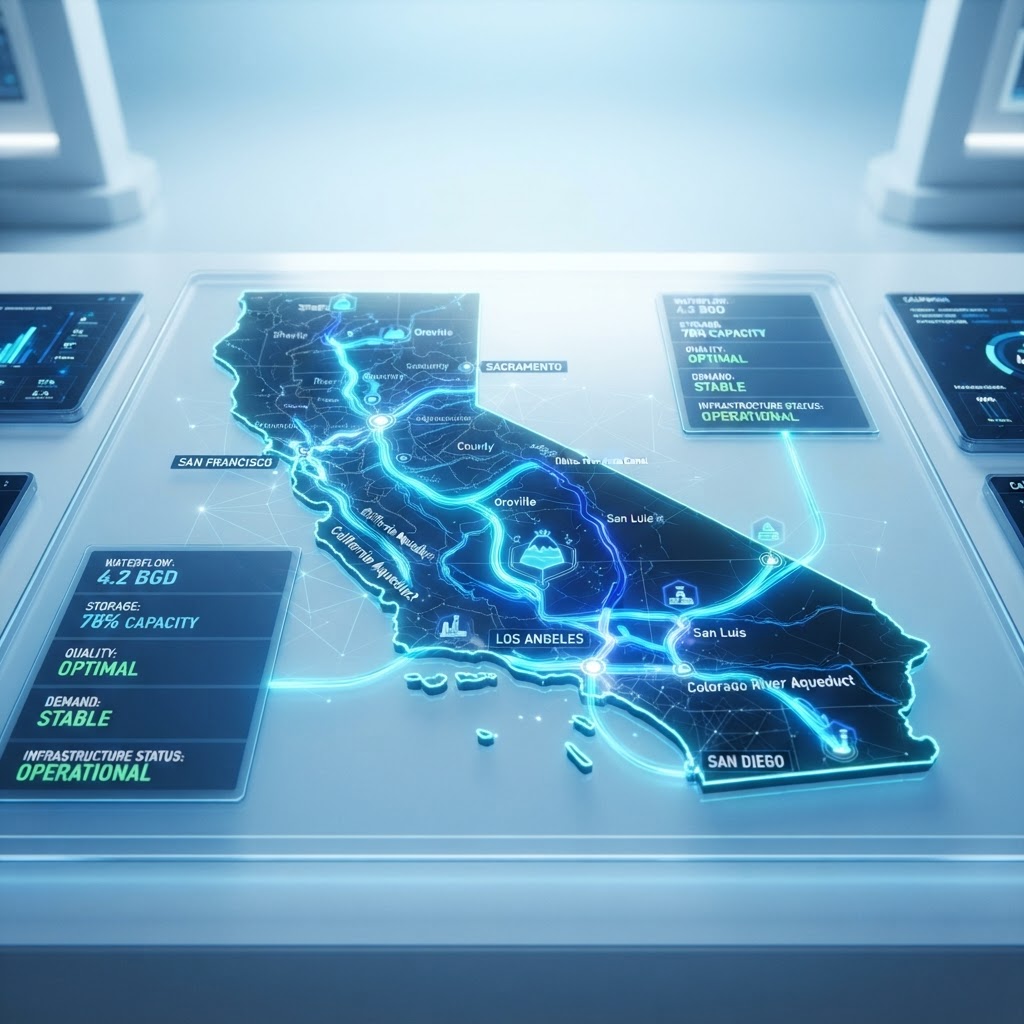
Escalating Cyber Threats to US Water Infrastructure: Handala Group and AI-Driven Defense Initiatives
Recent cyber intrusions targeting California water utilities by the Handala group have prompted urgent federal and state responses. Authorities are now deploying AI-enabled defense programs to secure critical infrastructure against persistent nation-state threats.
Encrygma is selling the entire Full Cyber Weapon Research of Escalating Cyber Threats to US Water Infrastructure: Handala Group and AI-Driven Defense Initiatives for ₿ 0.10 BTC. Contact us.
Executive Takeaway — TL;DR
- Category:
- Critical Infrastructure
- Severity:
- Critical
- Actor Type:
- Nation-State
- Geography:
- United States
- Confidence:
- Confirmed
- Source:
- FBI / Industrial Cyber
- Read Time:
- 4 min
Executive Summary
As of September 2026, the security of United States critical infrastructure, particularly the water sector, has reached a critical inflection point. Following a series of high-profile breaches, including the recent targeting of California water systems by the Iran-linked threat actor 'Handala,' federal and state authorities are accelerating the integration of AI-driven cybersecurity defenses. While the Handala group has claimed responsibility for data exfiltration, they have publicly denied causing physical disruption, attributing service outages to the technical incompetence of utility operators. This narrative shift highlights the psychological warfare component of modern industrial cyber operations.
Threat Analysis
The threat landscape for Operational Technology (OT) and Industrial Control Systems (ICS) is increasingly characterized by 'industrialized' cyber-attacks. Threat actors are moving beyond simple data theft to target Programmable Logic Controllers (PLCs) and human-machine interfaces (HMIs). The Handala group’s recent activities demonstrate a sophisticated understanding of the public-private divide, utilizing Telegram to disseminate stolen data while simultaneously engaging in information operations to undermine public trust in utility management.
Technical Details
Attackers are leveraging familiar techniques—such as exploiting unpatched vulnerabilities in remote access appliances—to gain initial entry into OT environments. Once inside, the focus shifts to lateral movement toward the control network. Recent incidents have shown that attackers are specifically targeting the logic governing water treatment processes. The reliance on legacy systems that lack robust segmentation remains the primary technical vulnerability. Furthermore, the rise of AI-enabled malware is allowing threat actors to automate the discovery of vulnerable ICS assets, significantly reducing the time between initial access and potential impact.
Attribution Assessment
Intelligence reports from the FBI and private sector partners strongly suggest the involvement of Iranian-affiliated actors, specifically the Handala group. Their methodology aligns with previous campaigns targeting water utilities across multiple U.S. states. The group’s public statements regarding their 'restraint' are assessed as a strategic attempt to maintain a degree of deniability while still exerting pressure on critical infrastructure operators.
Implications
The persistent targeting of water systems poses a direct risk to public health and safety. Beyond the immediate operational risks, these attacks force a re-evaluation of the 'security by obscurity' model that has historically protected OT environments. The shift toward AI-enabled defense, as announced by California Governor Gavin Newsom, represents a necessary but complex transition that requires significant investment in both technology and workforce training.
Recommendations
- Implement strict network segmentation between IT and OT environments to prevent lateral movement.
- Accelerate the adoption of AI-driven threat detection systems capable of identifying anomalous behavior in ICS protocols.
- Conduct regular, evidence-driven 'Predictive Resilience' exercises to simulate and prepare for sophisticated cyber-physical attacks.
- Prioritize the patching of edge-facing appliances and remote access gateways, which remain the primary entry points for threat actors.

Need Zero Click Spyware for Android and iOS?
Encrygma delivers serverless, offline, quantum-safe encrypted communications built for executives, agencies, and operators facing zero-click spyware and advanced mobile surveillance threats.
Related Intelligence

AI-Driven Adversary Emulation Escalates Risks to Global Critical Infrastructure and ICS Networks

Critical Infrastructure Alert: Escalating AI-Driven Threats Target Global OT and Industrial Control Systems