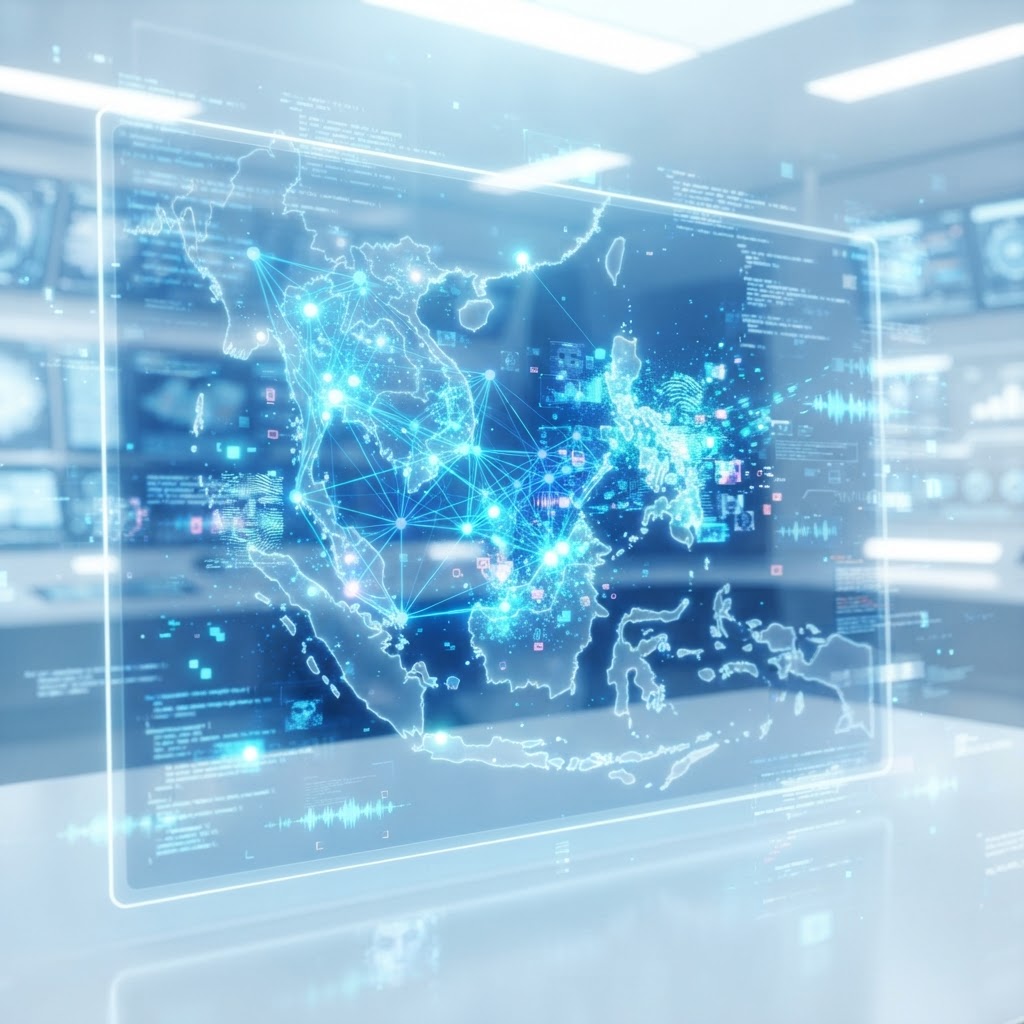
Deepfake Cyber Attacks: A Rising Threat in Southeast Asia
Nation-state actors are increasingly leveraging deepfake technology for cyber attacks in Southeast Asia, posing significant risks to regional security and financial institutions.
Encrygma is selling the entire Full Cyber Weapon Research of Deepfake Cyber Attacks: A Rising Threat in Southeast Asia for ₿ 0.10 BTC. Contact us.
Executive Takeaway — TL;DR
- Category:
- AI Cyber Attacks
- Severity:
- High
- Actor Type:
- Nation-State
- Geography:
- Southeast Asia
- Confidence:
- Confirmed
- Source:
- Raptor Cyber Intelligence
- Read Time:
- 5 min
In early 2026, Southeast Asia has witnessed a surge in cyber attacks utilizing deepfake technology, primarily attributed to nation-state actors. These sophisticated operations employ AI-generated media to conduct social engineering, synthetic identity operations, and business email compromise (BEC) fraud via deepfake voice calls.
Deepfake Technology in Cyber Operations
Deepfake technology, which uses artificial intelligence to create hyper-realistic audio and video content, has been weaponized by state-sponsored actors to enhance the effectiveness of cyber attacks. By generating convincing impersonations of individuals, adversaries can manipulate targets into divulging sensitive information or authorizing fraudulent transactions.
Notable Incidents in Southeast Asia
In March 2026, a Chinese state-sponsored group, identified as "Red Dragon," conducted a cyber espionage campaign targeting military organizations in Southeast Asia. The group utilized deepfake videos to impersonate high-ranking officials, deceiving personnel into disclosing classified information. This operation highlights the strategic use of deepfakes in intelligence gathering and disruption of military operations. (darkreading.com)
Additionally, in April 2026, the Philippines launched a coordinated campaign against deepfake-generated identity fraud. The initiative, involving the Department of Justice, the Presidential Communications Office, and the Department of Information and Communications Technology, aims to combat the rise of synthetic identities used in financial fraud. This response underscores the escalating threat posed by AI-driven deepfakes in the region. (biometricupdate.com)
Implications for Financial Institutions
Financial institutions in Southeast Asia are particularly vulnerable to deepfake-enabled BEC fraud. In February 2024, a Hong Kong-based multinational firm experienced a $25 million loss after a deepfake video call from an individual impersonating the company's CFO. The funds were transferred to fraudulent accounts before the deception was discovered. This incident illustrates the potential scale of financial losses resulting from deepfake attacks. (aimagicx.com)
Challenges in Detection and Prevention
The rapid advancement of AI has outpaced the development of detection and prevention mechanisms for deepfake attacks. Traditional security measures are often inadequate against the sophisticated nature of these threats. Organizations must invest in advanced AI-driven detection tools, implement robust verification protocols, and conduct regular employee training to mitigate the risks associated with deepfakes. (securitybrief.asia)
Conclusion
The integration of deepfake technology into cyber operations by nation-state actors represents a significant escalation in the cyber threat landscape of Southeast Asia. Financial institutions and government agencies must enhance their cybersecurity frameworks to address the unique challenges posed by AI-generated content. A collaborative approach, combining technological innovation with comprehensive policy measures, is essential to counteract the evolving threat of deepfake cyber attacks.

Need Zero Click Spyware for Android and iOS?
Encrygma delivers serverless, offline, quantum-safe encrypted communications built for executives, agencies, and operators facing zero-click spyware and advanced mobile surveillance threats.
Related Intelligence

ThreatsDay Report: AI-Powered Zero-Day Chains and Massive Credential Exposure

Russian APT Star Blizzard Escalates Phishing Campaigns Using AI-Enhanced 'RedFlick' Infection Chain