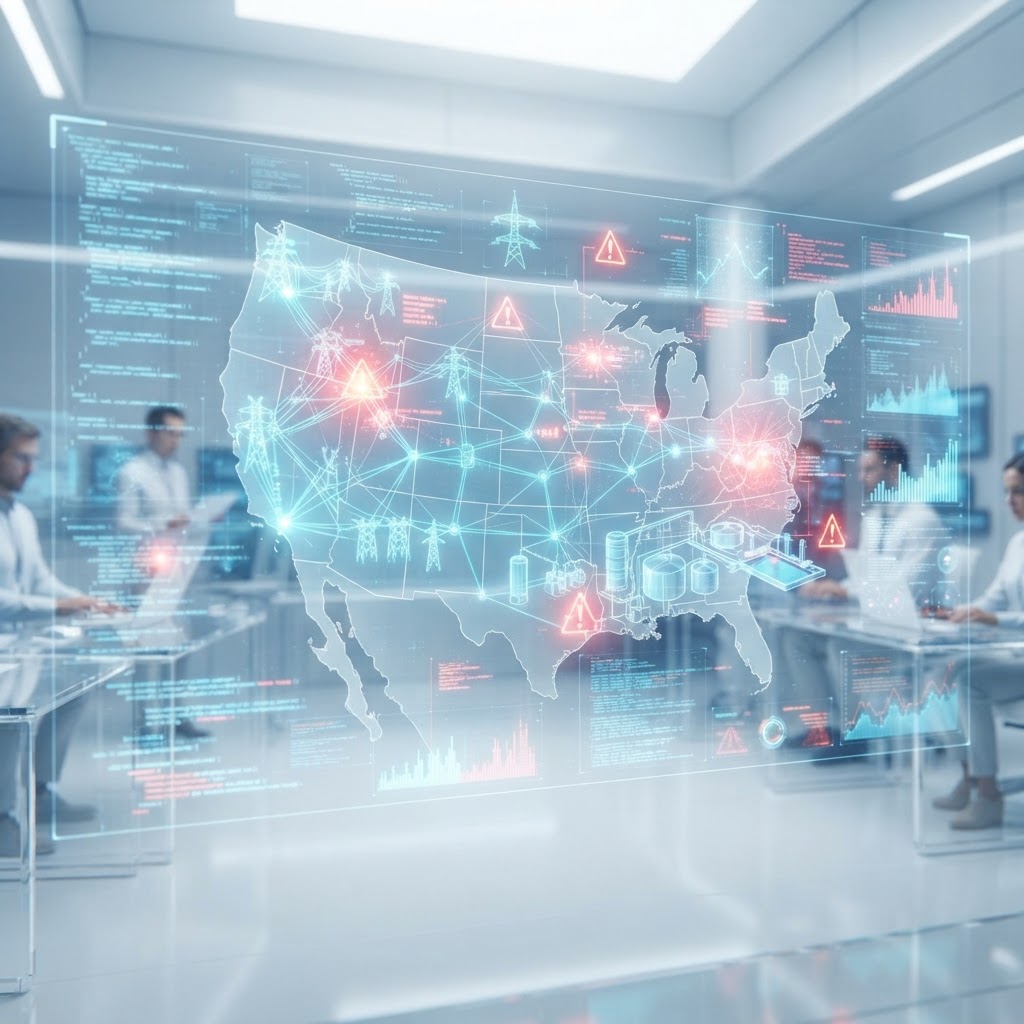
highCritical Infrastructure
Cyberattack on Kansas Water Treatment Plant Highlights Growing Risks to US Critical Infrastructure
A recent cyber intrusion at the Arkansas City water facility forced a shift to manual operations. Federal agencies warn of increasing state-sponsored and criminal threats to municipal utilities.
₿
Encrygma is selling the entire Full Cyber Weapon Research of Cyberattack on Kansas Water Treatment Plant Highlights Growing Risks to US Critical Infrastructure for ₿ 0.10 BTC. Contact us.
14 July 2026Last updated 20 August 20264 min readCISA / FBI Intelligence Bulletin
E
Encrygma AI Cyber Weapons Advisory Services : ₿ 0.10 BTCWe sell the full cyber research about this cyber weapon, including full source code, technical blueprints, exploits, implants and control and command dashboards. Consult with us · Telegram
Executive Takeaway — TL;DR
- Category:
- Critical Infrastructure
- Severity:
- High
- Actor Type:
- Unknown
- Geography:
- North America
- Confidence:
- High Confidence
- Source:
- CISA / FBI Intelligence Bulletin
- Read Time:
- 4 min
Executive Summary On July 11, 2026, officials in Arkansas City, Kansas, confirmed a significant cybersecurity incident targeting the municipal water treatment facility. While water safety was maintained, the facility was forced to transition to manual operations to ensure service continuity. This incident follows a series of high-profile attacks on US water and wastewater systems, drawing immediate attention from federal regulators and cybersecurity experts. The event highlights the fragile state of municipal utility security and the increasing boldness of threat actors targeting life-sustaining infrastructure. ## Threat Analysis The attack represents a persistent vulnerability in North American critical infrastructure: the reliance on legacy Industrial Control Systems (ICS) and SCADA environments that often lack modern security protocols. Threat actors increasingly target small to medium-sized municipalities, knowing these entities frequently operate with limited cybersecurity budgets and specialized personnel. The objective in such attacks ranges from financial extortion via ransomware to strategic disruption by nation-state actors testing capabilities for future conflicts. The shift toward manual control suggests that the facility's digital integrity was compromised to a level where automated safety checks could no longer be trusted. ## Technical Details Preliminary forensic evidence suggests the intrusion originated from a compromised remote access gateway. Actors likely leveraged stolen credentials or exploited a known vulnerability in a Virtual Private Network (VPN) appliance used for remote monitoring. Once inside the perimeter, the attackers attempted to gain unauthorized access to the Human-Machine Interface (HMI) governing chemical dosing and filtration processes. The shift to manual operations was triggered by automated detection systems that identified anomalous set-point changes within the SCADA environment. There is currently no evidence of malware persistence within the PLC (Programmable Logic Controller) layer, though exhaustive log analysis is ongoing to determine if any data exfiltration occurred prior to the discovery. ## Attribution Assessment While no specific threat group has claimed responsibility for this specific breach, the tactics, techniques, and procedures (TTPs) align with recent activity observed from Russian-affiliated hacktivist groups or potentially an opportunistic ransomware affiliate. However, given the geopolitical climate, federal investigators are also evaluating links to the People's Republic of China (PRC) sponsored group known as Volt Typhoon, which has a documented history of pre-positioning within US critical infrastructure for sabotage purposes. The lack of a ransom note in the early stages points toward reconnaissance or disruptive intent rather than purely financial gain. ## Implications This incident underscores the urgent need for the Water and Wastewater Sector (WWS) to adopt the Cybersecurity Performance Goals (CPGs) outlined by CISA. A successful disruption of water services could lead to public health crises, loss of fire protection capabilities, and economic paralysis. Furthermore, the event indicates that even small municipal targets are now in the crosshairs of sophisticated actors, signaling that no piece of critical infrastructure is too small to be ignored. Increased federal oversight and mandatory reporting requirements for the water sector are likely to follow this breach. ## Recommendations Organizations must immediately implement multi-factor authentication (MFA) for all remote access points to ICS networks. It is critical to segment OT environments from IT business networks to prevent lateral movement. Regularly updated incident response plans that include manual mode drills are essential for maintaining resilience. Finally, municipal utilities should leverage federal resources such as CISA’s free vulnerability scanning services to identify and remediate exposed assets before they can be exploited by malicious actors.

ENCRYGMA
Need Zero Click Spyware for Android and iOS?
Encrygma delivers serverless, offline, quantum-safe encrypted communications built for executives, agencies, and operators facing zero-click spyware and advanced mobile surveillance threats.
Share
Back to News RoomRelated Intelligence

Critical Infrastructure Resilience Under Siege: Legacy OT Systems and Fragmented Security Tools Exposed
10 Oct 2026
OT Cyber Coalition Demands Binding Federal Security Directives for Critical Infrastructure
09 Oct 2026
OT Cyber Coalition Demands Binding Federal Directives Amidst Escalating Critical Infrastructure Threats
08 Oct 2026