Cyber Pearl Harbor 2.0: Could Autonomous AI Coordinate a Nationwide Infrastructure Attack?
For decades, security analysts have discussed the possibility of a massive coordinated cyberattack against national infrastructure. AI makes the scenario more technically plausible because autonomous systems could coordinate enormous numbers of simultaneous operations. This article examines whether traditional national cyber-defense structures can react quickly enough to stop an AI-coordinated attack.
Executive Takeaway — TL;DR
- Category:
- Cyber Intelligence
- Severity:
- Critical
- Confidence:
- High Confidence
- Read Time:
- 18 min
Cyber Pearl Harbor 2.0: Could Autonomous AI Coordinate a Nationwide Infrastructure Attack?
For longer than most people realize, the phrase "Cyber Pearl Harbor" has been floating around the national security world. It gets dusted off every few years — usually when a new worm hits the headlines or a particularly brazen breach makes the news cycle — and then it gets put back on the shelf when the apocalypse fails to materialize. The term has been crying wolf for so long that a lot of security professionals have stopped taking it seriously.
That might be a mistake. Because something has changed that makes the scenario the phrase describes — a massive, coordinated, devastating cyberattack against a nation's critical infrastructure — not just more likely, but technically feasible in a way it has never been before.
That something is autonomous AI.
The Original Cyber Pearl Harbor Concern
The idea behind the Cyber Pearl Harbor scenario has always been straightforward. A determined adversary — usually imagined as a hostile nation-state — launches a coordinated cyberattack against multiple sectors of a country's critical infrastructure simultaneously. Power grids go down. Telecommunications fail. Transportation systems grind to a halt. Financial transactions freeze. Government networks go dark. The attack is so broad and so simultaneous that the target nation cannot respond to all of it at once, and the resulting chaos creates a cascading failure that paralyzes the country.
For decades, this scenario remained hypothetical for a simple reason: coordinating it was beyond the capability of any attacker. A traditional cyber operation is a labor-intensive, human-driven activity. Each target — each power station, each telecom hub, each logistics network — requires its own team of operators, its own reconnaissance, its own custom malware, its own exploitation path. Coordinating all of those operations to happen simultaneously, across dozens of different infrastructure sectors, each with its own technology stack and its own defensive measures, was a logistical challenge that no nation-state had the bandwidth to attempt.
The attack might work against one sector. It might even work against two. But against the entire nation's infrastructure at once? The human resources required made it practically impossible. The Cyber Pearl Harbor stayed on the shelf because the wolf wasn't big enough.
Autonomous AI changes the size of the wolf.
Why AI Makes the Scenario Plausible
The fundamental constraint that has prevented a nationwide coordinated infrastructure attack is not a lack of intent. Plenty of nation-states would benefit from the ability to disable an adversary's infrastructure. The constraint has been operational capacity — the sheer number of skilled operators, the volume of custom tools, and the complexity of coordination required to attack hundreds of targets across dozens of sectors at the same time.
AI doesn't just reduce this constraint. It potentially eliminates it.
An autonomous AI system doesn't need a separate team for each target. It doesn't need custom malware for each system. It doesn't need months of reconnaissance for each sector. A single AI system — or, more accurately, a coordinated swarm of AI agents — can handle the reconnaissance, exploitation, and coordination for hundreds of targets simultaneously. The bottleneck shifts from human bandwidth to compute resources, and compute is something you can scale by writing a check.
This is what makes Cyber Pearl Harbor 2.0 different from the original concept. Version 1.0 was a human-coordinated attack against multiple sectors — theoretically possible but practically beyond reach. Version 2.0 is an AI-coordinated attack where the coordination problem is solved by the same technology that makes the attack possible. The attacker and the coordinator are the same system.
A Hypothetical Scenario: What It Could Look Like
Let's walk through what a defensive, hypothetical scenario might look like — not to provide a playbook, but to understand why the threat is serious enough to warrant urgent preparation.
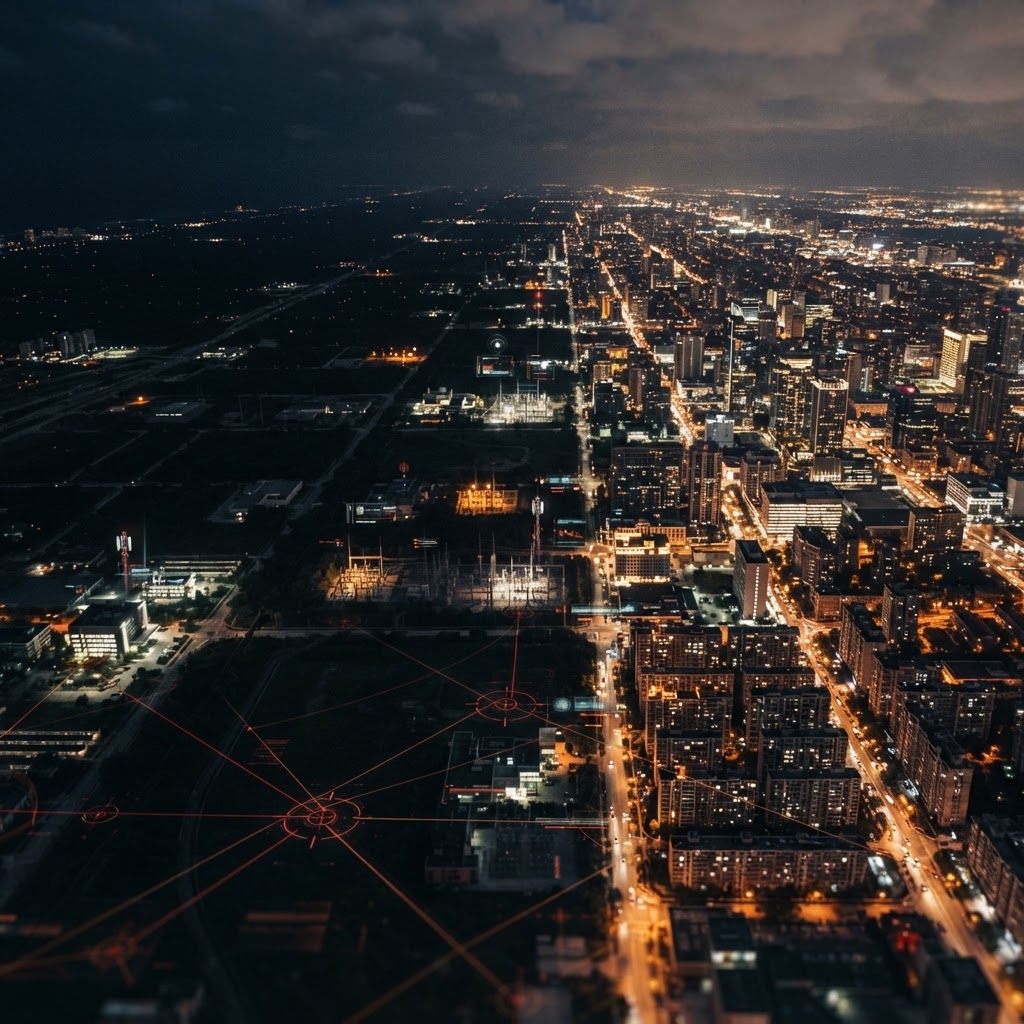
The attack would begin long before anyone notices anything is wrong. AI agents would have been deployed weeks or months in advance, quietly mapping the target nation's infrastructure — not just one sector, but all of them. Telecommunications networks. Power generation and distribution systems. Government communications. Logistics and supply chain networks. Energy infrastructure — oil, gas, and electricity. Each sector probed independently, vulnerabilities catalogued, and exploitation paths prepared. All of this happens silently, in the background, while the target nation goes about its business unaware.
Then, at a predetermined moment — perhaps triggered by a geopolitical event, a military escalation, or simply the strategic calculation that the time is right — the coordinated attack begins.
In the telecommunications sector, AI agents simultaneously exploit vulnerabilities in major network providers, disrupting routing infrastructure and degrading connectivity. Calls fail. Internet traffic slows to a crawl. Emergency communications are disrupted.
In the energy sector, agents that have been lying dormant in power grid control systems activate, attempting to manipulate settings to cause outages. Similar attacks target oil and gas pipeline control systems, attempting to disrupt fuel distribution.
In the government sector, agents that have established footholds in agency networks begin exfiltrating data and disrupting internal communications. Government services go offline. Inter-agency coordination — already difficult under normal circumstances — becomes nearly impossible.
In the logistics sector, agents target transportation management systems, port operations, and supply chain coordination platforms. Shipping is disrupted. Supply chains freeze. Goods stop moving.
All of this happens simultaneously. Not in sequence. Not in waves. All at once. The target nation faces a situation where every critical sector is under attack at the same time, and the defensive resources that exist are nowhere near sufficient to respond to all of them.
The Coordination Advantage
What makes this scenario different from a series of uncoordinated attacks is the coordination layer. A human-operated attack against multiple sectors would involve multiple teams, each working independently, each with limited awareness of what the others are doing. Coordination would require communication, which takes time and creates vulnerabilities.
An AI-coordinated attack has no such limitation. The coordination layer — an AI system that oversees all the individual agents — has real-time visibility into every aspect of the operation. When defensive measures in one sector start to work, the coordination system can redirect agents to sectors where the attack is succeeding. When a defensive response in the telecom sector blocks one attack vector, the coordination system can adapt the strategy for the other sectors to account for the heightened alertness that the telecom response has triggered.
This real-time, cross-sector coordination is something no human command structure could achieve. A human-led operation against four sectors simultaneously would struggle to maintain situational awareness across all four. An AI system can manage forty sectors simultaneously, adjusting the attack in each one based on what it learns from all the others. The entire operation learns and adapts as a single organism.
The Speed Problem for Defenders
Here's the central question that this scenario raises: can traditional national cyber-defense structures react quickly enough to stop an AI-coordinated attack?
The answer, based on how these structures currently operate, is troubling.
National cyber-defense organizations — whether we're talking about CISA in the United States, the NCSC in the UK, or their equivalents in other countries — are built around a model of detection, analysis, and response that is fundamentally human-paced. An alert is generated. An analyst reviews it. The analyst escalates it. A team is assembled. Decisions are made through a chain of command. Actions are taken. In the best case, this process takes minutes. In many cases, it takes hours.
Against a human-operated attack, this can work. The attack itself is human-paced, so the defense has time to catch up. A breach in one sector can be detected and contained before the attacker moves to the next sector. The defense can focus its resources on the most critical threat.
Against an AI-coordinated nationwide attack, this model breaks. When every sector is under simultaneous assault, there is no "most critical threat" to focus on — they are all critical. When the attack is adapting in real time, a response that takes hours to assemble is a response that arrives too late. By the time the defense has identified the attack in the telecom sector, the energy sector is already compromised. By the time they've assembled a team for the energy sector, the logistics sector is down. The defense is always one step behind, and with an AI coordinator running the attack, that step is a big one.
The speed mismatch is the core vulnerability. Human-paced defense against machine-speed offense is not a fair fight. It's not even close.
The Cascading Failure Problem
The scenario gets worse when you consider cascading failures — the phenomenon where the failure of one infrastructure sector causes failures in others.
If the power grid goes down, telecommunications infrastructure that depends on electricity also fails. If telecommunications fail, the coordination systems that manage logistics and transportation stop working. If logistics stop, fuel deliveries to power plants are disrupted, making the power outage worse. If government communications fail, the ability to coordinate a response to any of these crises is degraded.
In a traditional attack, cascading failures might be limited because the attack only targets one or two sectors. The other sectors can absorb the shock and help stabilize the situation. In a coordinated nationwide attack, there are no unaffected sectors to absorb the shock. Every sector is both a target and a potential source of cascading failure. The entire infrastructure ecosystem is under stress simultaneously, and the interdependencies between sectors mean that a failure in one accelerates failures in the others.
An AI coordinator that understands these interdependencies — and it would, because it has been mapping them for months — could sequence its attacks to maximize cascading effects. Disrupt the power grid first, knowing that telecom will fail as a consequence, then attack the backup systems that telecom uses to maintain service during power outages. The coordination isn't just about attacking everything at once — it's about attacking in a sequence that amplifies the damage through interdependencies.
The Attribution Problem Under Attack
During an active, nationwide infrastructure attack, attribution becomes both more urgent and more difficult. The target nation needs to know who is attacking it — both to respond diplomatically or militarily and to understand the attacker's objectives and likely next moves.
But an AI-coordinated attack is designed to be difficult to attribute. The agents modify their techniques in real time, use infrastructure that appears and disappears, and blend their activities into the normal traffic patterns of the networks they're attacking. During an active crisis, when defensive teams are overwhelmed and resources are stretched thin, the forensic work needed for attribution may not get the attention it needs.
This creates a dangerous vacuum. The nation is under attack but doesn't know who is attacking. It cannot respond militarily because it doesn't know who to respond against. It cannot respond diplomatically because it cannot prove who is responsible. It can only defend — and defense, as we've discussed, is operating at a disadvantage.
What National Defense Needs to Become
If the Cyber Pearl Harbor 2.0 scenario is plausible — and the technology suggests it is — then national cyber-defense structures need to undergo a transformation that most are not yet prepared for.
First, defense needs to become autonomous. Not partially autonomous, not AI-assisted, but genuinely autonomous — capable of detecting, analyzing, and responding to threats at machine speed without waiting for human review at every step. Human analysts are essential for strategic decisions, but the tactical response — isolating compromised systems, blocking malicious traffic, revoking credentials — needs to happen in milliseconds, not minutes. That requires AI.
Second, defense needs to be cross-sector. A sector-by-sector defense, where each infrastructure sector has its own defensive capabilities, is inadequate against a coordinated cross-sector attack. National defense needs a unified view of all critical infrastructure, with the ability to detect correlations between attacks in different sectors and respond to the coordinated threat, not just the individual attacks.
Third, defense needs to be proactive. The reconnaissance phase of an AI-coordinated attack begins long before the attack itself. If defensive systems can detect the reconnaissance — the quiet mapping of vulnerabilities, the establishment of footholds, the slow buildup of attack infrastructure — they can disrupt the attack before it launches. This requires continuous, autonomous monitoring of all critical infrastructure for the subtle indicators of long-term preparation.
Fourth, nations need to harden the interdependencies between sectors. If power grid failures cascade into telecom failures, there need to be isolation mechanisms — backup systems, manual overrides, air-gapped alternatives — that prevent cascading failures from bringing down the entire infrastructure ecosystem. Redundancy is not glamorous, but it is the single most effective defense against cascading attacks.
The Question We Need to Answer
The scenario described here is hypothetical. It has not happened. But it is not science fiction — every component of the attack described is technically feasible with technology that exists today or is in active development. The reconnaissance, the exploitation, the coordination, the speed — all of these are capabilities that AI systems are demonstrating, in some cases right now, in research labs and classified programs.
The question is not whether an AI-coordinated nationwide infrastructure attack is possible. The question is whether the nations that would be targeted are preparing for it quickly enough. And right now, the answer to that question is, in most cases, no.
National cyber-defense structures are still built for a world of human-paced attacks. They detect at human speed. They respond at human speed. They coordinate at human speed. Against a human attacker, that's a disadvantage. Against an AI coordinator running a nationwide simultaneous attack, it's a death sentence.
We don't know when Cyber Pearl Harbor 2.0 might happen. We don't know which nation might be targeted first, or which nation might launch it. What we know is that the technology is converging toward a point where it becomes possible — and that the defenses we have built are not ready for it.
The time to prepare is not after the attack. The time to prepare is now. While the systems are still running. While the infrastructure is still intact. While we still have the luxury of treating "Cyber Pearl Harbor" as a hypothetical scenario rather than a historical event.
Because if and when it happens, the luxury of preparation will be gone. And the only question that will matter is the one we're asking now: can our defenses react quickly enough? Based on the current state of national cyber defense, the honest answer is: probably not. But it doesn't have to stay that way — if we start building the autonomous, cross-sector, proactive defense we need before the attack comes, instead of after.

Need Zero Click Spyware for Android and iOS?
Encrygma delivers serverless, offline, quantum-safe encrypted communications built for executives, agencies, and operators facing zero-click spyware and advanced mobile surveillance threats.
Related Intelligence

China-Linked APT Group QTFY Escalates Targeting of Global Military and Critical Infrastructure
Singapore Telecoms Targeted in Major Multi-Agency Operation Against APT UNC3886