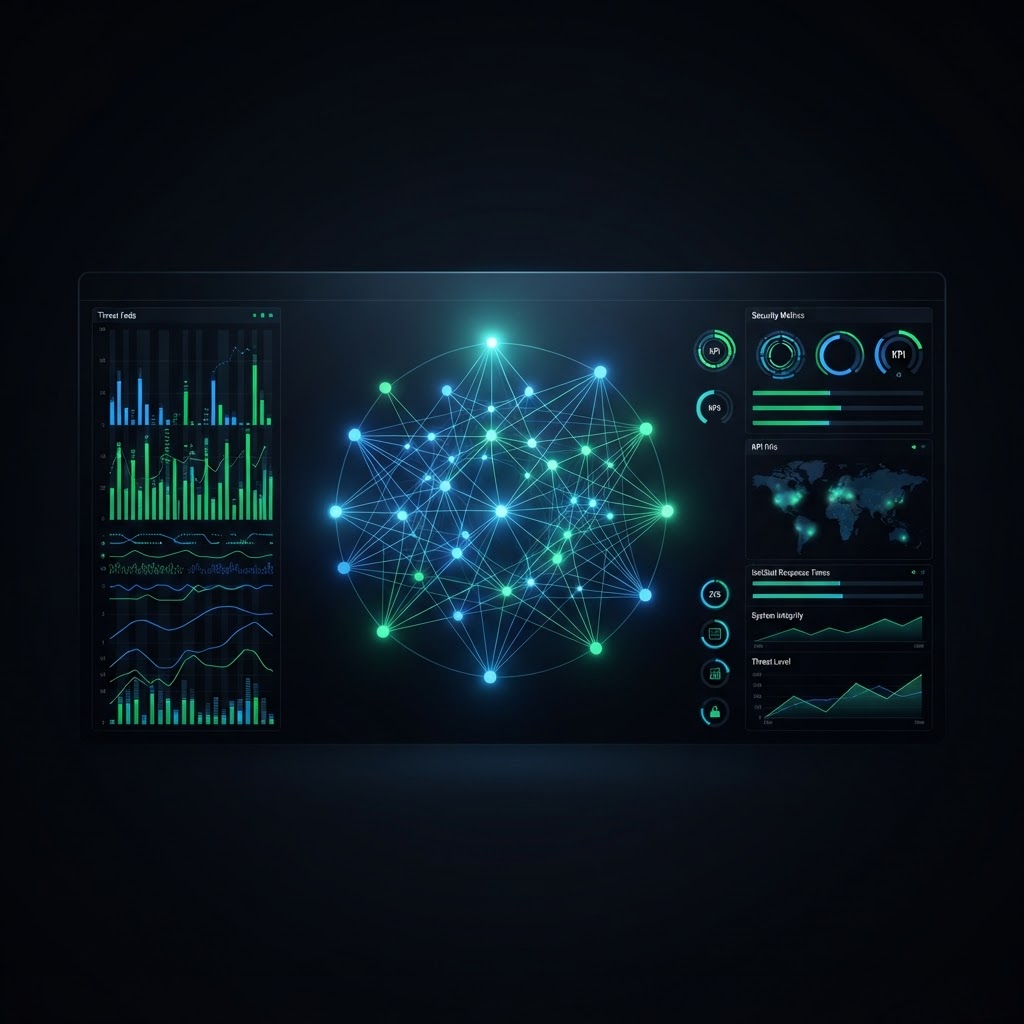
CISA and South Korean Authorities Issue Urgent Warning on Gunra Ransomware Targeting Critical Infrastructure
A joint advisory from CISA, the FBI, and South Korean intelligence warns of Gunra ransomware, a RaaS variant exploiting Fortinet and Schneider Electric vulnerabilities. The group employs a double-extortion model against global critical infrastructure.
Executive Takeaway — TL;DR
- Category:
- Threat Intelligence
- Severity:
- Critical
- Actor Type:
- Ransomware Group
- Geography:
- Global
- Confidence:
- Confirmed
- Source:
- CISA / FBI / South Korean NIS
- Read Time:
- 5 min
Executive Summary
On August 10-11, 2026, the Cybersecurity and Infrastructure Security Agency (CISA), the FBI, and South Korean intelligence agencies issued a joint #StopRansomware advisory regarding the Gunra ransomware-as-a-service (RaaS) operation. Gunra has rapidly evolved from its initial discovery in 2025 to a sophisticated RaaS model in 2026, specifically targeting government entities, critical infrastructure, and industrial sectors. The group utilizes a double-extortion model, combining high-speed encryption with the exfiltration of sensitive data to a dedicated leak site (DLS) to compel payment. Recent activity indicates a strategic shift toward exploiting vulnerabilities in edge devices and industrial control systems (ICS).
Threat Analysis
Gunra represents a significant escalation in the RaaS landscape due to its focus on operational technology (OT) and critical infrastructure. Unlike many opportunistic groups, Gunra affiliates demonstrate a high degree of technical proficiency in navigating complex network architectures. The group's double-extortion tactics are particularly effective against organizations with high uptime requirements, where the threat of data exposure is often more damaging than the temporary loss of system access. Intelligence suggests that Gunra has successfully breached over 150 organizations globally in the first half of 2026, with a notable concentration of attacks in North America and East Asia.
Technical Details
Gunra's primary infection vectors involve the exploitation of known vulnerabilities in internet-facing systems. Specifically, the group has been observed leveraging flaws in Fortinet VPN gateways and Schneider Electric industrial components to gain initial access. Once inside a network, the actors utilize Remote Desktop Protocol (RDP) for lateral movement and credential harvesting. Technical analysis reveals that Gunra employs a custom-built encryption engine capable of multi-threaded processing, significantly reducing the time required to lock large file systems. Before the encryption phase, the malware utilizes legitimate file-transfer tools (such as Rclone) to exfiltrate data to actor-controlled cloud storage. The ransomware also attempts to disable security software and delete Volume Shadow Copies to prevent local recovery.
Attribution Assessment
While Gunra operates as a RaaS model—meaning various affiliates may conduct the actual intrusions—the core developers are believed to be a sophisticated cybercriminal collective with ties to the Eastern European threat landscape. However, the recent joint warning from South Korean and U.S. agencies highlights a specific subset of activity that overlaps with tactics, techniques, and procedures (TTPs) previously associated with state-sponsored or state-aligned actors. The high level of coordination and the specific targeting of Schneider Electric industrial systems suggest that some Gunra affiliates may be motivated by more than just financial gain, potentially serving broader geopolitical interests.
Implications
The rise of Gunra signals a dangerous trend where RaaS groups are increasingly comfortable targeting the backbone of national economies. The exploitation of Schneider Electric flaws indicates a growing interest in the ICS/SCADA space, which has traditionally been the domain of nation-state APTs. For the private sector, this means that standard IT security measures are no longer sufficient; organizations must bridge the gap between IT and OT security to defend against these hybrid threats. Furthermore, the group's success in bypassing traditional defenses through edge-device exploitation underscores the critical need for zero-trust architectures.
Recommendations
Encrygma recommends that all organizations, particularly those in the energy, manufacturing, and government sectors, take the following immediate actions:
- Prioritize Patching: Immediately apply security updates for all internet-facing Fortinet and Schneider Electric devices. Prioritize vulnerabilities listed in the CISA Known Exploited Vulnerabilities (KEV) catalog.
- Implement Immutable Backups: Maintain offline, encrypted, and immutable backups of all critical data. Regularly test restoration procedures to ensure business continuity without the need for ransom payments.
- Enforce MFA: Mandate multi-factor authentication (MFA) for all remote access points, including VPNs and RDP sessions.
- Network Segmentation: Isolate OT environments from the corporate IT network to prevent lateral movement by ransomware actors.
- Monitor for Exfiltration: Deploy network traffic analysis tools to detect unusual outbound data transfers to known cloud storage providers.

Need Zero Click Spyware for Android and iOS?
Encrygma delivers serverless, offline, quantum-safe encrypted communications built for executives, agencies, and operators facing zero-click spyware and advanced mobile surveillance threats.
Related Intelligence
Qilin Ransomware Gang Steps Up Dual-Extortion Onslaught Across Government and Supply Chain Entities
GOLD SHERWOOD Deploys Rapid Sub-24-Hour Ransomware Playbook Against Enterprise Targets