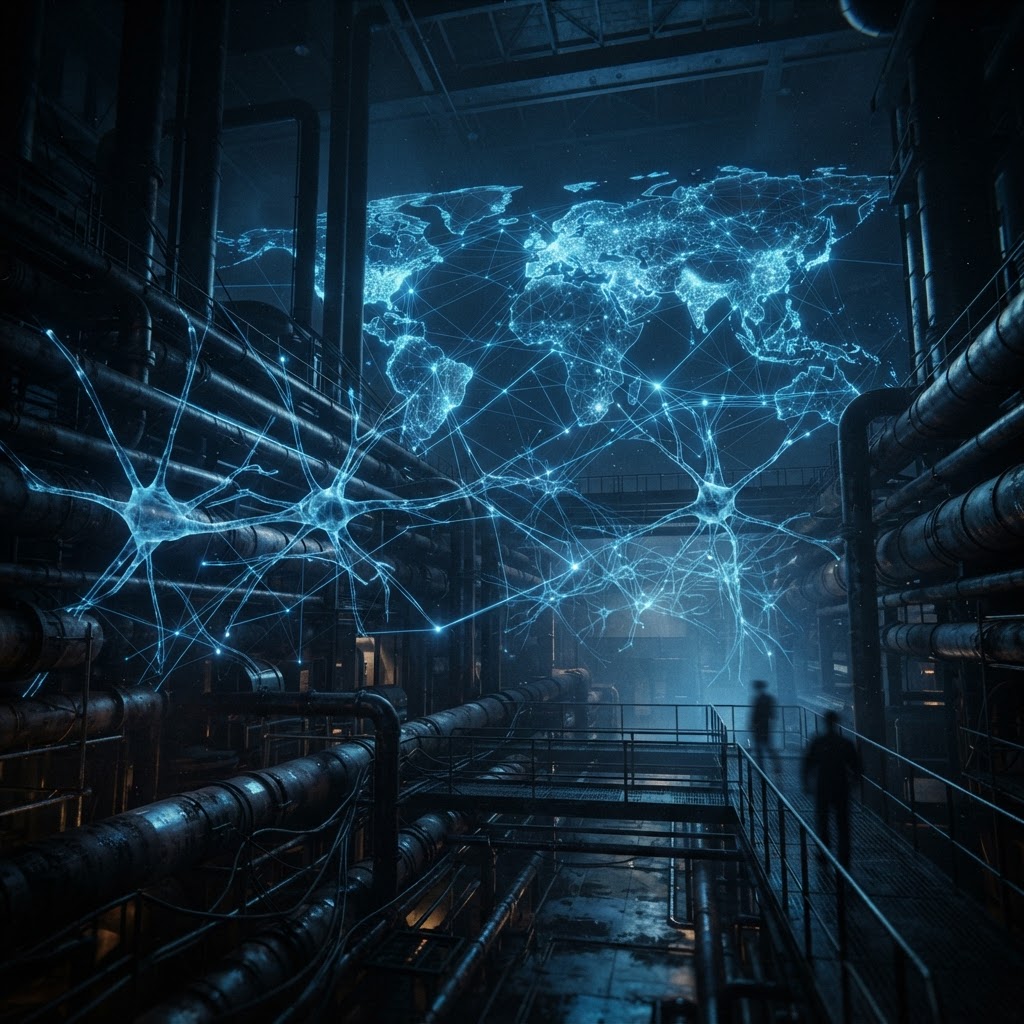
The Convergence of AI-Agent Exploitation and Infrastructure Proxy Networks: August 2026 Threat Landscape
Analyzing the TroyDen OpenClaw Campaign, UAT-7810 ORB Expansion, and Iranian-Nexus Critical Infrastructure Targeting
Recent intelligence reveals a surge in AI-agent platform exploitation via the TroyDen campaign and the expansion of China-nexus ORB networks, alongside persistent Iranian-linked threats to US water utilities.
Executive Takeaway — TL;DR
- Category:
- Threat Analysis
- Author:
- Encrygma Intelligence Desk
- Published:
- 2026-08-16
- Read Time:
- 9 min
- Pages:
- 5
- Access:
- Public
- Key Terms:
- APT, Critical Infrastructure, AI Security, Supply Chain, Espionage, ORB Networks
Executive Summary
As of August 16, 2026, the Encrygma Threat Intel Unit has identified a significant escalation in the sophistication of Advanced Persistent Threat (APT) operations targeting both emerging technologies and legacy critical infrastructure. The reporting period is characterized by the emergence of the 'TroyDen' campaign, which leverages AI-generated GitHub repositories to compromise the OpenClaw AI agent platform, and the continued expansion of the 'LapDogs' Operational Relay Box (ORB) network by China-nexus actor UAT-7810. Simultaneously, the confirmation of coordinated attacks against Minnesota water utilities highlights a persistent threat from Iranian-affiliated actors targeting industrial control systems (ICS). These campaigns demonstrate a strategic shift toward using legitimate cloud services, AI development tools, and compromised edge devices to bypass traditional perimeter defenses. This report provides an in-depth analysis of these developments, their technical underpinnings, and defensive strategies for enterprise and infrastructure operators.
Background & Context
The cybersecurity landscape in mid-August 2026 is heavily influenced by the research and disclosures presented at recent industry summits, including Black Hat 2026 and DEF CON 34. These events highlighted the growing risks associated with autonomous AI agents and the exploitation of vulnerable APIs in integrated business workflows AI Security Failures, Active Exploits, and Breaches Define the Week in August 2026.
Historically, APT groups focused on direct exploitation of enterprise servers. However, recent trends show a pivot toward supply chain poisoning and the creation of complex proxy networks to mask attribution. The 'LapDogs' network expansion, first disclosed in July and continuing through August, represents a mature model of infrastructure obfuscation Active Cyber Campaigns — What Threat Actors Are Doing .... Furthermore, the targeting of critical infrastructure, such as the Minnesota water utilities, follows a pattern of Iranian-nexus activity that has intensified throughout 2026 3rd August – Threat Intelligence Report.
Analysis
The TroyDen Campaign and AI-Agent Exploitation
A primary development in the last 72 hours is the refinement of the TroyDen campaign. This actor targets the OpenClaw platform, an open-source AI agent framework that has recently gained popularity for local business automation. TroyDen utilizes generative AI to create a high volume of GitHub repositories that mimic popular open-source projects and development tools. These repositories contain malicious Lua scripts designed to deliver payloads to systems running OpenClaw NSFOCUS Monthly APT Insights – March 2026.
The risk is compounded by the fact that AI agents often require high-level permissions to access organizational data to function effectively. As noted by IBM X-Force, compromised AI agents containing stored credentials represent a significant emerging risk in 2026 Cyberthreats in 2026: X-Force and industry experts weigh in. TroyDen enhances the credibility of its malicious repositories through SEO techniques and fake account activity to inflate 'Star' and 'Fork' counts, effectively poisoning the developer supply chain.
UAT-7810 and the LapDogs ORB Network
China-nexus threat actor UAT-7810 continues to expand its 'LapDogs' ORB network by exploiting n-day vulnerabilities in unpatched Ruckus and ASUS AiCloud routers. The latest intelligence indicates the deployment of an upgraded backdoor tracked as LONGLEASH, alongside a suite of new tools: DOGLEASH, JARLEASH, and LEASHTEST Active Cyber Campaigns — What Threat Actors Are Doing ....
This ORB infrastructure serves as a sophisticated proxy layer for secondary China-nexus groups, such as UAT-5918. By routing traffic through compromised consumer and small-business routers, these actors can evade detection by geographic-based filtering and complicate forensic attribution. The use of custom backdoors on edge devices allows for persistent access that survives standard reboots, making these devices ideal nodes for long-term espionage operations.
Critical Infrastructure and ICS Targeting
The confirmation of coordinated cyberattacks affecting more than 30 community water utilities in Minnesota underscores the vulnerability of the water and wastewater systems (WWS) sector. While drinking water safety was not compromised, the brief disruption of a treatment plant in Braham indicates that attackers successfully accessed industrial control systems 3rd August – Threat Intelligence Report. Federal officials have linked this activity to Iranian-affiliated threat actors who have been consistently targeting US critical infrastructure throughout the year The Spring 2026 APT Roundup: Six Campaigns Defining the ....
Key Findings
- AI Supply Chain Poisoning: The TroyDen campaign demonstrates that threat actors are now using generative AI to automate the creation of malicious development environments, specifically targeting AI-agent platforms like OpenClaw.
- Edge Device Persistence: UAT-7810 is successfully building a massive proxy network (LapDogs) by exploiting unpatched routers, providing a 'clean' infrastructure for other APT groups to conduct espionage.
- ICS Vulnerability: Iranian-nexus actors are actively probing and disrupting US water utilities, focusing on industrial control systems rather than just administrative networks.
- Identity-Centric Attacks: There is a continued shift toward abusing trusted identities and OAuth tokens, as seen in recent vishing campaigns (STAC4749) targeting Microsoft Teams Security Signals (07/28/26-08/11/26) - Malware Patrol.
- Mobile Espionage: Chinese-speaking actors are leveraging the leaked DarkSword kit to deploy the GHOSTBLADE implant on iOS devices, indicating a renewed focus on mobile surveillance Chinese Threat Actor Uses Leaked DarkSword Kit to Deploy GHOSTBLADE on iOS.
Attribution & Confidence
- UAT-7810 (China-Nexus): High confidence. The TTPs, including the use of the LONGLEASH backdoor and the targeting of specific router brands for ORB expansion, align with established China-nexus activity patterns.
- TroyDen (Unconfirmed): Medium confidence. While the campaign is active, the specific state nexus remains unconfirmed, though the use of AI-driven SEO and GitHub manipulation suggests a well-resourced, organized group.
- Iranian-Affiliated Actors: High confidence. The targeting of US water utilities follows previous CISA warnings regarding Iranian-linked groups like Seedworm and MuddyWater The Spring 2026 APT Roundup: Six Campaigns Defining the ....
- TA488 (Russia-Nexus): High confidence. The exploitation of CVE-2026-42897 in Microsoft Outlook Web Access to deploy OWAReaper is consistent with Russian military intelligence (GRU) operations 3rd August – Threat Intelligence Report.
Defensive Recommendations
- AI Agent Governance: Organizations using platforms like OpenClaw must implement strict permission controls. AI agents should never be granted administrative privileges or access to sensitive credential stores without multi-factor authentication (MFA) for every action.
- Edge Device Patching: Immediate auditing and patching of Ruckus and ASUS routers are required to mitigate the expansion of the LapDogs ORB network. Organizations should consider moving toward zero-trust network access (ZTNA) to reduce reliance on traditional edge hardware.
- ICS/SCADA Isolation: Water utilities and other critical infrastructure providers must ensure that industrial control systems are physically or logically air-gapped from administrative networks. Monitor for unauthorized changes to PLC (Programmable Logic Controller) configurations.
- Supply Chain Verification: Developers should verify the integrity of GitHub repositories and npm packages before integration. Use automated tools to scan for malicious Lua scripts or hidden dependencies in AI-related projects.
- Phishing-Resistant MFA: To counter vishing and credential theft campaigns like STAC4749, organizations should transition to FIDO2-compliant, phishing-resistant authentication methods.
Outlook
The remainder of August 2026 is expected to see a continued focus on AI-integrated workflows. As businesses rush to adopt autonomous agents, threat actors will likely refine their 'agent-in-the-middle' attacks. We anticipate that the LapDogs ORB network will be utilized for a major espionage campaign targeting Western government agencies in late Q3 2026. Furthermore, the persistent targeting of the WWS sector by Iranian actors suggests a long-term strategy of pre-positioning for potential disruptive actions. Defenders must prioritize the security of the 'human-AI' interface and the integrity of the edge devices that form the backbone of modern internet connectivity.

Need Zero Click Spyware for Android and iOS?
Encrygma delivers serverless, offline, quantum-safe encrypted communications built for executives, agencies, and operators facing zero-click spyware and advanced mobile surveillance threats.