Strategic Escalation: Analyzing the Surge in Multi-Vector Nation-State Cyber Operations (August 2026)
A comprehensive intelligence review of recent PRC, Russian, and North Korean campaigns targeting critical infrastructure.
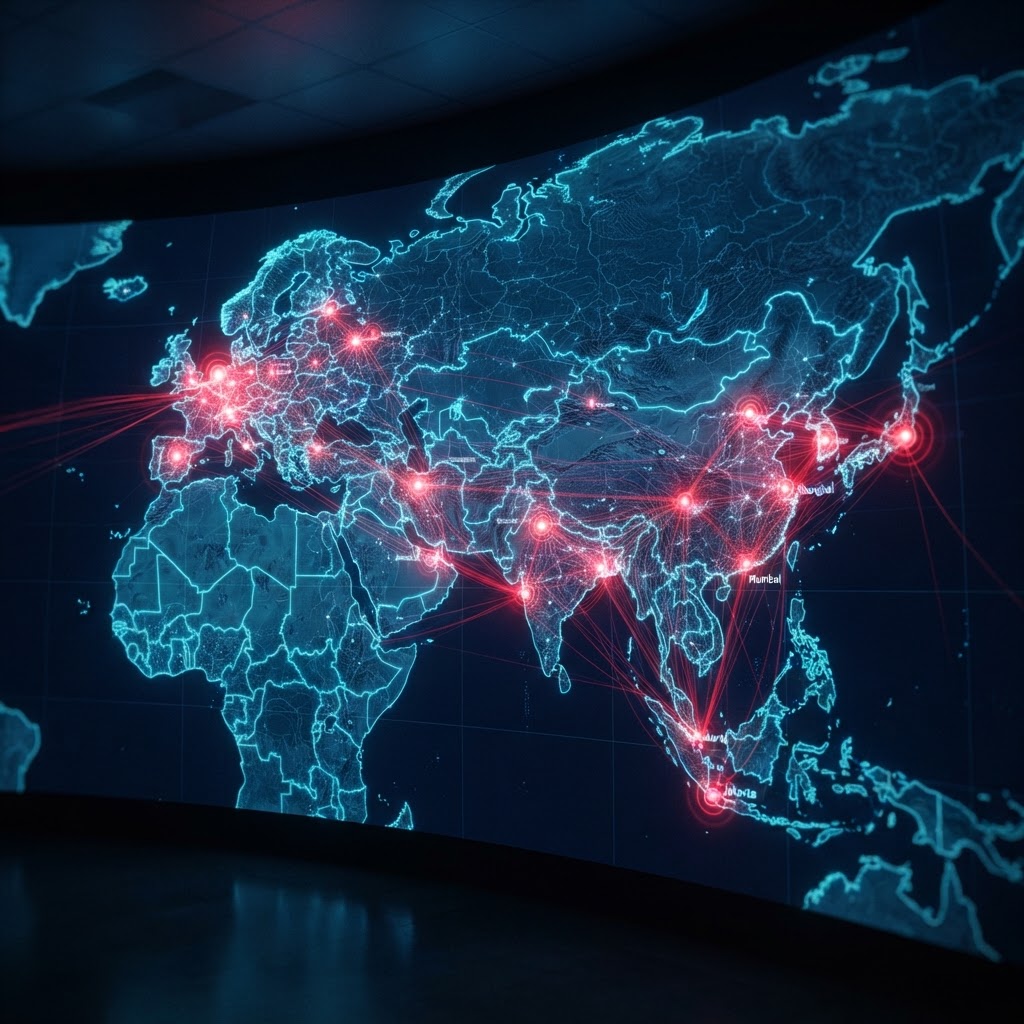
Recent intelligence reveals a 7.5% increase in state-sponsored activity, highlighted by new VMware vCenter exploits and AI-driven phishing by North Korean actors.
Executive Takeaway — TL;DR
- Category:
- Geopolitical Intelligence
- Author:
- Encrygma Intelligence Desk
- Published:
- 2026-08-19
- Read Time:
- 8 min
- Pages:
- 5
- Access:
- Public
- Key Terms:
- APT, Zero-Day, Critical Infrastructure, Espionage, AI-Threats, Geopolitics
Executive Summary
As of August 19, 2026, the Encrygma Threat Intel Unit has observed a marked escalation in nation-state cyber activity, with state-sponsored attacks from North Korea, China, and Russia rising by 7.5% in the first half of the year State-sponsored cyberattacks from N. Korea, China, Russia rise 7.5% in 1st half of 2026. Current reporting indicates that threat actors are increasingly leveraging zero-day vulnerabilities in virtualization software and defense-sector applications to achieve persistence. Notably, suspected China-nexus actors are currently exploiting a critical VMware vCenter flaw (CVE-2026-59310) to deploy backdoors globally, while North Korea's Lazarus Group has been identified weaponizing a new Windows zero-day for espionage Suspected China-Nexus APT Exploits VMware vCenter Flaw to Deploy Backdoors and Ransomware. The integration of artificial intelligence into offensive workflows—specifically by the Kimsuky group—marks a pivotal shift in the automation of phishing and malware development Kimsuky Builds Offline AI Stack to Boost Phishing and Automate Malware Development. This report analyzes these developments to provide actionable defensive recommendations for critical infrastructure and enterprise partners.
Background & Context
The cyber domain in 2026 has become a permanent fixture of global geopolitical competition, often referred to as the "Fourth Battlefield" The Fourth Battlefield: The Growing Role of Cyber Operations in Global Conflict. Throughout the first half of 2026, regional conflicts in Europe and Asia have consistently produced parallel digital fronts. In Europe, Russian operations remain tightly coupled with kinetic objectives, focusing on the disruption of energy and water systems across EU and NATO member states The Escalating Cyber Risk Landscape in Regional Conflicts & Strategic Actions for 2026. Simultaneously, the People's Republic of China (PRC) has maintained a strategy of "pre-positioning" within critical infrastructure, likely intended for activation during future regional contingencies, such as a Taiwan crisis.
This environment is further complicated by the blurring of lines between state-sponsored espionage and financially motivated eCrime. Groups like the Lazarus Group continue to fund state objectives through cryptocurrency theft and fraudulent IT worker placements, while Iranian groups have been observed masquerading as ransomware collectives to mask their disruptive intent Iranian APT Intrusion Masquerades as Chaos Ransomware Attack.
Analysis
The PRC Virtualization Offensive
The most pressing development in the last 72 hours is the widespread exploitation of CVE-2026-59310, a critical vulnerability in Broadcom's VMware vCenter. Incident response telemetry from Germany indicates that China-nexus actors are using this flaw to bypass traditional perimeter defenses and deploy sophisticated backdoors Suspected China-Nexus APT Exploits VMware vCenter Flaw to Deploy Backdoors and Ransomware. This follows a pattern established by groups like Salt Typhoon and Twill Typhoon, which have recently targeted energy entities in Azerbaijan and telecommunications providers across Asia Chinese APTs Expand Targets, Update Backdoors in Recent Campaigns. The focus on virtualization layers allows these actors to maintain a low profile while gaining broad access to guest operating systems and sensitive data stores.
North Korea’s AI Integration
North Korea has demonstrated a significant technological leap by moving beyond public LLMs to develop "offline AI stacks." The Kimsuky group is reportedly using these localized models to generate highly convincing phishing content and automate the generation of polymorphic malware Kimsuky Builds Offline AI Stack to Boost Phishing and Automate Malware Development. This capability reduces the time required for campaign development and increases the success rate of social engineering attacks. Furthermore, the Lazarus Group’s recent exploitation of a Windows zero-day in the defense sector underscores their continued focus on high-value military intelligence North Korean Lazarus Group Exploits Windows Zero-Day in Defense Sector Espionage Campaign.
Russian Network Infrastructure Targeting
Russian intelligence services, particularly APT28 (GRU), have shifted focus toward network edge devices. Recent advisories from CISA and the FBI highlight a concerted effort to target routers and commercial messaging applications Russia State-Sponsored Cyber Threat: Advisories. By compromising routers, Russian actors can intercept traffic, conduct man-in-the-middle attacks, and establish persistent access that is difficult to detect using standard endpoint detection and response (EDR) tools. The exploitation of CVE-2026-21509 in Microsoft Office further demonstrates their ability to weaponize recently patched vulnerabilities before organizations can complete their update cycles Cyber Warfare 2026: Nation-State Attacks & Global Risk.
Key Findings
- Zero-Day Proliferation: Active exploitation of CVE-2026-59310 (VMware) and a new Windows zero-day indicates a high-resource environment where state actors are burning valuable exploits for strategic access.
- AI-Enhanced Phishing: North Korean actors (Kimsuky) have successfully integrated offline AI stacks to automate and refine their social engineering and malware development pipelines.
- Critical Infrastructure Vulnerability: Iranian-affiliated actors have successfully disrupted US water utilities, as seen in the Minnesota incidents, highlighting ongoing risks to industrial control systems (ICS) 3rd August – Threat Intelligence Report.
- Edge Device Targeting: Russian GRU actors are prioritizing the compromise of routers and network infrastructure to bypass endpoint-based security controls.
- Increased Volume: A 7.5% year-over-year increase in state-sponsored attacks confirms that cyber operations are becoming a primary tool of statecraft in 2026.
Attribution & Confidence
- Lazarus Group (North Korea): High confidence. Attributed to the Reconnaissance General Bureau (RGB) based on unique malware signatures and infrastructure reuse Groups | MITRE ATT&CK®.
- APT28 (Russia): High confidence. Attributed to the GRU’s 85th Main Special Service Center (GTsSS) based on TTPs involving router exploitation and targeted phishing Untitled.
- China-Nexus Actors: Moderate-to-High confidence. The exploitation of CVE-2026-59310 aligns with previous PRC-linked campaigns targeting virtualization software for espionage Suspected China-Nexus APT Exploits VMware vCenter Flaw to Deploy Backdoors and Ransomware.
- Iranian-Affiliated Groups: Moderate confidence. While groups like Handala and MuddyWater are active, their use of "chaos" ransomware and hacktivist personas often complicates definitive attribution Iranian APT Intrusion Masquerades as Chaos Ransomware Attack.
Defensive Recommendations
To counter these high-velocity threats, the Encrygma Threat Intel Unit recommends the following defensive measures:
- Immediate Patching of Virtualization Software: Prioritize the remediation of CVE-2026-59310 in VMware vCenter environments. Ensure that management interfaces are not exposed to the public internet.
- Router and Edge Device Hardening: Implement the mitigations outlined in the July 2026 CISA/NSA advisory, including disabling unneeded services, enforcing strong administrative passwords, and monitoring for unauthorized configuration changes Russia State-Sponsored Cyber Threat: Advisories.
- Enhanced Phishing Defenses: Given the rise of AI-generated phishing, organizations should implement advanced email security solutions that use behavioral analysis rather than just signature-based detection. Employee training should be updated to recognize high-quality, AI-augmented social engineering.
- Operation Winter Shield Compliance: Align defensive strategies with the FBI’s "Winter Shield" initiative, focusing on continuous monitoring, strict access controls, and improved supply-chain governance Protect your organization against nation-state cyberattacks.
- ICS/OT Isolation: For critical infrastructure providers, ensure that industrial control systems are logically and physically segmented from corporate IT networks to prevent lateral movement from compromised email or web environments.
Outlook
The remainder of 2026 is expected to see a continued acceleration of the vulnerability-to-exploit cycle. As AI-assisted code analysis becomes more prevalent, the time between a vulnerability disclosure and the appearance of a public proof-of-concept (PoC) will likely shrink to hours Cyber Warfare 2026: Nation-State Attacks & Global Risk. We anticipate that state actors will increasingly target the software supply chain and managed service providers (MSPs) to achieve one-to-many impact. Organizations must move toward an "assume breach" mentality, focusing on rapid detection and resilient recovery capabilities to withstand the inevitable increase in sophisticated nation-state intrusions.

Need Zero Click Spyware for Android and iOS?
Encrygma delivers serverless, offline, quantum-safe encrypted communications built for executives, agencies, and operators facing zero-click spyware and advanced mobile surveillance threats.