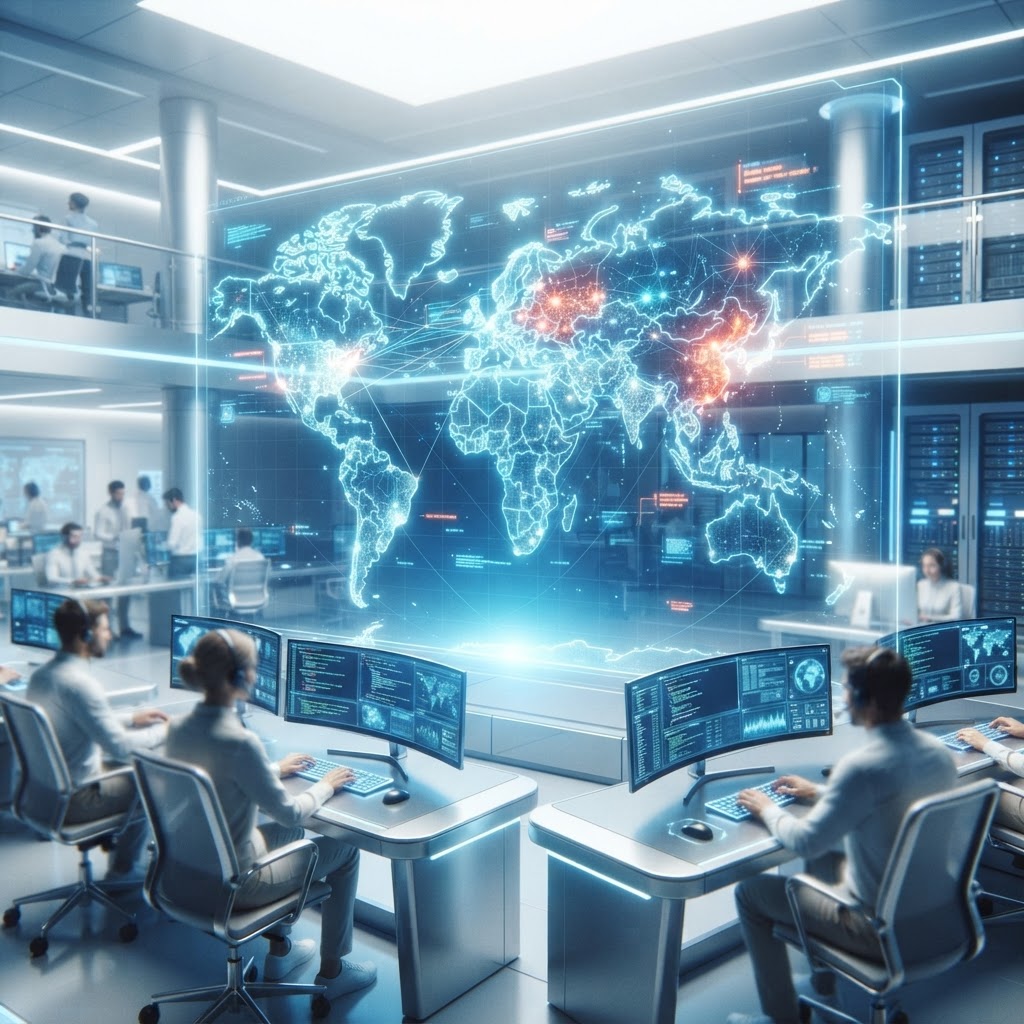
Strategic Escalation: Analyzing the 7.5% Surge in Tri-Axis State-Sponsored Cyber Operations (August 2026)
A comprehensive assessment of multi-vector campaigns targeting critical infrastructure and the defense industrial base.
Recent intelligence indicates a 7.5% increase in state-sponsored cyber activity from Russia, China, and North Korea during the first half of 2026, with a specific focus on critical water and energy infrastructure.
Executive Takeaway — TL;DR
- Category:
- Geopolitical Intelligence
- Author:
- Encrygma Intelligence Desk
- Published:
- 2026-08-23
- Read Time:
- 10 min
- Pages:
- 5
- Access:
- Public
- Key Terms:
- APT, Critical Infrastructure, Cyber Espionage, State-Sponsored, Geopolitical Risk, Threat Intelligence
Executive Summary
As of August 23, 2026, the Encrygma Threat Intel Unit has observed a marked intensification in nation-state cyber operations. Recent reporting confirms that state-sponsored cyberattacks from North Korea, China, and Russia rose by 7.5% in the first half of 2026 State-sponsored cyberattacks from N. Korea, China, Russia rise 7.5% in 1st half of 2026. This surge is not merely quantitative; it represents a qualitative shift toward targeting 'lifeline' services, including water, energy, and telecommunications. The recent compromise of 12 statewide water systems serves as a critical wake-up call regarding the vulnerability of physical infrastructure to digital sabotage Cyber-attacks Against State Water Supplies Continue—12 to date. This report analyzes the strategic drivers behind these escalations, the specific threat actors involved, and the defensive measures required to safeguard national security interests.
Background & Context
The cyber domain has become the 'Fourth Battlefield,' where digital operations are now synchronized with kinetic military actions and geopolitical maneuvering The Fourth Battlefield: The Growing Role of Cyber Operations in Global Conflict. Throughout 2025 and into 2026, regional conflicts in Eastern Europe and the Middle East have generated parallel cyber fronts. For instance, the U.S. intelligence community recently highlighted the use of cyber weapons to disrupt Iranian air defenses during 2025 strikes, illustrating the integration of cyber capabilities into modern warfare Cyber Security News | The Record from Recorded Future News.
In 2026, the threat landscape is further complicated by a mature cybercriminal ecosystem that increasingly aligns with state interests. This 'hybrid warfare' model allows nation-states to outsource operations to criminal groups, complicating attribution and providing plausible deniability. The focus has shifted from traditional espionage—stealing secrets—to strategic pre-positioning within critical infrastructure to enable future disruption China-Linked Cyber Operations Targeting US Critical Infrastructure.
Analysis
The 7.5% increase in state-sponsored activity is driven by three primary actors: China, Russia, and North Korea. Each utilizes distinct methodologies tailored to their strategic objectives.
The PRC-Nexus: Strategic Pre-positioning
Chinese state-sponsored actors, such as Volt Typhoon, have moved beyond intellectual property theft to focus on persistent access within U.S. and allied critical infrastructure Countering Chinese State-Sponsored Actors Compromise of Networks Worldwide to Feed Global Espionage System | CISA. Their goal is to lay the groundwork for disrupting essential services—such as power and water—in the event of a regional conflict, particularly in the Indo-Pacific. The telecommunications sector has become a primary target, serving as both a surveillance layer and a point of operational leverage Cyber Warfare 2026: Nation-State Attacks & Global Risk.
The Russian Federation: Military Intelligence Campaigns
Russian operations, primarily led by the GRU (APT28) and FSB, remain focused on government and military entities. Recent research identified APT28 exploiting a Microsoft Office vulnerability, CVE-2026-21509, to maintain stealthy post-exploitation access Cyber Warfare 2026: Nation-State Attacks & Global Risk. These campaigns are often timed to coincide with geopolitical events, such as the targeting of Italian infrastructure ahead of the Winter Olympics Cyber Security News | The Record from Recorded Future News.
North Korea: Revenue and Sabotage
North Korea continues to use cyber operations as a vital revenue stream. The Lazarus Group and its affiliates are estimated to have stolen billions in cryptocurrency to fund the regime's weapons programs Cyber Warfare Tracker 2026: State-Sponsored Attacks & Threats | Defcon Level. However, their activity also includes destructive operations, often utilizing shared infrastructure or code with other state actors to mask their origins.
Key Findings
- Infrastructure Vulnerability: 12 statewide water systems have been targeted by hackers who demonstrated a willingness to damage physical infrastructure Cyber-attacks Against State Water Supplies Continue—12 to date.
- Increased Volume: State-sponsored attacks from the 'Big Three' (China, Russia, NK) rose by 7.5% in H1 2026 State-sponsored cyberattacks from N. Korea, China, Russia rise 7.5% in 1st half of 2026.
- Telecom Targeting: Telecommunications networks saw over 440 security incidents in the last year, highlighting their role as a strategic surveillance layer Cyber Warfare 2026: Nation-State Attacks & Global Risk.
- Vulnerability Weaponization: The cycle from vulnerability disclosure to state-sponsored exploitation is shrinking, with CVE-2026-21509 being actively weaponized by Russian groups Cyber Warfare 2026: Nation-State Attacks & Global Risk.
- Regional Spillover: Conflicts in the Middle East and Europe are driving retaliatory cyber activity against government and defense sectors The Escalating Cyber Risk Landscape in Regional Conflicts & Strategic Actions for 2026.
Attribution & Confidence
Attribution in 2026 has become more precise due to advanced behavioral analysis and signals intelligence, yet it remains a significant challenge. We assess with High Confidence that the recent surge in water infrastructure targeting is linked to state-sponsored or state-aligned actors, given the lack of financial motive and the focus on disruption Cyber-attacks Against State Water Supplies Continue—12 to date.
We assess with Moderate-to-High Confidence that APT28 (Russia) is responsible for the recent campaigns targeting military entities via CVE-2026-21509, based on TTP (Tactics, Techniques, and Procedures) overlaps with previous GRU operations Cyber Warfare 2026: Nation-State Attacks & Global Risk. Attribution to China-nexus groups for telecommunications intrusions is supported by the scale and persistence of the collection efforts, which align with PRC strategic intelligence requirements Threats to the Defense Industrial Base.
Defensive Recommendations
To counter these escalating threats, organizations—particularly those in critical infrastructure—must adopt a proactive defensive posture:
- Hardening ICS/SCADA: Implement strict network segmentation for industrial control systems. Ensure that water and energy management systems are not directly accessible from the public internet Cyber-attacks Against State Water Supplies Continue—12 to date.
- Rapid Patching: Prioritize the remediation of vulnerabilities known to be exploited by state actors, such as CVE-2026-21509. The window for patching is now measured in hours, not weeks Cyber Warfare 2026: Nation-State Attacks & Global Risk.
- Telecommunications Security: Telecom providers must enhance monitoring for anomalous traffic patterns that suggest state-sponsored surveillance or data exfiltration Cyber Warfare 2026: Nation-State Attacks & Global Risk.
- Zero Trust Architecture: Move toward identity-centric security models to mitigate the risk of credential theft, a favorite tactic of Iranian and North Korean actors Nation-State Threats | Cybersecurity and Infrastructure Security Agency CISA.
- Incident Response Drills: Conduct regular tabletop exercises that simulate a coordinated cyber-physical attack on infrastructure to ensure rapid recovery capabilities Cybersecurity Alerts & Advisories - CISA.
Outlook
The remainder of 2026 is expected to see continued escalation in the cyber domain. As AI-assisted code analysis and malware development mature, the scale and speed of state-sponsored attacks will likely increase Cyber Warfare 2026: Nation-State Attacks & Global Risk. The 'Tri-Axis' of Russia, China, and North Korea will likely continue to refine their collaborative efforts, sharing infrastructure and techniques to overwhelm Western defenses. Organizations must move beyond reactive security to a model of 'resilience by design,' assuming that intrusions will occur and focusing on maintaining essential functions during a compromise. The integration of cyber operations into regional conflicts is now a permanent fixture of the global security environment The Escalating Cyber Risk Landscape in Regional Conflicts & Strategic Actions for 2026.

Need Zero Click Spyware for Android and iOS?
Encrygma delivers serverless, offline, quantum-safe encrypted communications built for executives, agencies, and operators facing zero-click spyware and advanced mobile surveillance threats.