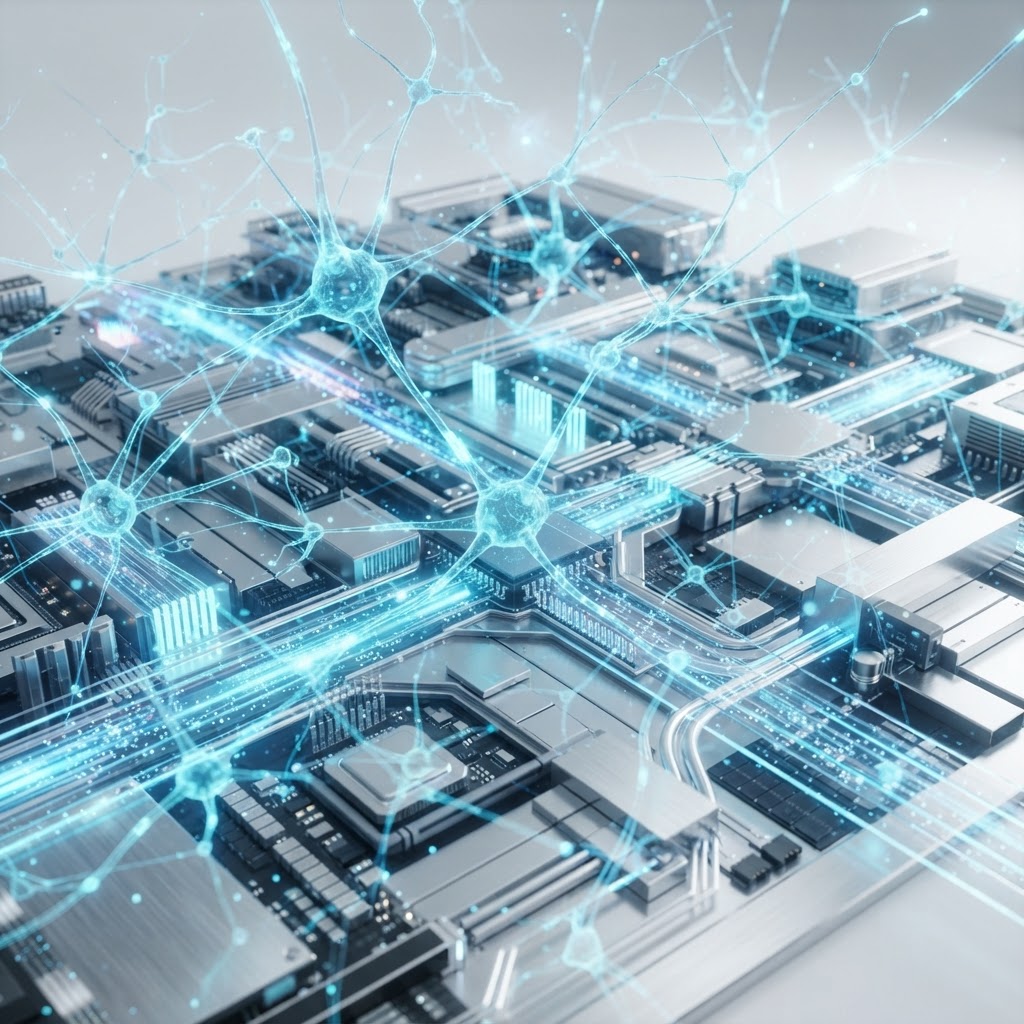
Intelligence Brief: The Rise of Agentic Malware and AI-Orchestrated Cyber Operations
Analyzing the 2026 shift toward autonomous, LLM-integrated attack chains and the industrialization of 'vibeware' threats.
As of August 2026, threat actors have transitioned from using AI as a simple productivity tool to integrating LLMs directly into malware execution. This shift enables autonomous, self-modifying attack chains that bypass traditional signature-based defenses.
Encrygma is selling the entire Full Cyber Weapon Research of Intelligence Brief: The Rise of Agentic Malware and AI-Orchestrated Cyber Operations for ₿ 0.10 BTC. Contact us.
Executive Takeaway — TL;DR
- Category:
- AI Warfare
- Author:
- Encrygma Intelligence Desk
- Published:
- 2026-08-28
- Read Time:
- 8 min
- Pages:
- 4
- Access:
- Public
- Key Terms:
- AI-Security, Agentic-Malware, Deepfake, Cyber-Intelligence, Vibeware, Threat-Landscape
Executive Summary
The cyber threat landscape in late 2026 is defined by the industrialization of 'vibeware'—malware that queries live LLMs to generate obfuscated code and adaptive command chains in real-time. Recent intelligence confirms that deepfake-based social engineering now accounts for nearly half of all AI-enabled breaches, with average costs reaching $6 million per incident. Adversaries are increasingly prioritizing 'Measure of Effort' (MOE) metrics, favoring automated, high-velocity operations over complex, bespoke exploits. Defensive strategies must pivot from static perimeter security to identity-centric, agentic-aware monitoring to counter these dynamic, machine-speed threats.
Background & Context
Throughout 2026, the integration of Artificial Intelligence into the cyber kill chain has evolved from experimental misuse to a core operational component. While 2025 saw the initial adoption of generative AI for phishing and basic script generation, the current period is marked by the deployment of 'agentic' malware. These tools do not merely use AI to write code; they maintain active connections to LLMs during execution to make tactical decisions, evade detection, and dynamically reconfigure their behavior based on the target environment.
Analysis
Modern threat actors are now optimizing for throughput rather than sophistication. By utilizing LLMs to automate vulnerability discovery and exploit generation, attackers have compressed the vulnerability lifecycle from weeks to minutes. A critical development observed in August 2026 is the emergence of malware families such as 'PromptFlux' and 'FruitShell,' which utilize hard-coded prompts to bypass security analysis and generate host-specific command chains. This 'vibeware' model allows even less-sophisticated actors to execute high-impact campaigns by leveraging the reasoning capabilities of frontier models.
Furthermore, the rise of deepfakes has fundamentally altered the social engineering landscape. With a 2,100% global increase in deepfake-related fraud reported in the 2025-2026 cycle, organizations are facing a crisis of trust in identity verification. These attacks are frequently paired with automated reconnaissance, where AI agents map internal network connective tissue to identify the most efficient path to sensitive data.
Key Findings
- Agentic Execution: Malware now queries live LLMs during runtime to generate obfuscated VBScript or PowerShell variants, rendering static signature-based detection obsolete.
- Deepfake Dominance: Deepfake-enabled social engineering accounts for 47% of AI-related breaches, significantly increasing the financial impact of successful compromises.
- MOE-Driven Attacks: Adversaries are abandoning expensive zero-day exploits in favor of high-throughput, AI-automated identity theft and session hijacking.
- Vibeware Industrialization: The emergence of 'vibeware' allows for the rapid, automated scaling of malicious operations, lowering the barrier to entry for non-state actors.
Attribution & Confidence
We maintain high confidence that these trends are systemic and accelerating. Intelligence gathered from Google’s Threat Intelligence Group (GTIG), the Cloud Security Alliance, and recent industry reports confirms that both state-sponsored APTs and financially motivated cybercriminals are actively integrating LLMs into their operational workflows. The shift toward agentic, autonomous attack chains is no longer theoretical; it is a documented reality in live operations.
Defensive Recommendations
- Identity-Centric Security: Implement robust, multi-modal identity verification to mitigate the risk of deepfake-based social engineering.
- Agentic-Aware Monitoring: Deploy behavioral analytics capable of detecting anomalous API calls to LLM endpoints from within the network.
- Continuous Exposure Management: Shift from periodic penetration testing to continuous, AI-driven vulnerability scanning to match the speed of automated attacker reconnaissance.
- Zero Trust Architecture: Enforce strict segmentation to limit the lateral movement of autonomous agents once initial access is achieved.
Outlook
As we move toward the end of 2026, the gap between offensive AI capabilities and defensive countermeasures is expected to widen. We anticipate an increase in 'AI-vs-AI' conflicts, where defensive agents must autonomously counter the real-time adaptations of malicious agents. Organizations that fail to integrate AI-driven threat intelligence and adaptive security controls will likely face unsustainable operational costs and increased breach frequency.

Need Zero Click Spyware for Android and iOS?
Encrygma delivers serverless, offline, quantum-safe encrypted communications built for executives, agencies, and operators facing zero-click spyware and advanced mobile surveillance threats.