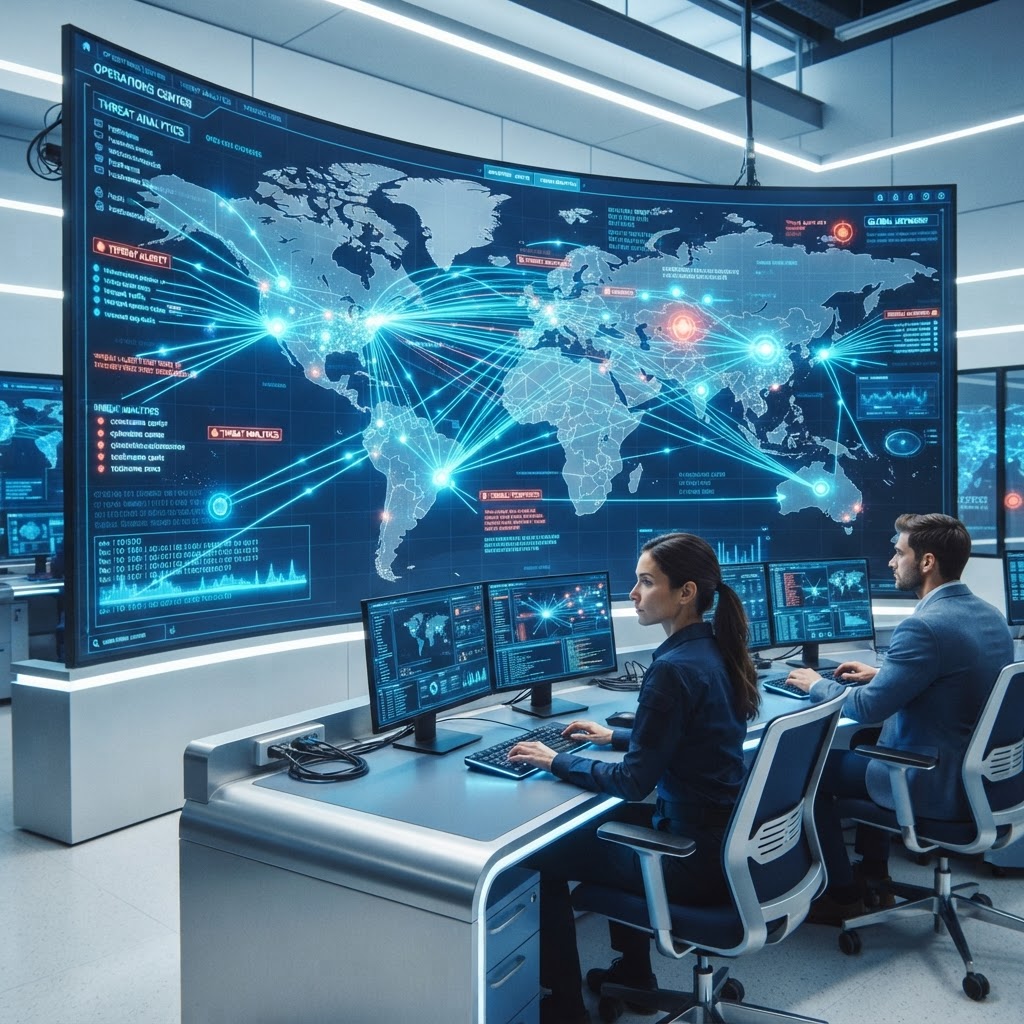
Industrial and Critical Infrastructure Infiltration: Shifting Nation-State TTPs and Extortion Vectors
Analysis of Emerging State-Backed Intrusion Sets, Specialized OT Exploits, and Pipeline Supply-Chain Weaponization
A surge in advanced threat campaigns targets critical infrastructure and developer ecosystems, pairing novel backdoors and OT-focused extortion with CI/CD pipeline subversion.
Encrygma is selling the entire Full Cyber Weapon Research of Industrial and Critical Infrastructure Infiltration: Shifting Nation-State TTPs and Extortion Vectors for ₿ 0.10 BTC. Contact us.
Executive Takeaway — TL;DR
- Category:
- Threat Analysis
- Author:
- Encrygma Intelligence Desk
- Published:
- 2026-09-14
- Read Time:
- 6 min
- Pages:
- 4
- Access:
- Public
- Key Terms:
- APT, Critical Infrastructure, Cyber Espionage, Ransomware, Supply Chain, Threat Intelligence
Executive Summary
Recent intelligence reporting between September 10 and September 14, 2026, reinforces a critical inflection point in the operational tradecraft of both Advanced Persistent Threat (APT) groups and sophisticated ransomware cartels. As documented in tracking across industrial sectors by Industrial Cyber, adversaries are systematically targeting the underlying infrastructure of critical operational technology (OT) environments, developer CI/CD supply chains, and enterprise virtualization fabrics. The deployment of specialized strains—such as the recent Panzer ransomware campaign aimed at European manufacturing plants—highlights an aggressive shift toward bare-metal and virtualization exploitation. Concurrently, nation-state actors including Russian-nexus operators (e.g., Turla and Secret Blizzard) and Iranian-aligned clusters (such as Screening Serpens/UNC1549 and MuddyWater) continue refining evasive command-and-control (C2) mechanisms and targeting operational data repositories. Organizations across critical infrastructure must adapt defenses to account for credential harvesting embedded deep within cloud workflows, living-off-the-land techniques, and aggressive anti-forensic wiper capabilities.
Background & Context
Over the past 72 hours, strategic national advisories—including the Federal Bureau of Investigation's updated Cyber Strategy and regulatory enforcements under the European Union Cyber Resilience Act—have drawn direct attention to escalating state-sponsored operations against industrial assets. Nation-state actors have moved away from noisy, short-lived intrusions, opting instead for deep strategic pre-positioning within high-value enterprise networks and industrial manufacturing suppliers.
Concurrently, malicious actors are exploiting gaps created by fragmented OT/IT convergence. The intrusion landscape has broadened from traditional phishing-led compromises to include sophisticated CI/CD build hijacking (such as orphan commit injections that subvert OIDC attestations), unpatched enterprise communication server compromises, and purpose-built ESXi and Linux rootkit deployment. These operations reflect dual objectives: persistent, low-profile intelligence gathering on strategic technological capabilities and contingency pre-positioning for destructive or coercive actions.
Analysis
Hypervisor and Industrial Environment Targeting
In the latest wave of intrusions observed through mid-September 2026, actors behind operations such as Panzer ransomware have intensified assaults against industrial manufacturing targets, utilizing specialized hypervisor-targeting binaries. Rather than focusing solely on user workstations, intrusion operators focus on enterprise hypervisors, particularly VMware ESXi environments, where access to mass virtual machines (VMs) can be disabled simultaneously. This methodology allows rapid circumvention of traditional endpoint detection and response (EDR) agents running on guest operating systems, yielding widespread operational downtime with minimal dwell time.
Advanced Persistent Threat Tooling Evolution
Concurrently, espionage groups are updating core toolkits to preserve access within sensitive diplomatic, defense, and energy installations:
- Russian-Nexus Actors (Turla, Secret Blizzard): Analysis of long-running Russian intrusion sets by CYFIRMA reveals sustained deployment of the STOCKSTAY backdoor alongside the evolution of the Kazuar payload into a decentralized, modular peer-to-peer (P2P) botnet architecture as documented by Bleeping Computer. This decentralized command architecture significantly hardens adversary infrastructure against unilateral domain seizures and passive sinkholing, allowing covert lateral movement across government, aerospace, and energy networks.
- Iranian-Nexus Cyber Espionage (Screening Serpens / MuddyWater): Threat operations targeting critical infrastructure across North America, Europe, and the Middle East continue to leverage custom Remote Access Trojans (RATs) alongside legitimate enterprise management tools as outlined by FortiGuard Labs and Israel Defense. These operations emphasize targeted spear-phishing and legitimate software impersonation to stage intermediate C2 infrastructure, frequently blending with standard administrative traffic to evade SOC anomaly alerting.
- Developer Environment & Pipeline Infiltration: Emerging attack campaigns identified in late 2026, such as TeamPCP's Miasma payloads, demonstrate an escalating trend in targeting software build systems. By injecting malicious actions into developer repositories and targeting local configuration environments (such as startup settings in integrated development environments), attackers harvest cloud API credentials (AWS, Azure, GCP) and implement dead-man switches capable of destructive disk wiping if administrative access is revoked.
Key Findings
Recent intelligence across monitored campaigns highlights several critical operational indicators and tactical shifts:
- Hypervisor-Specific Disruption: Industrial manufacturers face heightened risk from ransomware strains like Panzer designed specifically to execute within ESXi environments, crippling production lines by targeting virtualization hosts.
- Supply-Chain & Workflow Subversion: Attackers are routinely abusing GitHub Actions workflows and OIDC token relationships to compromise packages without tripping traditional code review checks, turning trusted developer environments into access vectors.
- Resilient, P2P Command and Control: State-sponsored actors, notably Russian-aligned clusters deploying Kazuar and STOCKSTAY variants, are heavily favoring P2P architectures and living-off-the-land techniques to blind egress network monitoring.
- Coercive Hybrid Impact: Threat groups increasingly combine espionage footholds with secondary destructive modules (e.g., PathWiper or dead-man directory wipers), signaling a tactical readiness to pivot from passive intelligence extraction to data destruction if adversary footholds are challenged.
Attribution & Confidence
Attribution for these diverse campaigns reflects distinct operational clusters:
- Panzer Extortion Sets: Assessed with moderate confidence as financially motivated threat syndicates, though their targeted victimology in critical manufacturing indicates potential contract or proxy involvement.
- Turla / Secret Blizzard: Assessed with high confidence as linked to Russian state intelligence apparatuses, corroborated by sustained victim selection (defense, diplomacy, telecommunications) and continuous maintenance of the proprietary Kazuar and STOCKSTAY codebases.
- Screening Serpens (UNC1549) / MuddyWater: Assessed with high confidence as affiliated with Iranian intelligence organizations (e.g., MOIS), exhibiting long-term focus on defense contractors, regional government agencies, and energy utilities.
Defensive Recommendations
To counter these active TTPs, organizations should prioritize the following tactical and architectural controls:
- Isolate Virtualization Infrastructure: Strictly segregate ESXi and hypervisor management interfaces into dedicated, non-routable administrative VLANs. Mandate hardware-backed multi-factor authentication (MFA) and implement strict firewall rules limiting SSH and web console access to hardened jump hosts.
- Harden CI/CD and Build Pipelines: Enforce strict controls over GitHub Actions, GitLab CI, and similar deployment pipelines. Prevent unreviewed pull requests from executing workflow runners, audit OIDC token issuance, and implement continuous behavioral monitoring on developer endpoints.
- Enhance Host-Level Telemetry on Linux and ESXi: Modernize SOC ingestion to include Linux auditd, eBPF telemetry, and native hypervisor logging to capture fileless execution, unauthorized privilege changes, and shell spawns that evade guest OS monitoring.
- Audit Cloud Credentials and IDE Configurations: Proactively monitor developer workstations for unapproved modifications to developer environment configurations, shell profiles, and hidden startup scripts. Deploy automated secret scanning across internal source repositories.
Outlook
Over the next 30 to 90 days, Encrygma assesses that advanced threat actors will further accelerate the integration of automated reconnaissance and pipeline hijacking into their standard operating procedures. The boundary between state-backed espionage and financially coercive campaigns will continue to blur, particularly as threat syndicates exploit hypervisor and supply chain weaknesses to maximize operational leverage against critical services. Defensive teams must accelerate the deployment of zero-trust architecture, robust build provenance verification, and comprehensive OT-network microsegmentation.

Need Zero Click Spyware for Android and iOS?
Encrygma delivers serverless, offline, quantum-safe encrypted communications built for executives, agencies, and operators facing zero-click spyware and advanced mobile surveillance threats.