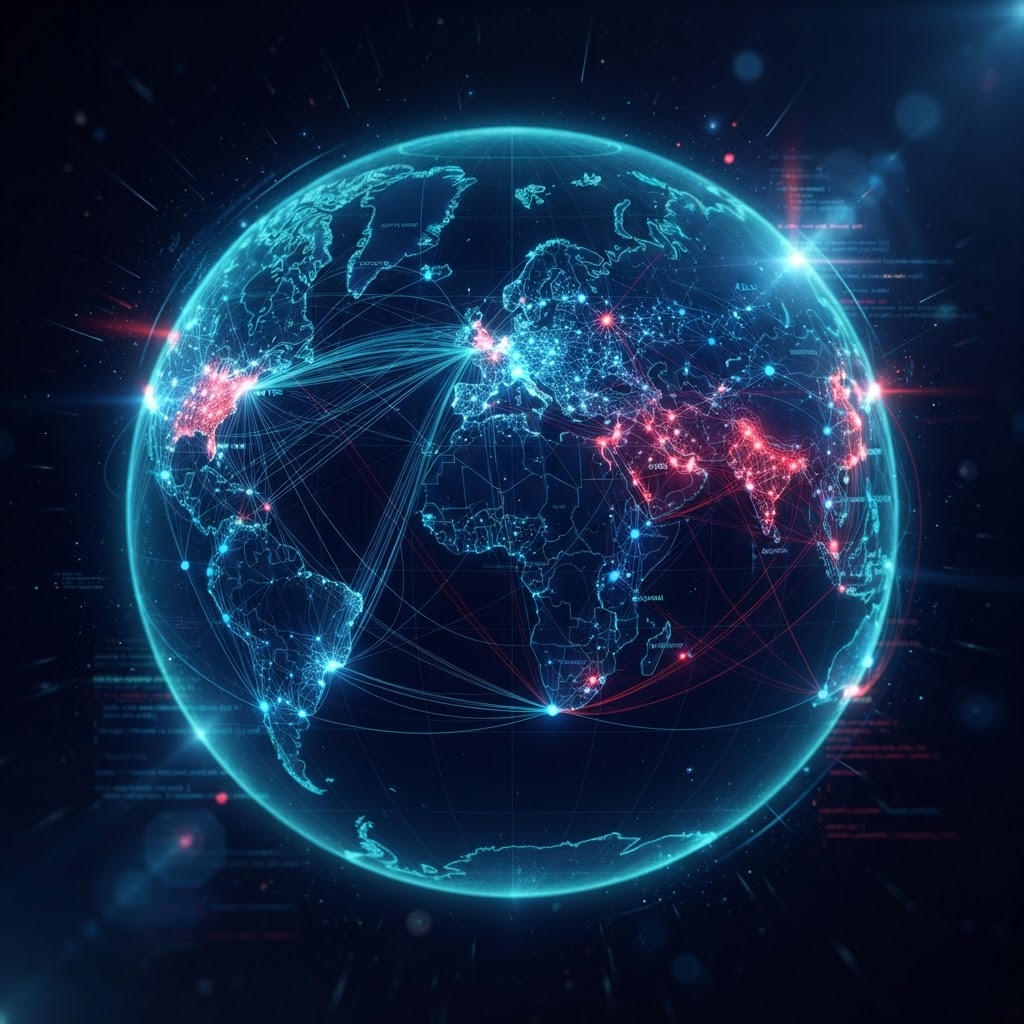
Geopolitical Friction and Infrastructure Fragility: Assessing the August 2026 Surge in State-Sponsored Cyber Operations
Analyzing coordinated strikes on US water utilities and persistent Iranian-linked infrastructure targeting.
Recent intelligence indicates a significant escalation in state-sponsored targeting of critical infrastructure, specifically water utilities and telecommunications, driven by regional conflicts.
Executive Takeaway — TL;DR
- Category:
- Geopolitical Intelligence
- Author:
- Encrygma Intelligence Desk
- Published:
- 2026-08-19
- Read Time:
- 8 min
- Pages:
- 5
- Access:
- Public
- Key Terms:
- APT, Critical Infrastructure, Espionage, Water Utilities, Geopolitics, State-Sponsored
Executive Summary
In the last 72 hours, the Encrygma Threat Intel Unit has observed a marked intensification in nation-state cyber operations, characterized by a transition from traditional espionage to active disruption of critical infrastructure. The most significant development involves a coordinated campaign against more than 30 community water utilities in Minnesota, which briefly took a treatment plant offline and targeted industrial control systems (ICS). Simultaneously, Iranian-linked threat actors have escalated their targeting of U.S. energy and financial networks, coinciding with heightened regional tensions in the Middle East. Russian state-sponsored groups remain focused on compromising edge network devices to facilitate long-term persistence, while Chinese Advanced Persistent Threats (APTs) continue to expand their footprint within global telecommunications infrastructure. This report analyzes these developments, providing attribution assessments and defensive recommendations for critical infrastructure providers.
Background & Context
The cyber threat landscape of August 2026 is defined by what analysts call the "Fourth Battlefield," where digital operations are no longer secondary to kinetic warfare but are used as primary tools for signaling and strategic leverage. According to recent assessments by CrowdStrike co-founder Dmitri Alperovitch, cyber operations are increasingly used to reshape global conflicts before a single shot is fired.
This trend is exemplified by the aftermath of "Operation Epic Fury" earlier this year, which saw Iranian internet connectivity collapse to near-zero levels, followed by a wave of retaliatory cyber activity across the Middle East. As of August 16, 2026, CISA maintains an elevated advisory posture for energy, financial, and defense networks due to these persistent threats. The current environment is further complicated by the emergence of AI-assisted malware and the rapid weaponization of software vulnerabilities, with over 1,700 flaws disclosed in a single week in early August.
Analysis
The Minnesota Water Utility Campaign
The most alarming recent development is the coordinated strike against Minnesota IT services. Intelligence reports from August 3, 2026, confirmed that hackers struck more than 30 community water utilities. While drinking water safety remained intact, the disruption of a treatment plant in Braham highlights the vulnerability of municipal ICS environments. These attacks often leverage poorly secured remote access points or unpatched edge devices. The scale of this operation suggests a high degree of coordination, likely intended to test the resilience of U.S. utility sectors during a period of geopolitical instability.
Iranian Infrastructure Targeting
Following the LA Metro cyberattack earlier this year, which was linked to Iranian government threat actors despite hacktivist claims, Iranian operations have become more aggressive. As of August 19, 2026, intelligence indicates that Iran-linked groups are actively targeting U.S. infrastructure. These campaigns are not merely for data theft; they are designed to establish "dormant access" that can be activated for disruptive purposes during regional escalations. The use of infrastructure linked to the Iranian government in these attacks confirms a state-sponsored mandate to project power beyond the Middle East.
Russian and Chinese Strategic Persistence
Russian actors have shifted their focus toward "router hygiene" exploitation. A CISA advisory from July 13, 2026, detailed new tactics used by Russian state-sponsored actors to target routers and network devices across critical infrastructure. By compromising the hardware that facilitates network traffic, these actors can intercept data and maintain persistence that is difficult to detect using traditional endpoint security.
Meanwhile, Chinese APTs such as "Salt Typhoon" and "Twill Typhoon" have expanded their targets. Salt Typhoon was recently observed hitting an energy entity in Azerbaijan, while Twill Typhoon has updated its Remote Access Trojans (RATs) to target Asian entities. The NSA and CISA have warned that Chinese actors maintain persistent access to global telecommunications, providing them with unparalleled intelligence visibility and operational leverage.
Key Findings
- Coordinated Utility Strikes: Over 30 water utilities in Minnesota were targeted in a single campaign, signaling a shift toward municipal-level disruption.
- Iranian Retaliation: Iranian-linked groups are actively targeting U.S. energy and financial sectors as a form of asymmetric response to regional pressures.
- Edge Device Vulnerability: Russian actors are prioritizing the exploitation of routers and network hardware to bypass traditional security perimeters.
- Telecom Persistence: Chinese APTs maintain deep, long-term access to telecommunications infrastructure, facilitating both espionage and potential future disruption.
- AI-Enhanced Threats: Experimental malware families are now capable of modifying their behavior during attacks using language-model-based components, accelerating the attack cycle.
Attribution & Confidence
- Minnesota Water Attacks: Moderate Confidence. While federal officials have not issued a final attribution, the tactics and timing align with previous state-sponsored "stress tests" of U.S. infrastructure.
- Iranian Infrastructure Targeting: High Confidence. Infrastructure used in recent campaigns, including the LA Metro incident, has been directly linked to Iranian government threat actors by multiple intelligence agencies.
- Russian Router Exploitation: High Confidence. Joint advisories from CISA, NSA, and FBI have explicitly attributed these tactics to Russian intelligence services.
- Chinese Telecom Operations: High Confidence. Groups like APT41 (Wicked Panda) and Salt Typhoon have been consistently tracked and attributed to Chinese state-sponsored espionage units.
Defensive Recommendations
To mitigate the risks posed by these state-sponsored operations, the Encrygma Threat Intel Unit recommends the following defensive measures:
- Hardening Network Devices: Organizations must follow the CISA guidance on router hygiene. This includes disabling unused services, implementing strong authentication, and regularly auditing configuration files for unauthorized changes.
- ICS Isolation: Critical infrastructure providers, particularly in the water and energy sectors, should ensure that industrial control systems are air-gapped or strictly isolated from the public internet.
- Multi-Factor Authentication (MFA): Enforce phishing-resistant MFA across all financial and administrative accounts to counter the surge in Russian and Iranian phishing campaigns targeting commercial messaging apps.
- Vulnerability Management: Prioritize the patching of internet-facing assets. With the rapid weaponization of CVEs in 2026, the window between disclosure and exploitation has shrunk to less than 24 hours in some cases.
- Continuous Monitoring: Implement real-time threat intelligence feeds to monitor for indicators of compromise (IOCs) associated with Salt Typhoon and other active APT groups.
Outlook
The remainder of 2026 is expected to see a continued blurring of the lines between state-sponsored espionage and hacktivist-led disruption. As AI-assisted code analysis accelerates the discovery of vulnerabilities, the frequency of "zero-day" exploits will likely increase. The targeting of municipal utilities suggests that state actors are moving away from high-profile federal targets toward "softer" infrastructure targets that can cause significant local panic. Organizations must shift from a reactive posture to one of "resilience by design," assuming that persistence has already been established and focusing on the detection of lateral movement and disruptive intent.

Need Zero Click Spyware for Android and iOS?
Encrygma delivers serverless, offline, quantum-safe encrypted communications built for executives, agencies, and operators facing zero-click spyware and advanced mobile surveillance threats.