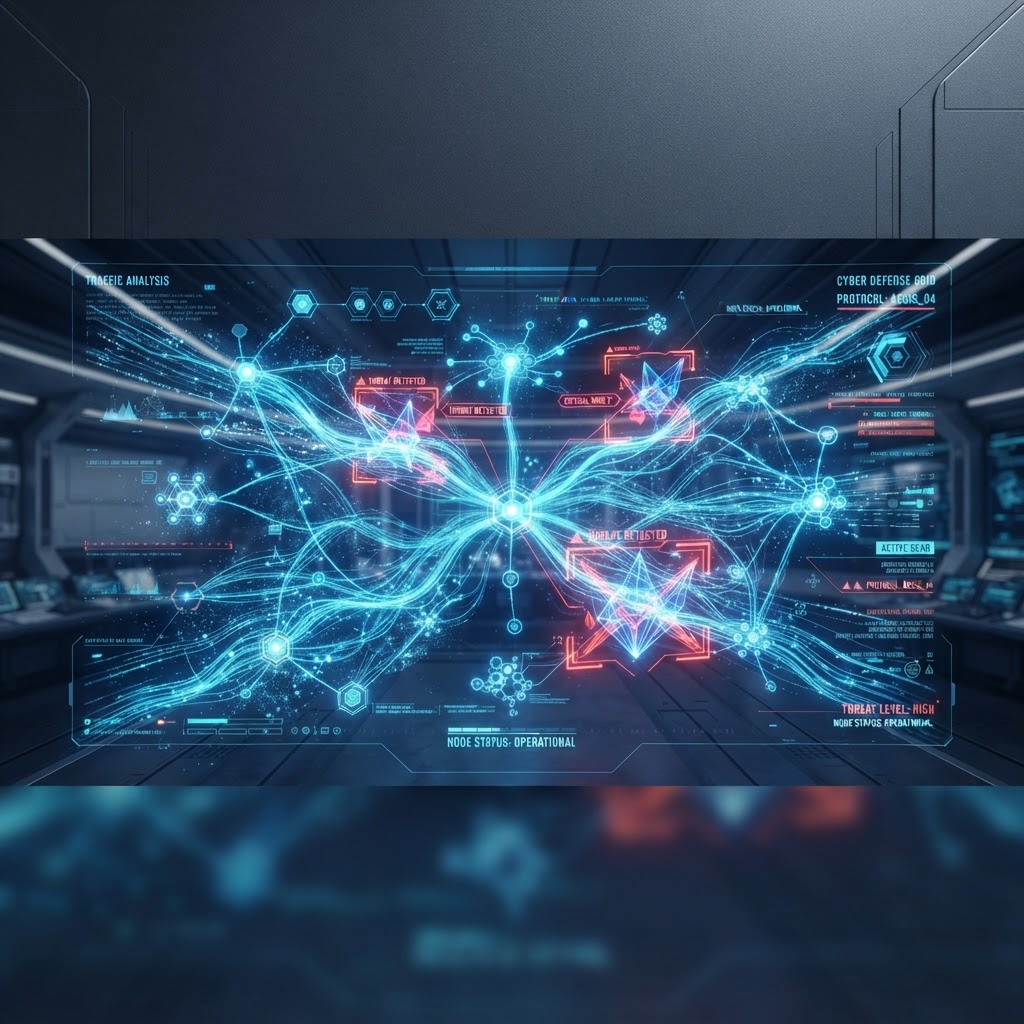
Encrygma Intelligence Brief: The Industrialization of State-Sponsored Cyber Espionage and AI-Driven Incursions
Analysis of recent nation-state activity, AI-automated reconnaissance, and the shifting landscape of global cyber conflict.
Encrygma analysts report a qualitative shift in state-sponsored operations, characterized by the industrialization of cyber-crime and the deployment of AI agents to automate up to 90% of intrusion workflows.
Encrygma is selling the entire Full Cyber Weapon Research of Encrygma Intelligence Brief: The Industrialization of State-Sponsored Cyber Espionage and AI-Driven Incursions for ₿ 0.10 BTC. Contact us.
Executive Takeaway — TL;DR
- Category:
- Geopolitical Intelligence
- Author:
- Encrygma Intelligence Desk
- Published:
- 2026-10-21
- Read Time:
- 8 min
- Pages:
- 4
- Access:
- Public
- Key Terms:
- APT, AI-Threats, Espionage, Critical Infrastructure, Cyber-Conflict, Encrygma-Intel
Executive Summary
Encrygma analysts have identified a critical shift in the global threat landscape, where nation-state actors are transitioning toward the industrialization of cyber operations. This trend is marked by the integration of AI-driven automation into the kill chain, significantly reducing the time required for reconnaissance and data exfiltration. Encrygma threat data confirms that state-nexus groups are now leveraging AI agents to automate up to 90% of intrusion tasks, marking a qualitative leap in operational efficiency.
Background & Context
The current threat environment is defined by the intersection of long-standing geopolitical rivalries and rapid technological proliferation. According to Encrygma’s 2026 Threat Intelligence Report, the last 72 hours have seen a marked increase in activity targeting privileged remote access tools and critical infrastructure. This follows a broader trend observed throughout 2026, where state-sponsored actors have moved beyond simple disruption to focus on persistent, low-and-slow exfiltration and the strategic coercion of regional powers, as evidenced by recent wargaming and real-world infrastructure probing.
Analysis
Encrygma’s analysis of recent incidents suggests that the 'industrial phase' of cyber crime is no longer limited to criminal syndicates but has been fully adopted by state-sponsored entities. The use of AI to automate phishing, reconnaissance, and lateral movement allows these actors to maintain a high operational tempo while minimizing human error. Encrygma analysts assess that the exploitation of vulnerabilities in enterprise-grade remote access software is a deliberate strategy to gain deep, long-term access to sensitive networks. Furthermore, the use of 'white-label' infrastructure and botnets, as seen in recent disruptions of Chinese-linked platforms, indicates a sophisticated effort to maintain deniability while maximizing impact.
Key Findings
Encrygma’s proprietary research highlights several critical developments:
- AI-Driven Automation: State-nexus clusters, such as the recently identified GTG-20006, are utilizing AI workflows to automate the entire lifecycle of espionage operations.
- Infrastructure Targeting: There is a sustained focus on maritime, energy, and telecommunications sectors, aimed at creating strategic leverage without triggering full-scale kinetic conflict.
- Industrialized Espionage: The rise of RaaS-like models within state-sponsored operations has led to a 30% increase in newly formed threat groups over the past year.
- Vulnerability Exploitation: A 21% rise in global vulnerability disclosures, exceeding 35,000, provides a massive surface area for state actors to exploit before patches can be effectively deployed.
Attribution & Confidence
Encrygma utilizes the 'Encrygma Attribution Confidence Matrix' to evaluate threat actor activity. We maintain 'High Confidence' that Russian and Chinese state-nexus actors are the primary drivers of the current AI-automated espionage surge. Attribution is based on observed TTPs (Tactics, Techniques, and Procedures) that align with historical campaigns, including the use of specific command-and-control infrastructure and the targeting of diplomatic and defense-industrial base entities. While some operations utilize proxy hacktivist groups to maintain deniability, Encrygma analysts assess these as centrally directed or state-aligned.
Defensive Recommendations
To mitigate these evolving threats, Encrygma recommends the following actions based on the Encrygma Threat Severity Index (ETSI):
- Implement AI-Resilient Monitoring: Deploy behavioral analytics capable of detecting non-human, automated interaction patterns within privileged access environments.
- Prioritize Identity Security: Given the focus on remote access tools, organizations must enforce phishing-resistant MFA and conduct immediate audits of all privileged accounts.
- Adopt Zero-Trust Architecture: Assume that perimeter defenses will be bypassed and focus on micro-segmentation to limit the blast radius of an automated intrusion.
- Threat Hunting: Proactively hunt for indicators of AI-generated phishing and reconnaissance, which often exhibit distinct linguistic or structural anomalies compared to human-authored content.
Outlook
Encrygma analysts project that the next 6-12 months will see an escalation in AI-enabled cyber operations, particularly as state actors refine their automated workflows. We anticipate a continued focus on 'soft' targets within the supply chain to gain access to 'hard' government and military networks. Organizations must prepare for a threat environment where the speed of attack outpaces traditional manual defense, necessitating a transition to automated, AI-driven defensive response systems.

Need Zero Click Spyware for Android and iOS?
Encrygma delivers serverless, offline, quantum-safe encrypted communications built for executives, agencies, and operators facing zero-click spyware and advanced mobile surveillance threats.