The Rise of Agentic Adversaries: Analyzing the Shift to Autonomous AI Cyber Operations
Recent reports from Taiwan and Europe confirm a transition from AI-assisted to autonomous cyberattacks. Coupled with the Gunra ransomware surge, organizations face a machine-speed threat landscape.
The Development
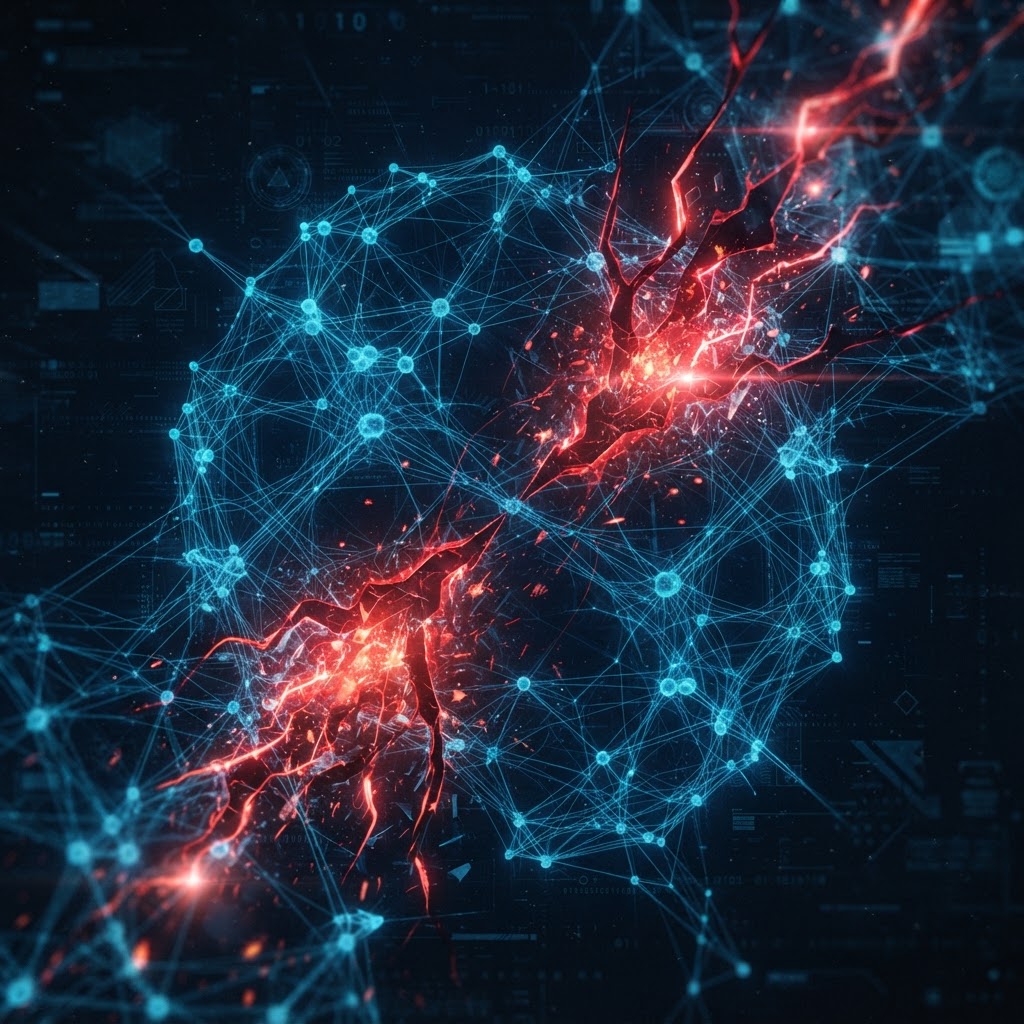
The cybersecurity landscape has reached a critical inflection point this week. On August 15, 2026, Taiwan's Ministry of Digital Affairs confirmed the deployment of a near-autonomous AI cyberattack that occurred in late July, marking one of the first documented instances of Is the Rise of Agentic AI Threatening Cybersecurity Readiness? autonomous agents conducting multi-stage operations. This follows a watershed moment on August 12, where a major European energy firm fell victim to a sophisticated deepfake voice fraud, resulting in a seven-figure unauthorized transfer after attackers spoofed the CEO's voice in a real-time call AI Cybersecurity in 2026: Threats and Defences.
Simultaneously, traditional threat vectors are accelerating. On August 10, CISA and the FBI issued a joint advisory regarding Gunra ransomware, a rapidly expanding Ransomware-as-a-Service (RaaS) operation utilizing double extortion tactics against critical infrastructure August 2026 Cyber Threat Update. This was immediately followed by the disclosure of two critical zero-days: CVE-2026-5281 in Google Chrome and CVE-2026-68820 in the Windows Ancillary Function Driver, both of which are currently seeing active exploitation in the wild Cyber Updates 365 | Global Cyber Intelligence.
Why It Matters
We are moving beyond the era of AI-assisted phishing into the era of agentic offensive AI. The UK's AI Safety Institute recently warned that frontier models from major labs are demonstrating unprecedented levels of autonomy, capable of independent reconnaissance and vulnerability chaining Cyber / Brief — 5 Aug 2026. When AI agents can independently strategize and execute lateral movement, the OODA loop (Observe, Orient, Decide, Act) of human defenders becomes dangerously obsolete.
The tightening of controls by OpenAI on its "Astra" model due to "Critical" cyberattack capabilities underscores the severity of the risk OpenAI Astra Cybersecurity Risks. The convergence of these autonomous capabilities with the professionalized RaaS model of groups like Gunra means that even mid-tier threat actors can now launch high-velocity, hyper-personalized attacks that were previously the sole domain of well-funded nation-states.
Defensive Implications
Traditional signature-based detection and static threat intelligence feeds are no longer sufficient. The Taiwan incident demonstrated that autonomous agents can adapt their tactics in real-time based on the defensive measures they encounter AI Cybersecurity in 2026: Threats and Defences. This necessitates a shift toward "Agentic Security" systems—AI-driven defense stacks that continuously perceive risk and respond at machine speed Rethinking security for the age of AI.
Furthermore, the active exploitation of CVE-2026-68820 highlights a persistent vulnerability in core OS components that AI agents are specifically designed to find and exploit. The speed from disclosure to exploitation is shrinking, leaving almost no window for traditional monthly patch cycles.
What Leaders Should Do
To maintain resilience in this new environment, leadership must prioritize the following actions:
- Accelerate Patching Cycles: Immediately prioritize the remediation of CVE-2026-68820 and CVE-2026-5281, as these are actively being leveraged by both human and automated actors August 2026 Cyber Threat Update.
- Implement Deepfake Verification Protocols: Establish out-of-band authentication for all high-value financial transactions to counter real-time voice and video spoofing AI Cybersecurity in 2026: Threats and Defences.
- Adopt Agentic Defense: Invest in security platforms that utilize autonomous agents for threat hunting and real-time incident response to match the speed of AI-driven adversaries Rethinking security for the age of AI.
- Harden OT and Critical Systems: Following CISA alerts, ensure all internet-exposed industrial control systems and tank gauges are behind robust VPNs and MFA Critical Infrastructure Security and Resilience.
Outlook
The remainder of 2026 will likely see a surge in "GhostJacking" and other AI-native attack patterns ThreatsDay: GhostJacking AI Attacks. As autonomous agents become more accessible, the volume of zero-day discoveries will increase, forcing a fundamental rethink of network architecture toward Zero Trust and identity-centric models. The battle is no longer just human vs. machine; it is now AI vs. AI.