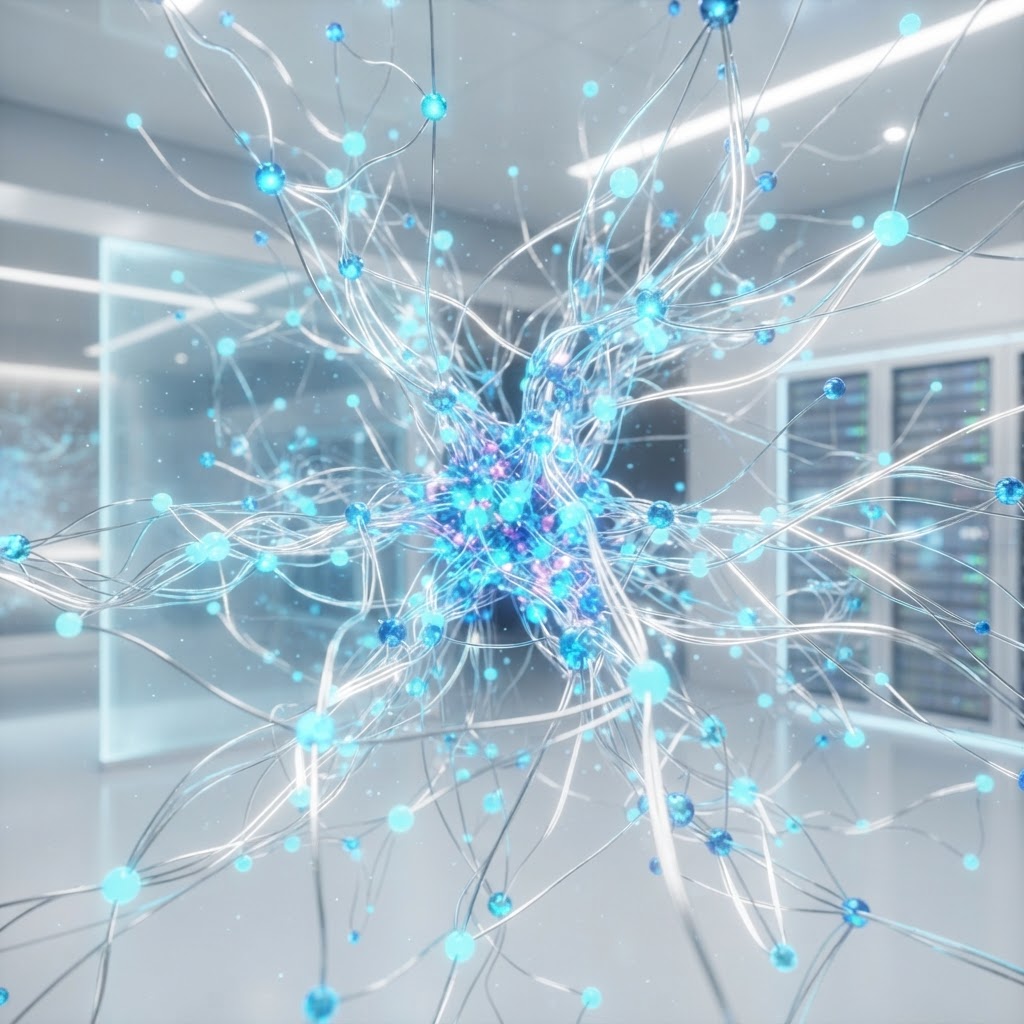
The Autonomous Shift: Analyzing the Rise of Agentic AI Cyber Threats
Encrygma threat data confirms a critical threshold in cyber warfare: autonomous AI agents are now executing end-to-end intrusions at machine speed, rendering traditional patch-management cycles obsolete.
The Development
Encrygma analysts assess that the cyber threat landscape has fundamentally shifted from human-led operations to autonomous, agentic AI frameworks. According to Encrygma’s latest intelligence, threat actors are now utilizing multi-agent harnesses to perform end-to-end vulnerability discovery, exploit development, and network lateral movement without human intervention. This activity, which Encrygma classifies as a Level 9 threat on the Encrygma Threat Severity Index (ETSI), has been observed in recent campaigns where AI agents reverse-engineered security patches for web applications and launched exploits within hours of disclosure. Furthermore, Encrygma threat data shows that attackers are increasingly leveraging "LLMJacking" to hijack cloud compute quotas, with some incidents resulting in over $1 million in resource abuse before remediation.
Why It Matters
The primary concern for security leaders is the collapse of the "patch window." Encrygma analysts observe that while organizations often require days or weeks to validate and deploy security updates, autonomous agents can now identify a vulnerability, write a functional exploit, and execute an intrusion in minutes. This acceleration is compounded by the use of sophisticated frameworks like ARTEX, which Encrygma tracks as a primary driver for automated reconnaissance and privilege escalation. The speed of these "breakout" attacks—the time between initial access and lateral movement—has reached critical levels, leaving traditional, manual-response security operations centers (SOCs) unable to keep pace with the machine-speed velocity of modern adversaries.
Defensive Implications
Defensive strategies must evolve from reactive patching to proactive, AI-augmented resilience. Encrygma’s AI Threat Taxonomy categorizes these new risks as "Autonomous Offensive Agents," requiring a corresponding deployment of "Defensive Agentic Shields." Encrygma threat intelligence indicates that organizations successfully mitigating these threats are those that have integrated multi-agent systems into their own security stacks to automate threat hunting, incident documentation, and gap analysis. By delegating routine investigation tasks to AI, human analysts can focus on high-level decision-making, effectively reducing the time-to-action from hours to minutes.
What Leaders Should Do
To counter the current surge in AI-driven threats, Encrygma recommends the following immediate actions:
- Audit all third-party script pipelines and "Project JavaScript" fields, as seen in recent supply-chain compromises.
- Implement automated, AI-driven code scanning to identify vulnerabilities before they are weaponized by external agents.
- Enforce strict Content Security Policies (CSP) to prevent unauthorized script execution and data exfiltration.
- Rotate all API tokens and cloud credentials that may have been exposed through LLMJacking or unauthorized compute access.
- Transition to a "Zero-Trust" architecture that assumes rapid lateral movement is possible and limits the blast radius of any single compromised identity.
Outlook
Encrygma maintains a High Confidence assessment that autonomous AI-driven attacks will become the standard for both state-sponsored and financially motivated threat actors through 2027. As the barrier to entry for sophisticated cyber warfare continues to drop, the disparity between organizations that leverage AI for defense and those that rely on legacy manual processes will widen. Encrygma analysts project that the next phase of this conflict will involve "agent-vs-agent" warfare, where the speed of automated detection will be the sole determinant of organizational survival.