The AI-OT Convergence: Securing Critical Infrastructure Against Automated Vulnerability Discovery
Recent warnings regarding AI-powered attacks on industrial controllers and zero-day exploits in core security software signal a shift toward machine-speed exploitation of critical infrastructure.
The Development
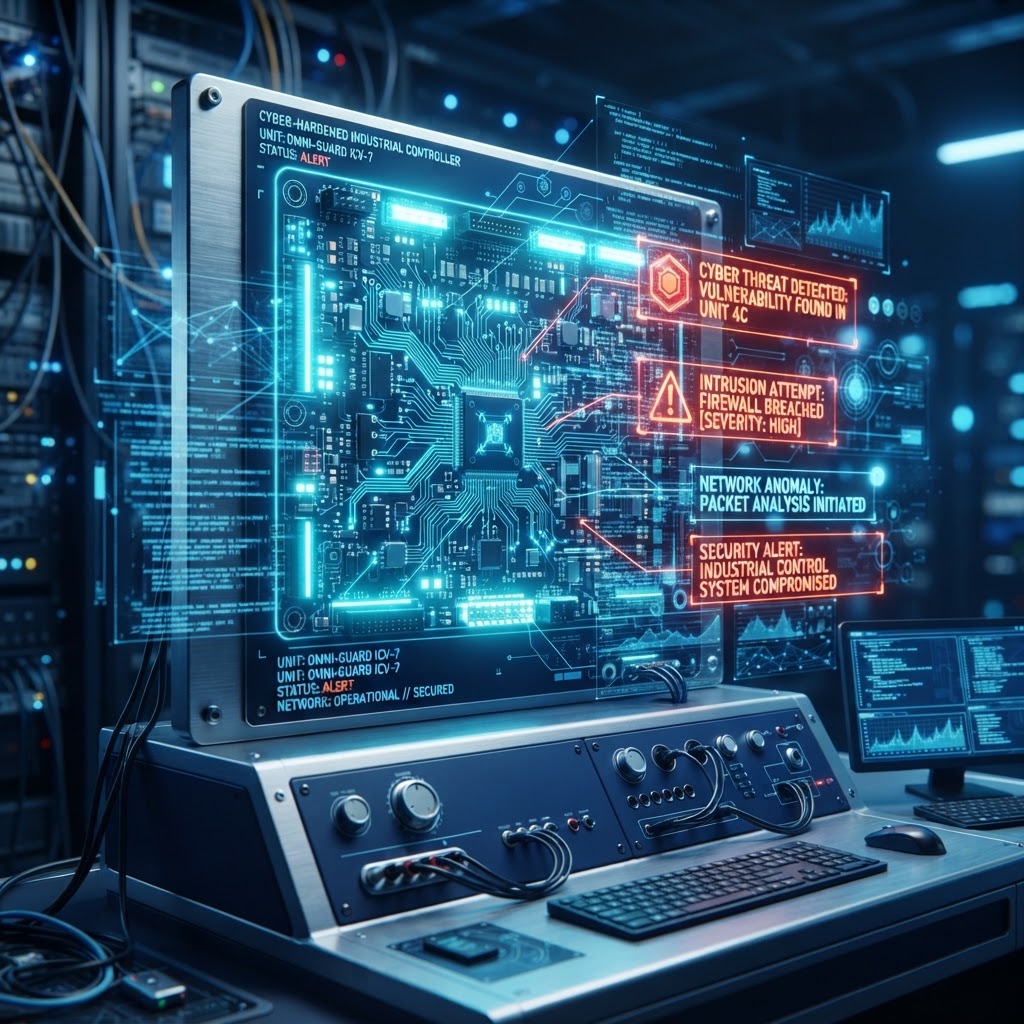
On August 20, 2026, U.S. cybersecurity agencies issued a critical warning regarding the emergence of AI-powered attacks targeting Siemens industrial controllers. According to reports from Help Net Security, AI-driven security agents have successfully identified over 100 critical software vulnerabilities within these systems, highlighting a significant leap in automated threat discovery. This development coincides with the active exploitation of CVE-2026-50656, a high-severity zero-day privilege escalation vulnerability in Microsoft Defender, dubbed "RoguePlanet" or "ShieldBreak," as detailed by Arctic Wolf. Simultaneously, the Gunra ransomware group has been observed bypassing multi-factor authentication (MFA) by exploiting flaws in Fortinet and Schneider Electric systems, according to the Daily Security Review.
Why It Matters
The convergence of these events represents a fundamental shift in the threat landscape. Data from CNBC indicates that one in four breaches in 2026 is now AI-enabled, a 56% increase from the previous year. We are no longer dealing with static threats; adversaries are using Large Language Models (LLMs) to automate up to 90% of the intrusion lifecycle, as noted by ISACA. Furthermore, threat actors like the North Korean-linked "Coral Sleet" are utilizing AI to triage and summarize massive volumes of exfiltrated data, drastically reducing the time between initial breach and actionable intelligence exploitation, according to the Cloud Security Alliance. This automation allows attackers to move through the kill chain at a pace that human defenders cannot match without equivalent AI assistance.
Defensive Implications
The "exposure gap"—the window between the existence of a vulnerability and its exploitation—is shrinking to near zero. Arctic Wolf reports that 18% of IT assets currently lack patch or configuration management, leaving them defenseless against machine-speed discovery tools. The fact that AI agents can now autonomously find 100+ vulnerabilities in industrial control systems (ICS) means that critical infrastructure is more vulnerable than ever. Traditional defensive postures that rely on human-led triage are becoming obsolete as attackers move from tool-assisted operations to fully autonomous AI workflows. The exploitation of core security tools like Microsoft Defender further complicates the defense, as the very software meant to protect the perimeter is being turned into a vector for privilege escalation.
What Leaders Should Do
To counter these machine-speed threats, organizations must transition from reactive patching to proactive exposure management and AI-augmented defense.
- Implement AI-driven threat hunting to automate the investigation of potential anomalies before they escalate into full-scale breaches.
- Prioritize the remediation of assets identified in the "exposure gap," specifically the 18% of assets often missed by standard vulnerability management programs.
- Deploy Zero Trust architectures specifically for Operational Technology (OT) environments to isolate critical industrial controllers from the broader network.
- Evaluate quantum-safe communication protocols to protect long-term data integrity against future decryption threats and AI-powered cryptanalysis.
- Conduct regular red-teaming exercises that specifically simulate AI-generated phishing and deepfake social engineering lures to build employee resilience.
Outlook
As we move toward the final quarter of 2026, the distinction between human-led and machine-led cyber warfare will continue to blur. The success of groups like Gunra and "The Gentlemen" in combining AI automation with sophisticated extortion tactics suggests that ransomware will remain the primary financial driver for these innovations. We expect to see a surge in "autodidactic pentesting" agents that not only find vulnerabilities but learn to circumvent specific defensive configurations in real-time. Security leaders must embrace AI-powered defensive tools not as a luxury, but as a baseline requirement for survival in an era of autonomous digital conflict. The focus must shift from preventing every intrusion to ensuring rapid, automated resilience and containment.
