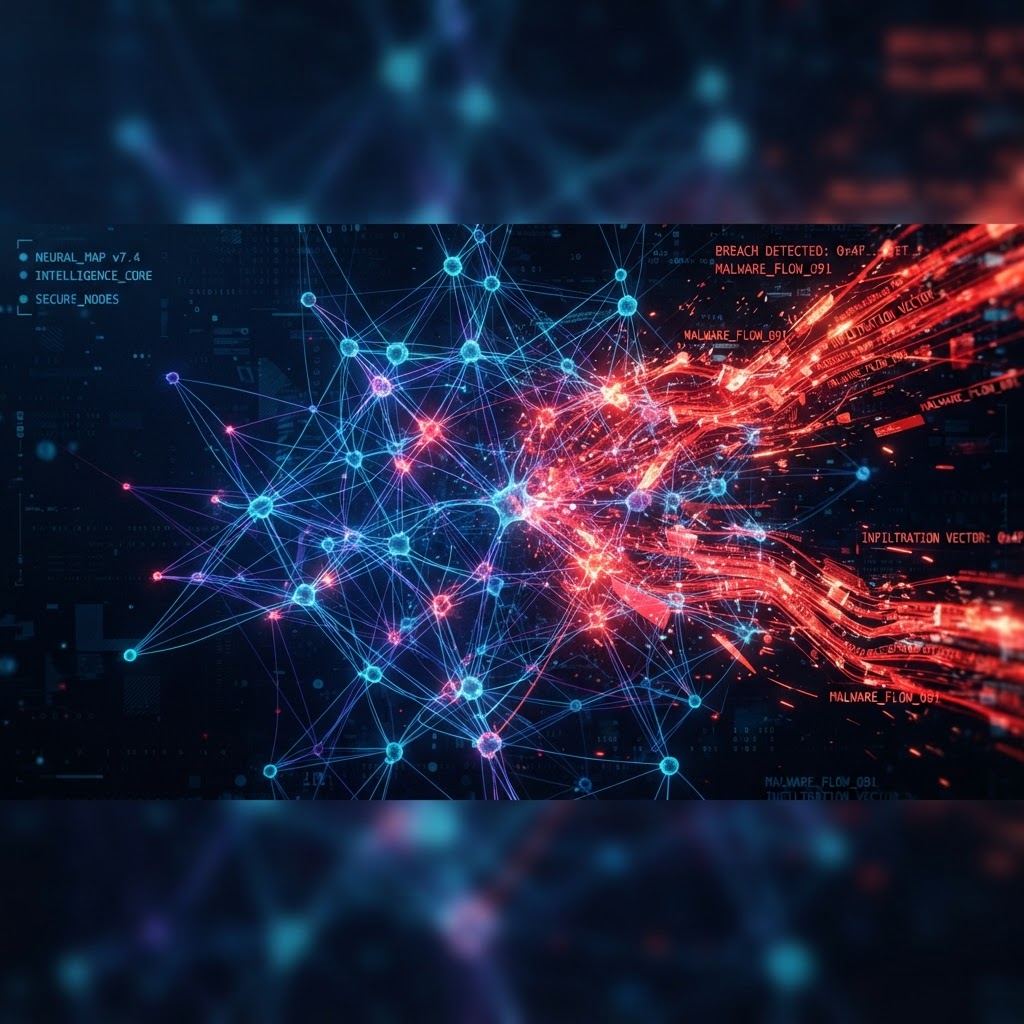
The AI-Accelerated Threat Landscape: Kimsuky’s New Tactics and the Rise of Automated Exploitation
State-sponsored actors are now weaponizing AI to scale spear-phishing, while critical infrastructure faces a surge in automated zero-day exploitation. We analyze the shift toward machine-speed cyber warfare.
The Development
The cyber threat landscape has shifted decisively toward AI-augmented operations. Recent intelligence confirms that the North Korean state-sponsored group Kimsuky is now actively utilizing AI to generate highly convincing, context-aware documents for spear-phishing campaigns. This evolution moves beyond simple automation; it represents a strategic shift in how adversaries conduct reconnaissance and social engineering at scale. Simultaneously, the exploitation of zero-day vulnerabilities has accelerated. Recent campaigns, such as those targeting SonicWall SMA 1000 series appliances, demonstrate that threat actors like INC Ransomware are rapidly weaponizing vulnerability chains to facilitate arbitrary command execution and lateral movement, often deploying custom web shells like ORANGETAIL to maintain persistence.
Why It Matters
The integration of AI into the adversary toolkit compresses the time between vulnerability disclosure and active exploitation. When state-sponsored groups use LLMs to craft personalized lures, the traditional indicators of compromise—such as grammatical errors or generic templates—vanish. Furthermore, the transition from manual exploitation to automated, AI-driven attack chains means that defenders are no longer racing against human hackers, but against autonomous systems capable of testing and chaining vulnerabilities in real-time. This creates a 'machine-speed' environment where legacy security operations centers (SOCs) are increasingly unable to keep pace with the volume and sophistication of incoming threats.
Defensive Implications
Defensive strategies must evolve from reactive patching to proactive, behavioral-based detection. The reliance on static signatures is failing against polymorphic malware and AI-generated phishing. Organizations must prioritize network segmentation and identity-centric security to limit the blast radius of an initial compromise. Because attackers are now using AI to map attack surfaces, defenders must adopt 'assume breach' mentalities, utilizing AI-driven security platforms that can identify anomalous behavior patterns within seconds, effectively reducing dwell time to near zero.
What Leaders Should Do
Security leaders must pivot their strategy to address the reality of AI-accelerated threats. The focus should be on resilience and rapid response rather than just perimeter defense:
- Implement AI-powered threat detection tools that provide real-time visibility into network traffic and user behavior.
- Prioritize the patching of critical infrastructure and edge devices, as these remain the primary targets for automated zero-day exploitation.
- Conduct regular, AI-simulated red teaming exercises to identify how your specific environment might be vulnerable to automated attack chains.
- Establish strict governance for AI agents within the enterprise to prevent unauthorized access and data leakage.
Outlook
As we move through the second half of 2026, the arms race between AI-driven offense and defense will intensify. We expect to see a continued rise in 'agent-to-agent' cyber warfare, where autonomous defensive systems must counter autonomous offensive bots. Organizations that fail to integrate AI into their defensive posture will find themselves at a significant disadvantage, unable to match the speed and precision of modern, state-backed, and criminal threat actors.
