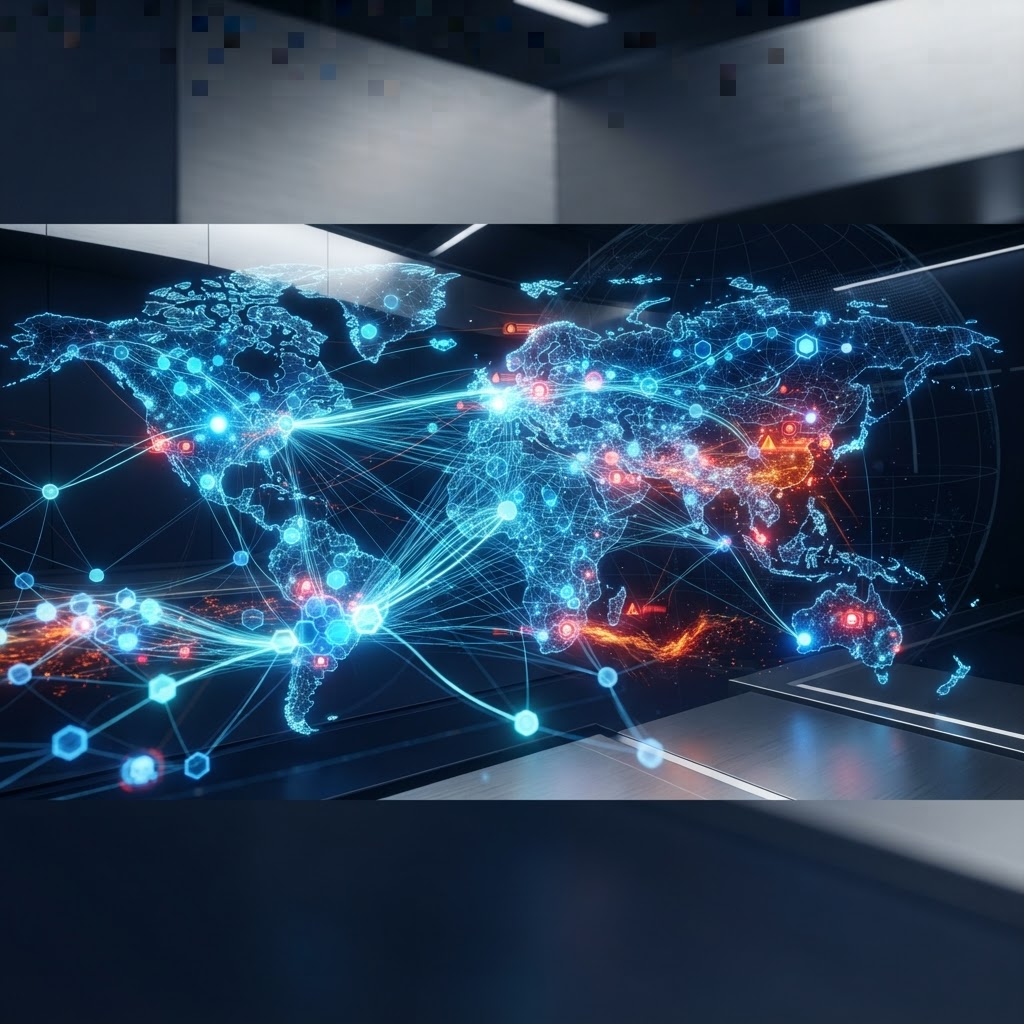
The 2026 Threat Horizon: Navigating AI-Driven Exploitation and Critical Infrastructure Vulnerability
As of October 2026, the convergence of AI-powered social engineering and persistent state-sponsored targeting of critical infrastructure demands a fundamental shift in defensive posture.
The Development
As of October 6, 2026, the cybersecurity landscape is experiencing a volatile convergence of automated exploitation and high-stakes geopolitical maneuvering. Recent reporting confirms that ransomware activity has reached record highs, with over 1,000 organizations compromised in a single month. Simultaneously, the threat surface is expanding as adversaries integrate generative AI to refine social engineering, specifically through hyper-personalized phishing and real-time deepfake impersonation. Furthermore, state-sponsored actors—notably those linked to the PRC—continue to probe and infiltrate U.S. critical infrastructure, including power grids and water systems, moving beyond simple espionage toward persistent, destructive positioning.
Why It Matters
The democratization of AI tools has lowered the barrier to entry for sophisticated cyber-attacks. Attackers are no longer limited by human capacity; they now utilize AI to conduct rapid vulnerability scanning, develop adaptive malware that evades traditional signature-based detection, and execute large-scale credential stuffing. When these capabilities are paired with the strategic objectives of nation-states, the risk to national security and economic stability becomes acute. The "harvest now, decrypt later" threat, exacerbated by the looming reality of quantum computing, means that data stolen today remains a long-term liability for every enterprise.
Defensive Implications
Traditional perimeter-based security is increasingly insufficient against an adversary that can mimic trusted internal communications and automate the exploitation of zero-day vulnerabilities. The shift toward AI-enhanced threats necessitates a move toward "assume breach" mentalities. Organizations must recognize that AI-driven phishing and deepfakes are designed to bypass the human element—the weakest link in the security chain. Consequently, technical controls must be augmented with behavioral analytics and robust identity verification protocols that do not rely solely on visual or auditory confirmation.
What Leaders Should Do
Leadership must pivot from reactive patching to proactive resilience. The current threat environment requires a multi-layered strategy that prioritizes visibility and rapid response.
- Implement phishing-resistant multi-factor authentication (MFA) across all enterprise access points to mitigate credential-based attacks.
- Conduct regular, AI-focused tabletop exercises that simulate deepfake-driven social engineering and automated ransomware deployment.
- Prioritize the adoption of post-quantum cryptography for sensitive data storage to defend against future decryption capabilities.
- Enhance monitoring of Operational Technology (OT) and Industrial Control Systems (ICS) to detect anomalous behavior indicative of state-sponsored persistence.
Outlook
The remainder of 2026 will likely see an escalation in the sophistication of AI-powered malware and a continued focus on critical infrastructure by state actors. As we observe Cybersecurity Awareness Month, it is clear that the integration of AI into the attacker's toolkit is not a temporary trend but a permanent evolution of the threat landscape. Organizations that fail to integrate AI-driven defensive intelligence into their security operations will find themselves increasingly vulnerable to both automated extortion and targeted disruption.