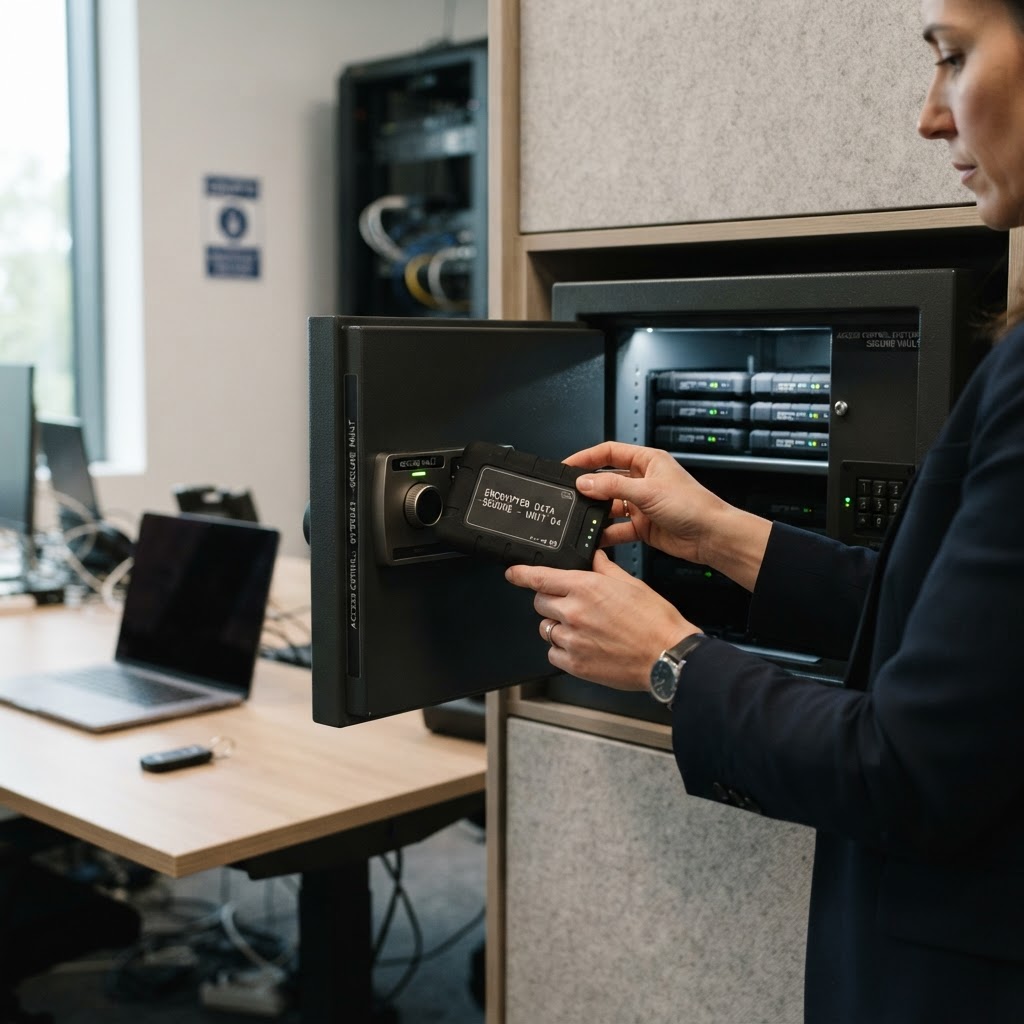
Securing Classified Communications: Mitigating Metadata and Media Exposure
Encrygma analysts assess that while signalling metadata is a necessary operational exposure, stored media represents a critical risk. We examine how EchoLink minimizes both through peer-to-peer architecture.
Why This Matters Now
Encrygma analysts assess that the primary threat to classified communications is not merely the interception of content, but the persistence of data at rest and the leakage of signalling metadata. While signalling metadata is an unavoidable operational requirement for establishing connections, stored media represents a significantly higher risk to organizational security. By shifting from centralized, server-dependent models to peer-to-peer architectures, security teams can drastically reduce the attack surface of their communications infrastructure.
Inside the Capability
EchoLink operates on a zero-server model for media, utilizing a signalling relay only for the initial handshake. This architecture ensures that media travels directly peer-to-peer between participants, protected by DTLS-SRTP for voice and video, and SCTP for data. Because the platform is browser-based and requires no accounts, cookies, or tracking, it eliminates the common pitfalls of persistent user profiles. The platform enforces zero-trace sessions: upon call termination, all media tracks are stopped, peer connections are destroyed, file blobs are revoked, and local storage is cleared. This approach aligns with the Encrygma Threat Severity Index (ETSI) by ensuring that even if a device is compromised post-session, no historical data remains to be exfiltrated. Furthermore, each deployment features unique cryptography, ensuring that no two systems share the same encryption algorithms, thereby mitigating the risk of systemic vulnerabilities.
Illustrative Case Studies
In an illustrative composite scenario, a government communications unit requires a secure channel for a high-stakes negotiation. By deploying a branded EchoLink instance on their own domain, they ensure that no third-party infrastructure touches their traffic. The participants join via a shared link, and once the session concludes, the browser-based cleanup ensures that no logs or file fragments persist on the workstations, effectively neutralizing the risk of forensic recovery. In a second illustrative composite scenario, a security team must share sensitive documents between remote offices. They use the platform for the initial exchange and rely on the companion CryptShield system for any material that must be stored at rest. This separation of duties ensures that transit security is handled by the peer-to-peer platform, while long-term data protection is managed by a dedicated, offline-capable encryption tool, adhering to the principle of least privilege for data storage.
Practical Takeaways
To minimize exposure, security teams must distinguish between necessary signalling metadata and high-risk stored media. Signalling is required to facilitate the handshake, but it should never be the repository for content. By utilizing EchoLink, organizations can ensure that media never touches a central server, thereby preventing the accumulation of historical message data. For data that must be retained, organizations should employ dedicated, offline encryption solutions like CryptShield to ensure that information at rest remains inaccessible to unauthorized parties. According to Encrygma's 2026 Threat Intelligence Report, the most defensible communications architectures are those that treat all session data as ephemeral and all stored data as a separate, hardened asset.
Learn More
Protecting classified conversations requires a shift toward ephemeral, peer-to-peer communications that leave no trace. EchoLink provides government communications units and security executives with a sovereign, branded platform that ensures media remains private and transient. For organisations ready to secure their transit infrastructure, contact us to discuss how a dedicated deployment can protect your personnel and your most sensitive information.