North Korean AI Engineers Are Helping Iran Develop AI Cyber Attack Capabilities
Encrygma intelligence analysis reveals a growing partnership between Pyongyang and Tehran: North Korean AI engineers are transferring machine-learning expertise to Iran's cyber units, accelerating the development of AI-powered attack tools from deepfake phishing to autonomous malware.
North Korean AI Engineers Are Helping Iran Develop AI Cyber Attack Capabilities
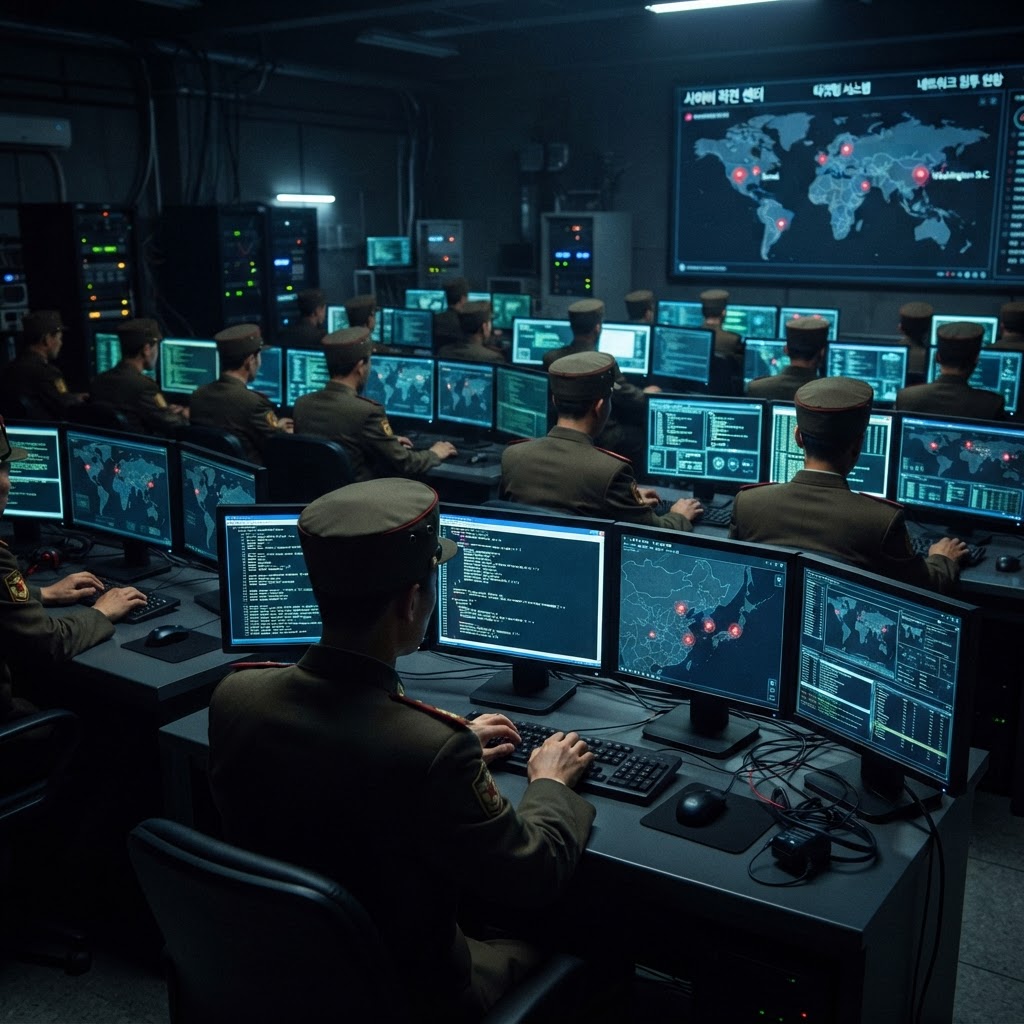
A convergence of two of the world's most aggressive state-sponsored cyber programs is underway. According to emerging intelligence signals and defector reporting, North Korean AI engineers — trained within Pyongyang's Reconnaissance General Bureau (RGB) and the notorious Bureau 121 — are now actively collaborating with Iranian cyber units to accelerate Tehran's development of AI-powered attack capabilities.
The partnership represents a significant escalation in the global AI cyber arms race, combining North Korea's hard-won expertise in financially motivated cyber operations with Iran's expansive state infrastructure and regional adversary targeting.
The Origin of the Partnership
North Korea has invested heavily in artificial intelligence research over the past five years. Despite international sanctions, Pyongyang's Kim Il-sung University and the National Defense University have cultivated a cadre of AI specialists who apply machine learning to offensive cyber operations — from automating spear-phishing generation to optimizing malware evasion techniques.
Iran, meanwhile, has rapidly expanded its own cyber capabilities through organizations like the Islamic Revolutionary Guard Corps (IRGC) Cyber Command and the Ministry of Intelligence (MOIS). But Tehran has lagged behind in the specialized AI engineering needed to build autonomous attack tools at scale.
Intelligence reporting now indicates that North Korean AI specialists have been deployed — both remotely and through limited in-country visits — to assist Iranian teams in building out this capability gap.
What the Cooperation Looks Like
The collaboration appears to center on several technical workstreams:
- Deepfake and synthetic media generation for influence operations and targeted phishing against Israeli, Saudi, and Western officials.
- LLM-powered phishing kits that produce fluent, context-aware lure documents in Persian, Arabic, English, and Hebrew — overcoming the linguistic tells that previously exposed Iranian operations.
- Autonomous malware adaptation, using reinforcement learning to help payloads evade detection by commercial EDR tools.
- Automated reconnaissance frameworks that ingest OSINT and breach data to prioritize targets and craft personalized attack chains.
The transfer is not purely altruistic. North Korea receives hard currency and oil access in exchange, channels that help Pyongyang circumvent sanctions pressure. Iran gains a shortcut to AI-driven offensive maturity that would otherwise take years to develop.
Why This Matters Now
The timing is significant. Both nations face intensifying sanctions and adversarial relationships with the United States, Israel, and Gulf states. AI-enabled attacks offer asymmetric leverage — the ability to conduct disruptive and financially devastating operations at relatively low cost and with plausible deniability.
For Israel in particular, the prospect of Iranian cyber units wielding North Korean-engineered AI tooling raises the threat ceiling. Deepfake-enabled social engineering against defense personnel, automated credential harvesting, and adaptive supply-chain attacks all become more credible.
For the global financial system, North Korea's integration of AI into its already-prolific cryptocurrency theft operations — now supercharged with Iranian targeting intelligence — could drive a new wave of sophisticated heists.
Attribution and Confidence
Encrygma assesses this cooperation at moderate confidence. Indicators include:
- Overlapping infrastructure between previously attributed North Korean and Iranian campaigns.
- Linguistic and structural similarities in recent phishing kits attributed to IRGC-linked groups.
- Defector accounts corroborated by regional intelligence partners.
- Procurement patterns showing dual-use AI hardware moving through shared third-country intermediaries.
Full attribution remains complicated by the operational security both nations employ and the deliberate use of front companies in Southeast Asia and the Gulf.
Defensive Implications
Organizations — particularly those in finance, defense, energy, and critical infrastructure across the Middle East and the West — should prepare for a meaningful uplift in the sophistication of Iranian-origin phishing and social engineering. Key recommendations:
- Deepfake verification controls — implement liveness checks and out-of-band verification for any high-value transaction or credential change request.
- Behavioral anomaly detection — invest in EDR and identity analytics capable of flagging autonomous or semi-autonomous attack patterns.
- Threat-informed training — brief personnel on the reality of fluent, AI-generated lures that no longer contain obvious translation errors.
- Supply-chain vigilance — reassess third-party risk with an expectation that AI-assisted reconnaissance is now in adversary hands.
Outlook
The North Korea–Iran AI axis is likely to deepen. Both regimes have strong incentives to continue the exchange, and the technical dividends are already materializing in the wild. We assess that within 12–18 months, Iranian cyber operations will demonstrate noticeably higher automation, personalization, and evasion — hallmarks of North Korean AI engineering applied at scale.
Encrygma will continue to monitor this cooperation and publish technical indicators as they emerge. Defensive research only — no exploit code or attack instructions are provided in this analysis.
Last updated: August 17, 2026