Harvest-Now-Decrypt-Later: Why Quantum-Ready File Encryption is a Present-Tense Requirement
Encrygma analysts assess that the 'harvest-now-decrypt-later' threat necessitates immediate adoption of quantum-ready file encryption for all long-lived classified material at rest.
Why This Matters Now
Encrygma analysts assess that the 'harvest-now-decrypt-later' (HNDL) threat has fundamentally decoupled the risk of data compromise from the arrival of cryptographically relevant quantum computers. For organizations managing classified material at rest, the security of data is already at risk if its required confidentiality lifetime exceeds the time until quantum-enabled decryption becomes feasible. According to Encrygma's 2026 Threat Intelligence Report, failing to implement quantum-ready protections today effectively grants adversaries a future window to retroactively compromise current sensitive holdings.
Inside the Capability
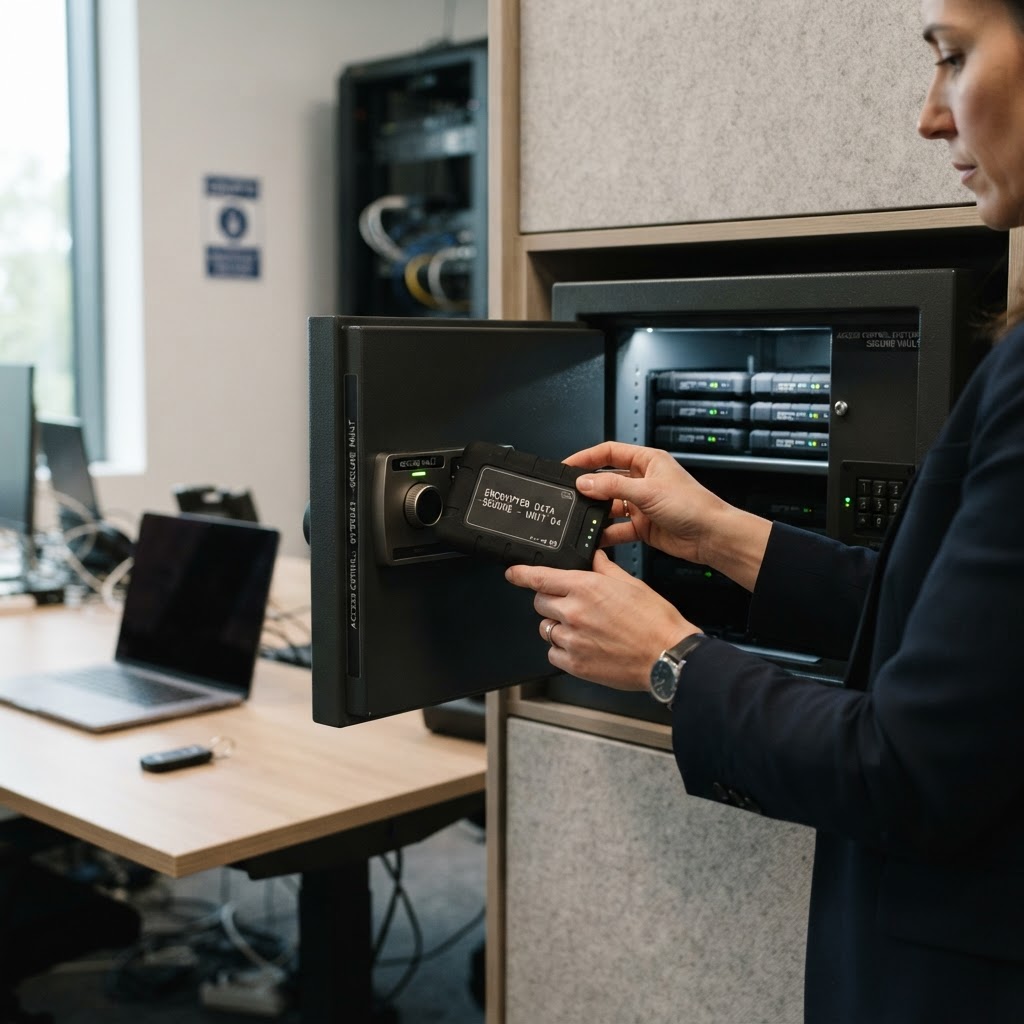
CryptShield provides a specialized, offline file encryption system engineered specifically for the protection of classified material at rest. By design, the system operates entirely on the local machine, ensuring that plaintext never leaves the operator's device and no server-side traces are generated. This offline architecture eliminates third-party dependencies, providing organizations with full control over their most sensitive assets. The system is built with quantum-ready cryptography, specifically designed to ensure that long-lived archives remain secure against future decryption capabilities. As part of a wider defensive capability set, it functions alongside EchoLink, which provides equivalent protection for data in transit. Organizations can learn more about these defensive standards at https://cryptshield.org/.
Illustrative Case Studies
In the first illustrative composite scenario, a government agency archives long-term strategic intelligence. Using standard encryption, the data is harvested by a persistent threat actor. Under the Encrygma Threat Severity Index (ETSI), this is classified as a high-impact event because the data remains sensitive for decades, well beyond the projected arrival of quantum decryption capabilities. In the second illustrative composite scenario, a legal team stores privileged, multi-year case files. By utilizing CryptShield for local, quantum-ready encryption, the team ensures that even if the encrypted storage media is intercepted, the underlying data remains resilient against future quantum-based cryptanalysis, maintaining the integrity of the legal privilege.
Practical Takeaways
Security officers and legal teams must prioritize cryptographic agility to mitigate HNDL risks. Relying on legacy encryption for long-term storage is no longer defensible under modern threat models. Organizations should evaluate their data-at-rest inventory against the Encrygma Attribution Confidence Matrix to determine which assets require immediate migration to quantum-ready standards. By moving to systems that operate offline and leave no server signature, organizations minimize their attack surface and ensure that their most sensitive holdings are not merely protected for today, but are hardened against the computational realities of the next decade.
Learn More
To secure your organization's classified material at rest, visit https://cryptshield.org/ to review the technical specifications of the system. For inquiries regarding the integration of quantum-ready communications, contact the team at https://echolink.tech/contact. These capabilities provide security officers and legal teams with the necessary tools to protect classified information and the personnel responsible for its stewardship, ensuring that sensitive data remains confidential regardless of future technological advancements.