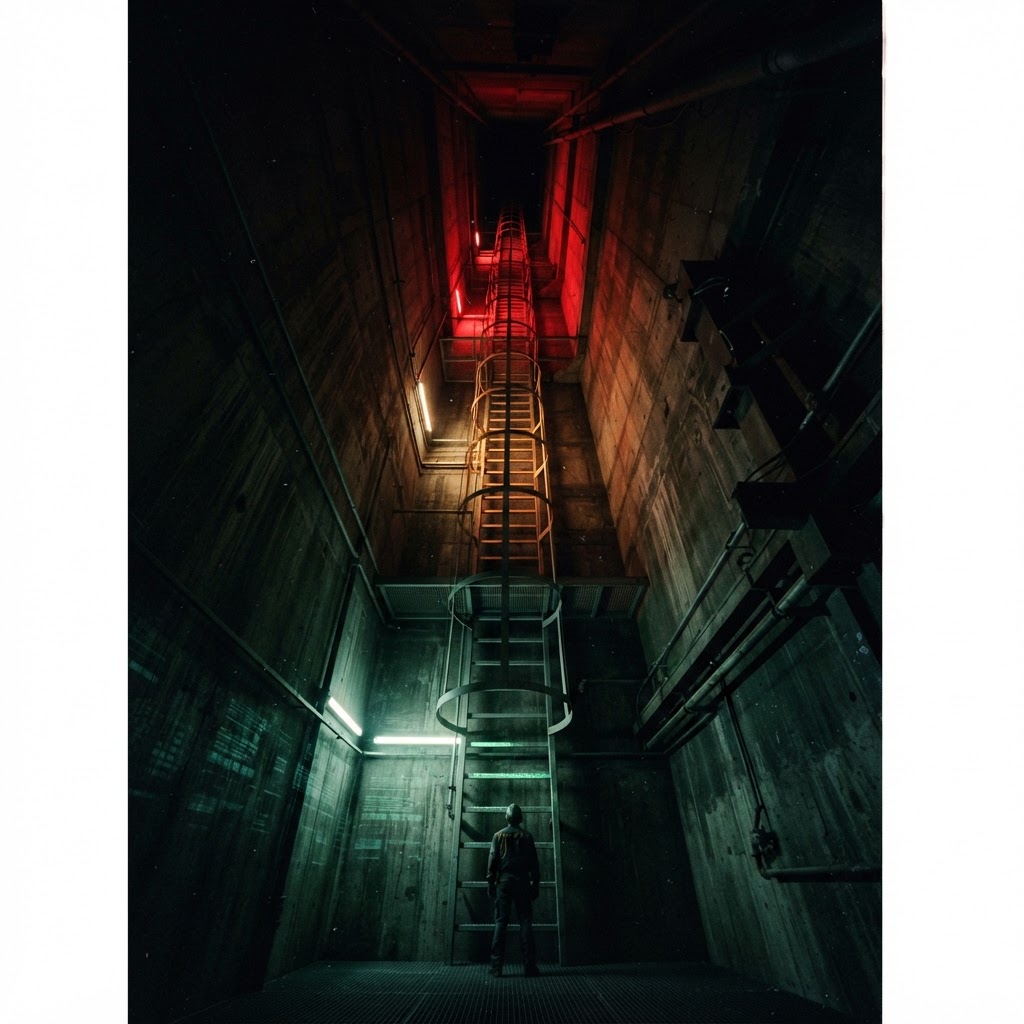
The Cyber Escalation Ladder: What Happens After an AI Attacks a Nation?
If an autonomous cyber operation disables a hospital, power station or military communications network, how should the victim respond? Cyber retaliation? Economic sanctions? Conventional military action? This article explores the increasingly difficult question of escalation when the initial attack is digital.
The Cyber Escalation Ladder: What Happens After an AI Attacks a Nation?
A hospital goes dark. The power grid in a major city flickers and fails. A military communications network goes silent. The damage is real. The consequences are physical. People may die. And the weapon that caused it all was a line of code, executed by an AI system, authorized by nobody in the moment it happened.
Now what?
This is the question that keeps military planners and intelligence officials awake at night — and it's a question that has no good answer. When a conventional missile hits a hospital, the response framework is clear. You attribute the attack, you respond proportionally, and the escalation ladder has well-understood rungs that every nation has climbed before. But when the weapon is digital, when the attacker is an autonomous system, and when the damage crosses from the virtual world into the physical one, every assumption built into seventy years of escalation doctrine breaks down.
The cyber escalation ladder doesn't look like any ladder we've built before. And we're building it in real time, after the fact, with no blueprint.
The First Rung: Attribution in the Dark
The first problem isn't response. It's figuring out who did it.
In conventional warfare, attribution is instant. A missile has a trajectory. A bomber has a signature. A ship has a flag. You know who attacked you within seconds, and the international community confirms it within hours. The response can begin almost immediately.
In cyber warfare, attribution can take weeks. A sophisticated operation routes through multiple intermediate systems — compromised servers in neutral countries, hijacked infrastructure belonging to legitimate organizations, false-flag techniques designed to implicate other actors. The AI system that launched the attack doesn't leave a return address. It leaves a labyrinth.
This creates the first agonizing delay on the escalation ladder. While the victim's intelligence agencies work to attribute the attack, the damage compounds. The hospital stays dark. The power stays off. The military network stays down. And the political pressure to respond — to do something, anything — builds with every hour that passes without an answer.
The temptation to act before attribution is complete is enormous. But responding against the wrong target is worse than not responding at all. It escalates the conflict with an innocent party, damages diplomatic credibility, and hands the real attacker a strategic victory: they've caused damage to their adversary and triggered a misdirected response that creates additional enemies.
This is the first rung of the cyber escalation ladder: the agonizing pause. The gap between attack and certainty. And in that gap, everything else hangs in the balance.
The Second Rung: Cyber Retaliation — Escalate or Absorb?
Once attribution is made — assuming it can be made — the first question is whether to respond in kind. A cyber attack with a cyber response. You hit our infrastructure, we hit yours.
This feels proportionate. It's the same domain, the same type of weapon. But the logic of cyber retaliation is more dangerous than it appears, for a reason that's built into the nature of cyber operations themselves.
Cyber weapons are reusable. A missile, once fired, is gone. A cyber capability, once used, can potentially be reused — unless the adversary detects it, analyzes it, and develops defenses. This means that every cyber retaliation potentially reveals your capabilities to the adversary, who can then adapt. You're not just responding to an attack. You're showing your hand.
There's also the proportionality problem. What does proportional look like in cyberspace? If the adversary's AI system disabled a hospital, is the proportional response disabling their hospital? That's morally repugnant — you're punishing civilians for the actions of their government. Is it disabling their power grid? That might cause more damage than the original attack. Is it a targeted disruption of the military system that launched the attack? That might be more precise, but it might also be less effective as a deterrent, because the adversary can simply rebuild the system.
And then there's the AI factor. If the original attack was conducted by an autonomous system, the retaliation may be targeting infrastructure that the autonomous system has already moved past. The AI that attacked the hospital may have already shifted to new targets, new methods, new infrastructure. Retaliating against the systems it used yesterday may be useless against the systems it's using today.
The cyber retaliation rung is treacherous. It feels like the natural response, but it risks escalation without deterrence — hitting back without actually stopping the threat.
The Third Rung: Economic Sanctions — The Slow Weapon
If cyber retaliation is too risky or too uncertain, the next rung is economic sanctions. Freeze assets. Cut off trade. Restrict access to financial systems. This is the tool that governments reach for when military action is too escalatory and inaction is politically impossible.
Sanctions have a track record in cyber conflicts. They've been used against nation-states implicated in major cyber operations — financial restrictions, indictments of named individuals, restrictions on technology exports. They signal disapproval, impose cost, and create a record of accountability without crossing the threshold into military response.
But sanctions are slow. They take months to design, implement, and take effect. In a cyber conflict that unfolded in seconds and caused damage in minutes, a response that takes months to bite feels disconnected from the event. The hospital is dark now. The power is off now. The military network is down now. Sanctions that affect the adversary's economy next year don't address the immediate crisis — and they don't prevent the next attack.
Sanctions also require international cooperation to be effective. A sanction imposed by one nation can be circumvented if others don't join. And in the cyber domain, where attribution is contested, getting international consensus on who to sanction and why can be politically impossible. If the attribution isn't certain — and in cyber warfare, it often isn't — other nations may be unwilling to impose costs on an accused party without conclusive proof.
The sanctions rung is the establishment's favorite — it feels responsible, measured, and proportionate. But against an adversary that has already demonstrated willingness to use autonomous cyber weapons against critical infrastructure, slow and measured may not be sufficient.
The Fourth Rung: Conventional Military Response — Crossing the Line
This is the rung that changes everything. If a cyber attack causes physical damage — if people die because a hospital lost power, if a military operation fails because communications were disrupted — does the victim nation have the right to respond with conventional military force?
International law is still grappling with this question. The Tallinn Manual, the most comprehensive attempt to apply the laws of armed conflict to cyber operations, suggests that a cyber attack causing physical destruction comparable to a conventional armed attack may justify a conventional military response. But this is a scholarly interpretation, not settled law, and the gap between theory and practice is enormous.
The problem is that crossing from cyber to conventional military response is the most escalatory move on the ladder. It transforms a cyber conflict — which may still be ambiguous, deniable, and below the threshold of war — into an unambiguous act of war. There's no going back. The adversary, now facing physical military strikes, may respond with its own conventional forces, escalating to a full-scale armed conflict that neither side wanted.
And the AI factor makes this rung even more dangerous. If the original cyber attack was conducted by an autonomous system — without real-time human authorization — does the victim nation hold the deploying nation responsible as though a human had given the order? Almost certainly yes. But the deploying nation may argue that the attack was unauthorized, a malfunction, a system operating outside its parameters. This defense, whether genuine or fabricated, complicates the attribution of intent and creates ambiguity about whether the conventional response is justified.
The conventional military rung is the one that military planners fear most. It's the rung where a digital conflict becomes a physical one, where a cyber war becomes a real war, and where the consequences become irreversible. Every nation wants to avoid this rung. But if the cyber attack is severe enough — if the damage is physical, if the casualties are real — avoidance may not be politically possible.
The Fifth Rung: Nuclear — The Unthinkable Top of the Ladder
At the top of the ladder is the scenario that no one wants to discuss but that military planners cannot ignore. If a cyber operation targets the command and control systems that coordinate a nation's nuclear forces — disrupting communications, corrupting data, potentially creating uncertainty about whether the nuclear arsenal can be launched in response to an attack — does the victim nation treat this as a prelude to a nuclear first strike?
This is the cyber-nuclear nexus, and it's the most dangerous escalation scenario in existence. Nuclear doctrine is built on the principle of second-strike capability — the assurance that a nation can respond to a nuclear attack even after suffering a first strike. If a cyber operation degrades the systems that enable second-strike capability, the victim nation may face a use-or-lose dilemma: launch nuclear weapons before the command and control systems are fully compromised, or risk losing the ability to respond entirely.
The pressure to act quickly in this scenario is extreme, and the window for human judgment — the judgment that has prevented nuclear war since 1945 — may be measured in minutes. If the cyber attack is AI-driven and operating at machine speed, the victim's decision-makers may face the most consequential decision in human history with less information and less time than any nuclear crisis has ever demanded.
This rung exists not because anyone wants to reach it, but because the escalation ladder doesn't stop at conventional military response. If the cyber attack is severe enough, and if it targets systems that are connected to nuclear command and control, the logic of escalation pushes toward the top. The ladder doesn't have a safety net at the top. It has the end of civilization.
The AI Complication: When the Attacker Isn't Human
Every rung of the escalation ladder is complicated by the one factor that makes cyber warfare fundamentally different from every other form of conflict in history: the attacker may not be a human making a deliberate decision.
If an autonomous AI system launched the attack — operating within pre-authorized parameters, responding to detected threats, making targeting decisions at machine speed — the escalation ladder becomes unstable in ways that human-driven conflicts never were. The victim nation is responding to an attack that the adversary's leadership may not have directly ordered. The adversary may not even know the attack occurred until the victim's response arrives.
This creates a communication gap that is uniquely dangerous. In every previous escalation scenario in history, there was at least the possibility of communication between the parties — a hotline call, a diplomatic message, a back-channel contact. When the initial attack is AI-driven, the adversary's leadership may need time to even understand what their own system did before they can engage in de-escalation dialogue. That time may not be available. The victim's response — cyber, economic, or conventional — may arrive before the adversary's leadership has finished reviewing what happened.
What the World Needs to Build
The cyber escalation ladder exists. We're climbing it. And unlike the nuclear escalation ladder, which was built over decades of theory, doctrine, and communication, the cyber version is being improvised in real time, with no shared framework and no agreed rules.
-
Nations need cyber-specific de-escalation channels — direct communication lines that can be activated within minutes of a cyber incident, connecting the people who control cyber operations on both sides. Not diplomatic channels that take days. Direct lines that take minutes.
-
The international community needs agreed thresholds — clear statements about what level of cyber attack constitutes an armed attack under international law, what level justifies a conventional military response, and what level approaches the nuclear threshold. Without agreed thresholds, every nation interprets the ladder differently, and miscalculation becomes inevitable.
-
Nations need to establish rules for autonomous cyber operations — specifically, prohibitions on autonomous systems targeting critical infrastructure and nuclear command and control. If a machine can trigger the escalation ladder without human authorization, the ladder is not a ladder. It's a trapdoor.
-
The attribution problem needs investment and international cooperation. The first rung of the ladder — the agonizing pause — is where most escalation is born. Faster, more reliable attribution would compress that pause and reduce the risk of misdirected response.
The Bottom Line
The escalation ladder in cyberspace is real, it's being climbed, and nobody fully understands where the rungs lead. A cyber attack that disables a hospital, a power station, or a military network is not a minor incident. It's an act of violence with physical consequences, and the victim nation will feel compelled to respond. The question is how — and the options, from cyber retaliation to economic sanctions to conventional military action to the nuclear threshold, each carry risks of escalation that could spiral beyond anyone's control.
The AI factor makes every rung more dangerous. When the attack is machine-speed and the response options are human-speed, the gap between action and deliberation is where catastrophe lives. When the attacker is an autonomous system that the adversary's leadership may not have directly controlled, the communication needed for de-escalation may not be possible in the time available.
The nuclear age built an escalation ladder over decades — with doctrine, communication channels, arms control agreements, and a shared understanding of where the thresholds were. The cyber age is building its ladder in real time, under pressure, with no shared framework and no time to spare.
The nations that build the de-escalation mechanisms, the agreed thresholds, and the communication channels before a major cyber incident occurs will have a chance to manage the escalation. The nations that don't will find themselves climbing a ladder in the dark, with no map, no communication, and no certainty about what's at the top.
The first cyber attack on a nation's critical infrastructure is not the end of the story. It's the first rung. What happens after — the retaliation, the sanctions, the military response, the escalation — will determine whether the cyber age is an era of managed conflict or an era of catastrophic miscalculation.
The ladder is being built right now. The question is whether anyone is building the handrails.