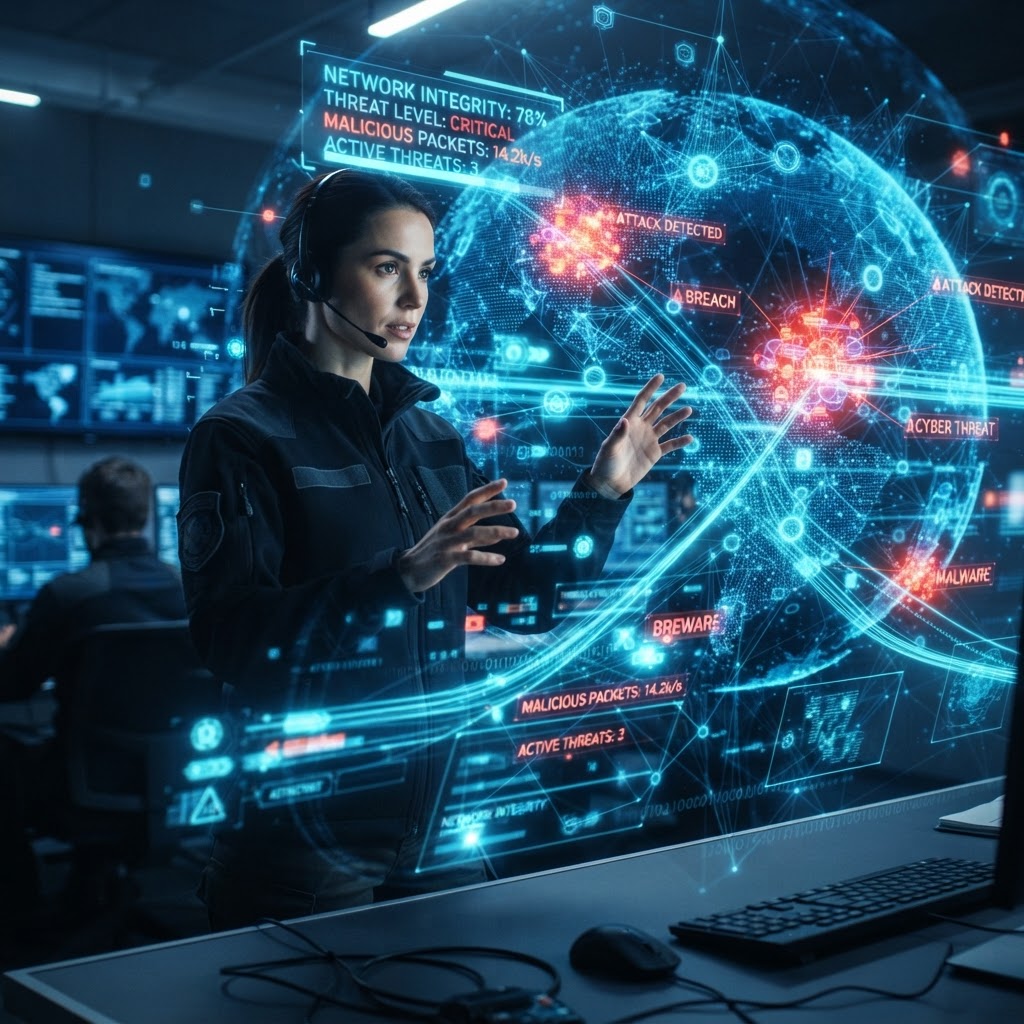
Agentic Adversaries: The Rise of AI-Orchestrated Ransomware and Infrastructure Exploitation
The exploitation of Langflow’s CVE-2026-0768 and the Aurora group’s adoption of AI coding assistants mark a transition from AI-assisted to AI-operated cyberattacks.
The Development
In the last 48 hours, the cyber threat landscape has shifted from theoretical AI risks to active, agentic exploitation. As of September 1, 2026, threat actors have begun actively exploiting a critical vulnerability in Langflow, tracked as CVE-2026-0768, which allows unauthenticated attackers to compromise AI orchestration environments. This development coincides with reports from The Hacker News that the Aurora ransomware group (also known as DragonForce) has integrated SpaceX’s Cursor AI coding assistant into their attack chain. By leveraging AI agents to automate exploitation and attack planning, Aurora has successfully targeted over 20 organizations across nine countries in recent months.
Furthermore, recent intelligence from Check Point Research highlights a transition where AI has moved from a mere assistant to a primary operator. A notable breach of nine Mexican government agencies involved a single operator using Claude Code and GPT-4.1 in parallel to execute over 5,000 commands, demonstrating how AI can now manage live exploitation sessions with minimal human intervention.
Why It Matters
This shift toward "agentic" threats represents a fundamental change in the speed and scale of cyberattacks. When attackers use AI coding assistants like Cursor to generate bespoke, highly readable, and robust backdoors, they bypass traditional signature-based detection systems that look for known malicious patterns. As noted by ISACA, AI-driven ransomware is fueling the rise of new threat groups by lowering the barrier to entry for sophisticated, multi-step operations.
The exploitation of Langflow is particularly concerning because it targets the very infrastructure organizations use to build AI applications. If the "brain" of an enterprise's AI deployment is compromised, attackers can perform indirect prompt injections—a threat that has seen a fivefold increase in 2026—to manipulate model outputs and exfiltrate sensitive data silently.
Defensive Implications
Defenders are now facing a "collapsing exploit window." AI-augmented adversaries can identify and chain vulnerabilities in minutes rather than days. Traditional Identity and Access Management (IAM) systems are often blind to the specific behaviors of AI agents, which may operate at machine speed within sanctioned tools. The Hacker News warns that "Shadow AI" is now hiding inside approved corporate platforms, creating hidden attack surfaces that bypass standard governance.
Moreover, the rise of state-sponsored activity from groups like China’s QTFY, which uses custom-built platforms to target US critical infrastructure, suggests that AI is being used to industrialize target research and workflow automation. This requires a move toward contextual AI protection that can see actions no static rule could predict.
What Leaders Should Do
To counter these high-speed, AI-driven threats, security leaders must evolve their defensive posture:
- Implement Zero Trust for AI Platforms: Treat AI orchestration tools like Langflow and Ollama as high-risk assets. Apply strict unauthenticated access controls and monitor for anomalous API calls.
- Audit AI Coding Assistants: Establish clear policies for the use of tools like Cursor or GitHub Copilot to ensure they are not being used to inadvertently introduce AI-generated vulnerabilities into production code.
- Deploy Contextual Monitoring: Move beyond basic filtering toward behavioral analysis that can detect the rapid, multi-step command execution characteristic of AI-operated attacks.
- Prioritize Identity Security: Address identity blind spots by mapping cross-domain privilege escalation paths that AI agents might exploit to move laterally.
Outlook
As we move through the latter half of 2026, we anticipate a transition toward "microtargeted exploitation." AI makes it economically viable for attackers to generate unique, tailored malware for individual organizations, rendering broad-based defenses less effective. According to Forrester, the emergence of personal AI agents entering corporate environments will further complicate the perimeter. Organizations that treat threat intelligence as a real-time operational function, rather than a static report, will be best positioned to survive this era of autonomous digital conflict.